By Tawnya Windmon
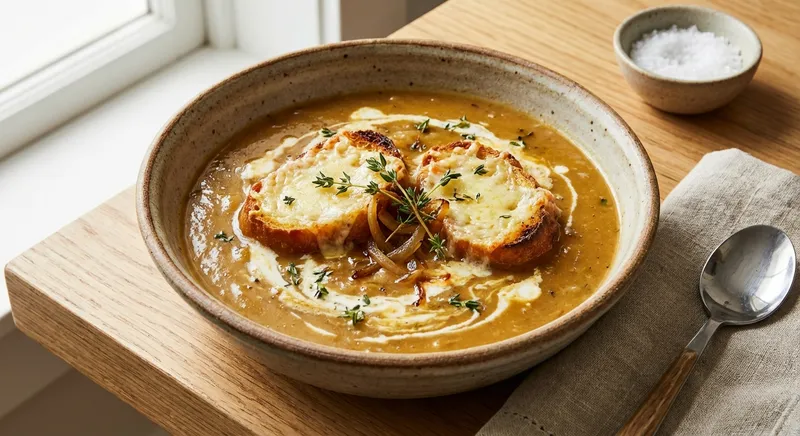
A deeply savory French-inspired soup built on slow-caramelized onions and sweet roasted garlic, finished with a touch of cream and brightened with balsamic and white wine. Topped with crisp, olive-oil brushed baguette slices and melted Gruyère for a restaurant-quality contrast of silky soup and crunchy, cheesy crostini.
Roast the garlic: Preheat oven to 200°C (400°F). Cut the tops off the garlic heads so the cloves are exposed, place on a piece of foil, drizzle 1 tsp olive oil over each exposed head, season lightly with salt, wrap and roast 30–35 minutes until very soft and caramelized. Why: Roasting mellows and sweetens garlic, creating a buttery, spreadable paste that adds depth and umami without sharp raw bite.
Prepare the onions: While garlic roasts, slice the onions thinly and measure butter and oil. Use a heavy-bottomed wide saucepan or Dutch oven and set it over medium-low heat. Why: Evenly sliced onions ensure consistent caramelization; a heavy pan distributes heat so the onions cook slowly without burning.
Caramelize the onions (first stage): Add 2 tbsp olive oil and 2 tbsp butter to the pan. When butter foams, add all the sliced onions and 1 tsp sugar, stirring to coat. Season with 1 tsp kosher salt. Cook over medium-low heat, stirring every 3–5 minutes. After 20 minutes the onions will be soft and turning golden. Why: Low-and-slow cooking breaks down onion sugars into flavorful caramelized notes; a little sugar jump-starts that process without making the onions cloyingly sweet.
Continue caramelizing and deglaze gradually: As onions deepen (30–45 minutes total), scrape up any fond (brown bits) and add 1–2 tbsp water, wine, or broth if the pan is getting too dry — this prevents burning while allowing Maillard browning. When the onions are a deep golden-caramel color (40–50 minutes total), stir in balsamic vinegar and the white wine to deglaze, scraping up browned bits. Why: Controlled deglazing lifts concentrated flavor from the pan and balances sweetness with acidity.
Add roasted garlic and build the soup: Squeeze the soft roasted garlic cloves from their skins into the pan (about 2 bulbs' worth). Add the broth, thyme sprigs, and bay leaf. Bring to a gentle simmer and cook 10–15 minutes to let flavors marry. Why: Simmering infuses the broth with the caramelized onion-garlic base; gentle heat preserves the sweet aromatics.
Finish and texture: Remove thyme sprigs and bay leaf. For a silky soup, use an immersion blender to purée directly in the pot until mostly smooth, or transfer in batches to a blender (vent to release steam). Stir in the heavy cream and adjust seasoning with salt and pepper to taste; reheat gently but do not boil. Why: Blending creates a luxurious mouthfeel; adding cream off heat prevents separation and keeps the soup velvety.
Make the Gruyère crostini: While soup simmers, preheat broiler. Toss baguette slices with 1 tbsp olive oil and place on a baking sheet. Toast under the broiler 1–2 minutes per side until lightly golden. Flip, sprinkle grated Gruyère evenly over slices, broil until cheese bubbles and is golden (about 1–2 minutes). Why: Toasting first gives the bread structure so it holds up in the soup; broiling the cheese adds a nutty, browned crust that complements the sweet soup.
Serve: Ladle hot soup into bowls and top each with 2 crostini or place crostini on the rim. Garnish with a few thyme leaves and a drizzle of extra-virgin olive oil if desired. Why: The contrast of temperature and texture (silky soup vs. crunchy, cheesy bread) is what elevates the dish to restaurant quality.
Storage and reheat: Cool leftover soup quickly, refrigerate up to 4 days or freeze up to 3 months. Reheat gently on the stovetop; add a splash of broth or cream if it thickens. Why: Gentle reheating preserves the emulsification and fresh flavor without breaking the cream.
630
Calories
17g
Protein
48g
Carbs
39g
Fat
5g
Fiber
How did this recipe turn out? Let others know!
to rate this recipe
By Tawnya Windmon
A deeply savory French-inspired soup built on slow-caramelized onions and sweet roasted garlic, finished with a touch of cream and brightened with balsamic and white wine. Topped with crisp, olive-oil brushed baguette slices and melted Gruyère for a restaurant-quality contrast of silky soup and crunchy, cheesy crostini.
Roast the garlic: Preheat oven to 200°C (400°F). Cut the tops off the garlic heads so the cloves are exposed, place on a piece of foil, drizzle 1 tsp olive oil over each exposed head, season lightly with salt, wrap and roast 30–35 minutes until very soft and caramelized. Why: Roasting mellows and sweetens garlic, creating a buttery, spreadable paste that adds depth and umami without sharp raw bite.
Prepare the onions: While garlic roasts, slice the onions thinly and measure butter and oil. Use a heavy-bottomed wide saucepan or Dutch oven and set it over medium-low heat. Why: Evenly sliced onions ensure consistent caramelization; a heavy pan distributes heat so the onions cook slowly without burning.
Caramelize the onions (first stage): Add 2 tbsp olive oil and 2 tbsp butter to the pan. When butter foams, add all the sliced onions and 1 tsp sugar, stirring to coat. Season with 1 tsp kosher salt. Cook over medium-low heat, stirring every 3–5 minutes. After 20 minutes the onions will be soft and turning golden. Why: Low-and-slow cooking breaks down onion sugars into flavorful caramelized notes; a little sugar jump-starts that process without making the onions cloyingly sweet.
Continue caramelizing and deglaze gradually: As onions deepen (30–45 minutes total), scrape up any fond (brown bits) and add 1–2 tbsp water, wine, or broth if the pan is getting too dry — this prevents burning while allowing Maillard browning. When the onions are a deep golden-caramel color (40–50 minutes total), stir in balsamic vinegar and the white wine to deglaze, scraping up browned bits. Why: Controlled deglazing lifts concentrated flavor from the pan and balances sweetness with acidity.
Add roasted garlic and build the soup: Squeeze the soft roasted garlic cloves from their skins into the pan (about 2 bulbs' worth). Add the broth, thyme sprigs, and bay leaf. Bring to a gentle simmer and cook 10–15 minutes to let flavors marry. Why: Simmering infuses the broth with the caramelized onion-garlic base; gentle heat preserves the sweet aromatics.
Finish and texture: Remove thyme sprigs and bay leaf. For a silky soup, use an immersion blender to purée directly in the pot until mostly smooth, or transfer in batches to a blender (vent to release steam). Stir in the heavy cream and adjust seasoning with salt and pepper to taste; reheat gently but do not boil. Why: Blending creates a luxurious mouthfeel; adding cream off heat prevents separation and keeps the soup velvety.
Make the Gruyère crostini: While soup simmers, preheat broiler. Toss baguette slices with 1 tbsp olive oil and place on a baking sheet. Toast under the broiler 1–2 minutes per side until lightly golden. Flip, sprinkle grated Gruyère evenly over slices, broil until cheese bubbles and is golden (about 1–2 minutes). Why: Toasting first gives the bread structure so it holds up in the soup; broiling the cheese adds a nutty, browned crust that complements the sweet soup.
Serve: Ladle hot soup into bowls and top each with 2 crostini or place crostini on the rim. Garnish with a few thyme leaves and a drizzle of extra-virgin olive oil if desired. Why: The contrast of temperature and texture (silky soup vs. crunchy, cheesy bread) is what elevates the dish to restaurant quality.
Storage and reheat: Cool leftover soup quickly, refrigerate up to 4 days or freeze up to 3 months. Reheat gently on the stovetop; add a splash of broth or cream if it thickens. Why: Gentle reheating preserves the emulsification and fresh flavor without breaking the cream.
630
Calories
17g
Protein
48g
Carbs
39g
Fat
5g
Fiber
Your Rating:
