By abbey f
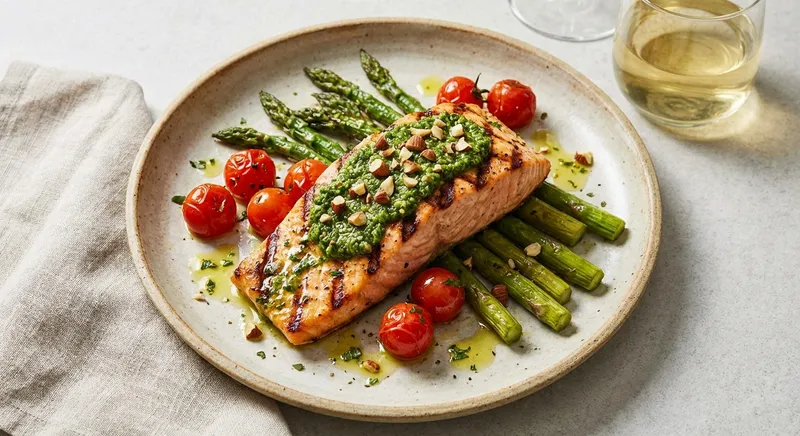
Charred, tender 6‑ounce salmon fillets paired with a bright, herbaceous basil‑almond pesto and roasted asparagus and blistered cherry tomatoes. The pesto’s toasted almonds and lemon zest add nutty, citrus lift while a quick high‑heat sear locks in juices and creates a restaurant‑quality crust.
Bring the salmon to room temperature (15–20 minutes) and pat dry with paper towels. Salting just before cooking seasons the fish and patting dry ensures better contact with the hot grill or pan so you get a golden sear instead of steaming.
Make the basil‑almond pesto: In a food processor combine the packed basil leaves, toasted almonds, garlic cloves, lemon zest, grated Parmesan, 2 tbsp olive oil, and a pinch of salt and pepper. Pulse until coarsely combined, then scrape the bowl and pulse again until the pesto is smooth but still has texture. Add another 1–2 tsp olive oil if it seems too stiff. Toasting the almonds beforehand and pulsing (not blitzing) preserves a bright green color and gives a pleasant nutty texture — the lemon zest brightens the flavors without adding liquid.
Prep the vegetables: Snap or trim the woody ends from the asparagus (bend near the base and it will break where the tender part begins). Toss the asparagus and halved cherry tomatoes with 1 tbsp olive oil, a pinch of salt and a few grinds of black pepper. Coating the asparagus in oil helps conduct heat for even roasting and encourages browning and slight caramelization of the tomatoes.
Roast the asparagus and tomatoes: Spread the asparagus and tomatoes in a single layer on a rimmed baking sheet. Roast in a 425°F (220°C) oven for 8–10 minutes — or until the asparagus is tender‑crisp and the tomatoes are blistered. Roasting at high heat quickly caramelizes sugars for deeper flavor while keeping the asparagus slightly crisp; overcooking will make it limp, so watch the clock.
Preheat a grill pan or cast‑iron skillet over medium‑high heat until very hot (you should see a faint shimmer). Brush the salmon lightly with a bit of the prepared pesto (this adds flavor and a thin oil layer), then season with salt and pepper. A very hot surface is essential to create a Maillard crust that locks in juices; the pesto brush adds seasoning and prevents sticking.
Cook the salmon: Place the fillets skin‑side down (if skin on) and press gently for 10–15 seconds so the skin makes full contact with the pan — this prevents curling and encourages even browning. Cook without moving for 3–4 minutes, until the skin is crisp and releases easily. Flip and cook 2–3 minutes on the flesh side for medium (internal temperature about 125–130°F / 52–54°C). Cook an extra minute for medium‑well. High heat, short cook time preserves moistness; use an instant‑read thermometer if you have one.
Finish and rest: Transfer the salmon to a plate and, if using, place 1 tsp butter on each fillet to melt as it rests for 2 minutes — resting lets juices redistribute so the fillet stays moist. Spoon a generous tablespoon of pesto over each fillet just before serving (pesto’s uncooked herbs and oil keep their bright color and fragrance when added at the end).
Plate: Divide the roasted asparagus and blistered cherry tomatoes between two plates. Place a salmon fillet on each bed of vegetables and garnish with a few small basil leaves or a light sprinkle of extra chopped toasted almonds for crunch and lemon zest for brightness. The contrast of textures — crisp skin, tender flesh, crunchy nuts, and snappy asparagus — is what makes this dish sing.
Finishing touch and serving suggestions: Serve immediately with lemon wedges on the side. If desired, drizzle any leftover pesto diluted with a teaspoon of warm water or olive oil to make a looser sauce to spoon over the vegetables.
653
Calories
41g
Protein
8g
Carbs
51g
Fat
3.4g
Fiber
How did this recipe turn out? Let others know!
to rate this recipe
By abbey f
Charred, tender 6‑ounce salmon fillets paired with a bright, herbaceous basil‑almond pesto and roasted asparagus and blistered cherry tomatoes. The pesto’s toasted almonds and lemon zest add nutty, citrus lift while a quick high‑heat sear locks in juices and creates a restaurant‑quality crust.
Bring the salmon to room temperature (15–20 minutes) and pat dry with paper towels. Salting just before cooking seasons the fish and patting dry ensures better contact with the hot grill or pan so you get a golden sear instead of steaming.
Make the basil‑almond pesto: In a food processor combine the packed basil leaves, toasted almonds, garlic cloves, lemon zest, grated Parmesan, 2 tbsp olive oil, and a pinch of salt and pepper. Pulse until coarsely combined, then scrape the bowl and pulse again until the pesto is smooth but still has texture. Add another 1–2 tsp olive oil if it seems too stiff. Toasting the almonds beforehand and pulsing (not blitzing) preserves a bright green color and gives a pleasant nutty texture — the lemon zest brightens the flavors without adding liquid.
Prep the vegetables: Snap or trim the woody ends from the asparagus (bend near the base and it will break where the tender part begins). Toss the asparagus and halved cherry tomatoes with 1 tbsp olive oil, a pinch of salt and a few grinds of black pepper. Coating the asparagus in oil helps conduct heat for even roasting and encourages browning and slight caramelization of the tomatoes.
Roast the asparagus and tomatoes: Spread the asparagus and tomatoes in a single layer on a rimmed baking sheet. Roast in a 425°F (220°C) oven for 8–10 minutes — or until the asparagus is tender‑crisp and the tomatoes are blistered. Roasting at high heat quickly caramelizes sugars for deeper flavor while keeping the asparagus slightly crisp; overcooking will make it limp, so watch the clock.
Preheat a grill pan or cast‑iron skillet over medium‑high heat until very hot (you should see a faint shimmer). Brush the salmon lightly with a bit of the prepared pesto (this adds flavor and a thin oil layer), then season with salt and pepper. A very hot surface is essential to create a Maillard crust that locks in juices; the pesto brush adds seasoning and prevents sticking.
Cook the salmon: Place the fillets skin‑side down (if skin on) and press gently for 10–15 seconds so the skin makes full contact with the pan — this prevents curling and encourages even browning. Cook without moving for 3–4 minutes, until the skin is crisp and releases easily. Flip and cook 2–3 minutes on the flesh side for medium (internal temperature about 125–130°F / 52–54°C). Cook an extra minute for medium‑well. High heat, short cook time preserves moistness; use an instant‑read thermometer if you have one.
Finish and rest: Transfer the salmon to a plate and, if using, place 1 tsp butter on each fillet to melt as it rests for 2 minutes — resting lets juices redistribute so the fillet stays moist. Spoon a generous tablespoon of pesto over each fillet just before serving (pesto’s uncooked herbs and oil keep their bright color and fragrance when added at the end).
Plate: Divide the roasted asparagus and blistered cherry tomatoes between two plates. Place a salmon fillet on each bed of vegetables and garnish with a few small basil leaves or a light sprinkle of extra chopped toasted almonds for crunch and lemon zest for brightness. The contrast of textures — crisp skin, tender flesh, crunchy nuts, and snappy asparagus — is what makes this dish sing.
Finishing touch and serving suggestions: Serve immediately with lemon wedges on the side. If desired, drizzle any leftover pesto diluted with a teaspoon of warm water or olive oil to make a looser sauce to spoon over the vegetables.
653
Calories
41g
Protein
8g
Carbs
51g
Fat
3.4g
Fiber
Your Rating:
