By Angeliki Apeiranthiti
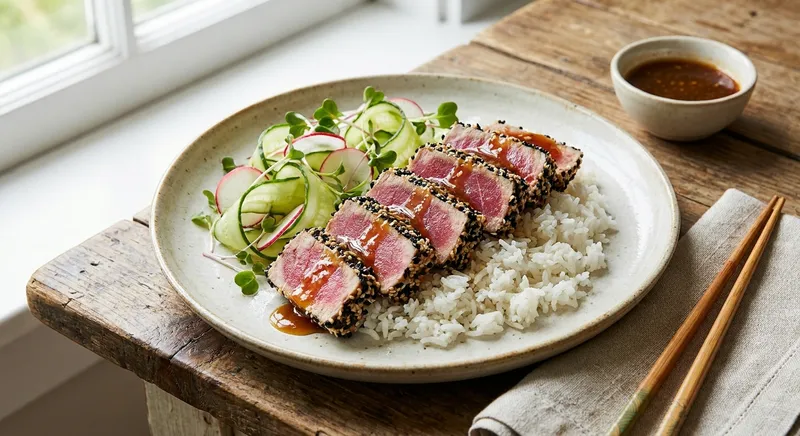
A restaurant-quality, Pan-Asian dish: a sesame-crusted tuna steak seared to a rare, buttery center, finished with a glossy soy-ginger-honey glaze. Paired with fragrant coconut jasmine rice and bright, quick-pickled cucumber, this dish balances crunchy sesame texture, umami-sweet glaze, and a cooling acid pop for a spectacular main course.
Make the soy-ginger glaze: In a small saucepan combine the soy sauce, mirin, honey, grated ginger and minced garlic. Bring to a gentle simmer over medium heat, then reduce heat to low and simmer 4–6 minutes until glossy and slightly reduced. Why: reducing concentrates and balances the sweet-salty flavors and slightly thickens the glaze so it will cling to the tuna rather than run off.
Toast the sesame seeds: Heat a dry skillet over medium heat, add the sesame seeds and toast, stirring constantly, 2–3 minutes until fragrant and lightly golden. Remove to a plate to stop cooking. Why: toasting blooms the oils in the seeds and deepens their nutty flavor — plain seeds taste flat in comparison.
Quick-pickle the cucumber: In a bowl whisk rice vinegar, sugar and 1/2 tsp salt until dissolved. Add thinly sliced cucumber and 2 tablespoons sliced scallions; toss and let sit at room temperature while you cook (minimum 10 minutes). Why: a short pickle brightens the cucumber with acid and sugar, adding crunch and cutting the richness of tuna and coconut rice.
Make the coconut jasmine rice: Rinse the jasmine rice under cold water until the water runs almost clear to remove excess surface starch — this prevents gummy rice. Combine the rinsed rice, coconut milk, water, and a pinch of salt in a medium saucepan. Bring to a boil, then reduce to the lowest heat and cover tightly; simmer 12–14 minutes until liquid is absorbed. Remove from heat and let rest, covered, 10 minutes. Finish by stirring in 1 tbsp cold butter and fluffing with a fork. Why: low, gentle heat and a rest period produce separate, tender grains; the butter adds creaminess and sheen.
Prepare the tuna: Pat tuna steaks dry with paper towels (moisture prevents proper crust). Season all over with 1 tsp kosher salt and 1 tsp black pepper. Brush lightly with the 1 tbsp sesame oil. Why: drying ensures a good sear; sesame oil gives a layer of flavor that helps the sesame seeds adhere.
Press the tuna into the sesame: Spread the toasted sesame seeds on a cutting board or shallow plate. Press each seasoned tuna steak firmly into the seeds, covering the top and sides — do not coat the bottom (that side will be pan-seared to make a neat crust). Why: this creates a crunchy, flavor-packed exterior while keeping the underside bare so it makes full contact with the hot pan.
Sear the tuna: Heat a large heavy skillet (cast-iron preferred) over high heat until very hot. Add the neutral oil and swirl. Place tuna steaks seed-side down first (so seeds make contact with the hot oil) and sear 30–45 seconds without moving until seeds form a golden crust. Flip and sear the other side 30–45 seconds for rare (internal temp ~115–120°F / 46–49°C). Reduce or increase time if you prefer more or less doneness. Why: high heat gives a quick Maillard crust on the exterior while keeping the center buttery-rare; tuna quickly overcooks — short sear times are key.
Rest and glaze: Transfer tuna to a plate and let rest 3 minutes (carryover heat evens the temperature). Spoon the warm soy-ginger glaze over the top or brush lightly to coat. Why: resting relaxes the juices and lets the glaze adhere rather than run off when you slice.
Finish pickles and rice: Drain most of the quick-pickle liquid if you prefer less wetness, toss the cucumbers again with remaining scallions and a squeeze of lime. Fluff the coconut rice once more and keep warm. Why: draining prevents watering down the plate and concentrates flavor.
Slice and plate: Using a sharp chef’s knife, slice tuna against the grain into 1/4–1/2-inch thick slices. Spoon a bed of coconut jasmine rice onto each plate, fan tuna slices alongside, spoon extra glaze over the tuna, and add a small mound of pickled cucumber. Garnish with remaining scallions and cilantro or microgreens and a drizzle of olive oil if you like. Why: slicing against the grain shortens the muscle fibers for a more tender bite; plating builds contrast in texture and temperature for an elegant presentation.
Serve immediately: This dish is best served right away so the tuna retains its rare center and crunchy sesame texture; the warm rice and cool pickles are meant to be eaten together on the first bite. Why: delays will soften the crust and change the ideal temperature contrasts.
864
Calories
59g
Protein
79g
Carbs
32g
Fat
4g
Fiber
How did this recipe turn out? Let others know!
to rate this recipe
By Angeliki Apeiranthiti
A restaurant-quality, Pan-Asian dish: a sesame-crusted tuna steak seared to a rare, buttery center, finished with a glossy soy-ginger-honey glaze. Paired with fragrant coconut jasmine rice and bright, quick-pickled cucumber, this dish balances crunchy sesame texture, umami-sweet glaze, and a cooling acid pop for a spectacular main course.
Make the soy-ginger glaze: In a small saucepan combine the soy sauce, mirin, honey, grated ginger and minced garlic. Bring to a gentle simmer over medium heat, then reduce heat to low and simmer 4–6 minutes until glossy and slightly reduced. Why: reducing concentrates and balances the sweet-salty flavors and slightly thickens the glaze so it will cling to the tuna rather than run off.
Toast the sesame seeds: Heat a dry skillet over medium heat, add the sesame seeds and toast, stirring constantly, 2–3 minutes until fragrant and lightly golden. Remove to a plate to stop cooking. Why: toasting blooms the oils in the seeds and deepens their nutty flavor — plain seeds taste flat in comparison.
Quick-pickle the cucumber: In a bowl whisk rice vinegar, sugar and 1/2 tsp salt until dissolved. Add thinly sliced cucumber and 2 tablespoons sliced scallions; toss and let sit at room temperature while you cook (minimum 10 minutes). Why: a short pickle brightens the cucumber with acid and sugar, adding crunch and cutting the richness of tuna and coconut rice.
Make the coconut jasmine rice: Rinse the jasmine rice under cold water until the water runs almost clear to remove excess surface starch — this prevents gummy rice. Combine the rinsed rice, coconut milk, water, and a pinch of salt in a medium saucepan. Bring to a boil, then reduce to the lowest heat and cover tightly; simmer 12–14 minutes until liquid is absorbed. Remove from heat and let rest, covered, 10 minutes. Finish by stirring in 1 tbsp cold butter and fluffing with a fork. Why: low, gentle heat and a rest period produce separate, tender grains; the butter adds creaminess and sheen.
Prepare the tuna: Pat tuna steaks dry with paper towels (moisture prevents proper crust). Season all over with 1 tsp kosher salt and 1 tsp black pepper. Brush lightly with the 1 tbsp sesame oil. Why: drying ensures a good sear; sesame oil gives a layer of flavor that helps the sesame seeds adhere.
Press the tuna into the sesame: Spread the toasted sesame seeds on a cutting board or shallow plate. Press each seasoned tuna steak firmly into the seeds, covering the top and sides — do not coat the bottom (that side will be pan-seared to make a neat crust). Why: this creates a crunchy, flavor-packed exterior while keeping the underside bare so it makes full contact with the hot pan.
Sear the tuna: Heat a large heavy skillet (cast-iron preferred) over high heat until very hot. Add the neutral oil and swirl. Place tuna steaks seed-side down first (so seeds make contact with the hot oil) and sear 30–45 seconds without moving until seeds form a golden crust. Flip and sear the other side 30–45 seconds for rare (internal temp ~115–120°F / 46–49°C). Reduce or increase time if you prefer more or less doneness. Why: high heat gives a quick Maillard crust on the exterior while keeping the center buttery-rare; tuna quickly overcooks — short sear times are key.
Rest and glaze: Transfer tuna to a plate and let rest 3 minutes (carryover heat evens the temperature). Spoon the warm soy-ginger glaze over the top or brush lightly to coat. Why: resting relaxes the juices and lets the glaze adhere rather than run off when you slice.
Finish pickles and rice: Drain most of the quick-pickle liquid if you prefer less wetness, toss the cucumbers again with remaining scallions and a squeeze of lime. Fluff the coconut rice once more and keep warm. Why: draining prevents watering down the plate and concentrates flavor.
Slice and plate: Using a sharp chef’s knife, slice tuna against the grain into 1/4–1/2-inch thick slices. Spoon a bed of coconut jasmine rice onto each plate, fan tuna slices alongside, spoon extra glaze over the tuna, and add a small mound of pickled cucumber. Garnish with remaining scallions and cilantro or microgreens and a drizzle of olive oil if you like. Why: slicing against the grain shortens the muscle fibers for a more tender bite; plating builds contrast in texture and temperature for an elegant presentation.
Serve immediately: This dish is best served right away so the tuna retains its rare center and crunchy sesame texture; the warm rice and cool pickles are meant to be eaten together on the first bite. Why: delays will soften the crust and change the ideal temperature contrasts.
864
Calories
59g
Protein
79g
Carbs
32g
Fat
4g
Fiber
Your Rating:
