By emensah m
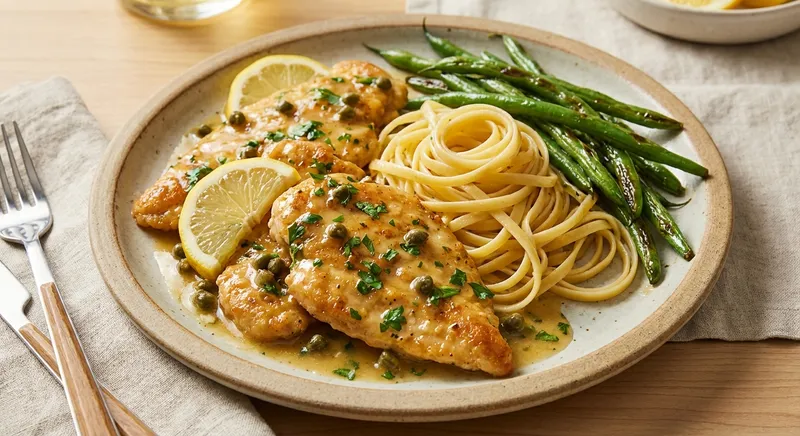
Bright, silky lemon-butter chicken piccata served over al dente linguine with crisp-tender green beans — a restaurant-quality weeknight dinner. Thin, pan-seared chicken cutlets get a golden crust, capers add briny pops, and a glossy lemony sauce finished with butter and reserved pasta water ties everything together into a silky, vibrant plate.
Prepare and pound the chicken: Butterfly each 6 oz breast horizontally if thick, then place between plastic wrap and gently pound to an even 1/3-inch thickness (use the flat side of a meat mallet or the bottom of a heavy pan). Season both sides lightly with salt and pepper. Why: Even thickness guarantees fast, even cooking and a tender result — no raw centers or overcooked edges.
Set up a dredging station: Put the flour on a shallow plate and season it with a pinch of salt and pepper. Dredge each chicken piece, shaking off excess. Why: A light flour coating helps the chicken brown evenly and gives the pan sauce a little body when the fond (browned bits) is deglazed.
Start the pasta and reserve water: Bring a large pot of well-salted water to a boil and cook the linguine until 1–2 minutes shy of package al dente (usually 7–8 minutes for 6 oz). Before draining, scoop and reserve 1 cup (240 ml) of pasta cooking water, then drain the pasta. Why: Starchy pasta water is a secret emulsifier that helps the sauce cling to the noodles and creates a silky finish.
Blanch the green beans: While the pasta cooks, bring a small pot of salted water to a boil and add the green beans for 3–4 minutes until bright green and just tender. Transfer immediately to an ice bath to stop cooking, then set aside. Why: Blanching preserves color, snap, and nutrients; shocking in ice prevents overcooking and keeps the beans vibrant on the plate.
Sear the chicken: Heat a large skillet over medium-high heat until hot. Add the olive oil and 1 tablespoon of the butter. When the butter foams and the oil shimmers, add the dredged chicken (work in two batches if needed) and cook undisturbed 2–3 minutes until deeply golden, then flip and cook 1.5–2 minutes more until just cooked through (internal temp ~165°F / 74°C). Transfer to a warm plate and tent with foil. Why: Searing undisturbed builds a brown crust (the Maillard reaction) that adds flavor; finishing in the pan for a short time prevents dryness because the cutlets are thin.
Build the sauce in the pan: Lower heat to medium and add the minced garlic (if using); cook 20–30 seconds until fragrant — don’t brown it or it will taste bitter. Add the lemon juice, capers, and 1/2 cup of the reserved pasta water, scraping the pan with a wooden spoon to lift the fond. Simmer for 1–2 minutes to meld flavors and slightly reduce. Why: Deglazing dissolves the fond into the sauce, which is where most of the flavor lives; the acid from lemon brightens and balances the butter.
Finish the sauce: Reduce heat to low and swirl in the remaining 1 tablespoon butter to create a glossy emulsion. If the sauce is too tart or thin, add up to 1/4 cup more reserved pasta water or a pinch of sugar to balance. Taste and season with salt and pepper. Why: Finishing with cold butter (monter au beurre) rounds the acidity, adds richness, and helps the sauce cling to the chicken and pasta.
Warm the chicken in the sauce: Return the chicken to the skillet for 30–60 seconds per side to reheat and coat in the sauce. Spoon some sauce over each piece. Why: Briefly warming melds the flavors without overcooking the chicken and lets it absorb some of the lemon-caper notes.
Toss pasta and beans with sauce: Add the drained linguine and blanched green beans to the skillet (or a large mixing bowl) with the sauce, adding up to 1/2 cup reserved pasta water as needed to loosen and emulsify. Toss gently to coat. Why: Tossing pasta in the sauce with starchy water creates a cohesive dish where noodles are lightly coated and glossy rather than swimming in loose sauce.
Plate and garnish: Mound linguine and green beans on two warmed plates, place a chicken cutlet on top of each, spoon extra sauce and capers over the chicken, and garnish with the lemon slices and a grind of black pepper. Serve immediately. Why: Serving hot plates and finishing with bright lemon keeps flavors vivid and presentation restaurant-style.
Optional finishing: A light drizzle of extra-virgin olive oil or a small handful of chopped flat-leaf parsley or thinly shaved Parmesan can be added at the end for aroma and color. Why: Fresh herbs and a final fat boost lift aroma and add a finishing touch without altering technique.
883
Calories
68g
Protein
91g
Carbs
26g
Fat
7g
Fiber
How did this recipe turn out? Let others know!
to rate this recipe
By emensah m
Bright, silky lemon-butter chicken piccata served over al dente linguine with crisp-tender green beans — a restaurant-quality weeknight dinner. Thin, pan-seared chicken cutlets get a golden crust, capers add briny pops, and a glossy lemony sauce finished with butter and reserved pasta water ties everything together into a silky, vibrant plate.
Prepare and pound the chicken: Butterfly each 6 oz breast horizontally if thick, then place between plastic wrap and gently pound to an even 1/3-inch thickness (use the flat side of a meat mallet or the bottom of a heavy pan). Season both sides lightly with salt and pepper. Why: Even thickness guarantees fast, even cooking and a tender result — no raw centers or overcooked edges.
Set up a dredging station: Put the flour on a shallow plate and season it with a pinch of salt and pepper. Dredge each chicken piece, shaking off excess. Why: A light flour coating helps the chicken brown evenly and gives the pan sauce a little body when the fond (browned bits) is deglazed.
Start the pasta and reserve water: Bring a large pot of well-salted water to a boil and cook the linguine until 1–2 minutes shy of package al dente (usually 7–8 minutes for 6 oz). Before draining, scoop and reserve 1 cup (240 ml) of pasta cooking water, then drain the pasta. Why: Starchy pasta water is a secret emulsifier that helps the sauce cling to the noodles and creates a silky finish.
Blanch the green beans: While the pasta cooks, bring a small pot of salted water to a boil and add the green beans for 3–4 minutes until bright green and just tender. Transfer immediately to an ice bath to stop cooking, then set aside. Why: Blanching preserves color, snap, and nutrients; shocking in ice prevents overcooking and keeps the beans vibrant on the plate.
Sear the chicken: Heat a large skillet over medium-high heat until hot. Add the olive oil and 1 tablespoon of the butter. When the butter foams and the oil shimmers, add the dredged chicken (work in two batches if needed) and cook undisturbed 2–3 minutes until deeply golden, then flip and cook 1.5–2 minutes more until just cooked through (internal temp ~165°F / 74°C). Transfer to a warm plate and tent with foil. Why: Searing undisturbed builds a brown crust (the Maillard reaction) that adds flavor; finishing in the pan for a short time prevents dryness because the cutlets are thin.
Build the sauce in the pan: Lower heat to medium and add the minced garlic (if using); cook 20–30 seconds until fragrant — don’t brown it or it will taste bitter. Add the lemon juice, capers, and 1/2 cup of the reserved pasta water, scraping the pan with a wooden spoon to lift the fond. Simmer for 1–2 minutes to meld flavors and slightly reduce. Why: Deglazing dissolves the fond into the sauce, which is where most of the flavor lives; the acid from lemon brightens and balances the butter.
Finish the sauce: Reduce heat to low and swirl in the remaining 1 tablespoon butter to create a glossy emulsion. If the sauce is too tart or thin, add up to 1/4 cup more reserved pasta water or a pinch of sugar to balance. Taste and season with salt and pepper. Why: Finishing with cold butter (monter au beurre) rounds the acidity, adds richness, and helps the sauce cling to the chicken and pasta.
Warm the chicken in the sauce: Return the chicken to the skillet for 30–60 seconds per side to reheat and coat in the sauce. Spoon some sauce over each piece. Why: Briefly warming melds the flavors without overcooking the chicken and lets it absorb some of the lemon-caper notes.
Toss pasta and beans with sauce: Add the drained linguine and blanched green beans to the skillet (or a large mixing bowl) with the sauce, adding up to 1/2 cup reserved pasta water as needed to loosen and emulsify. Toss gently to coat. Why: Tossing pasta in the sauce with starchy water creates a cohesive dish where noodles are lightly coated and glossy rather than swimming in loose sauce.
Plate and garnish: Mound linguine and green beans on two warmed plates, place a chicken cutlet on top of each, spoon extra sauce and capers over the chicken, and garnish with the lemon slices and a grind of black pepper. Serve immediately. Why: Serving hot plates and finishing with bright lemon keeps flavors vivid and presentation restaurant-style.
Optional finishing: A light drizzle of extra-virgin olive oil or a small handful of chopped flat-leaf parsley or thinly shaved Parmesan can be added at the end for aroma and color. Why: Fresh herbs and a final fat boost lift aroma and add a finishing touch without altering technique.
883
Calories
68g
Protein
91g
Carbs
26g
Fat
7g
Fiber
Your Rating:
