By Angeliki Apeiranthiti
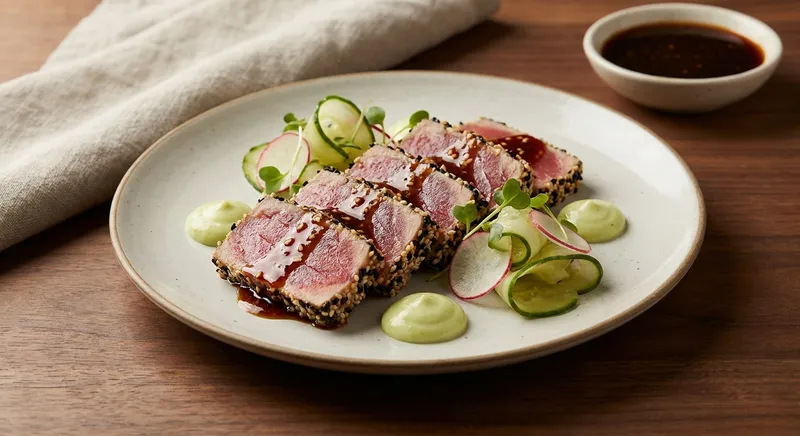
A restaurant-quality Japanese-fusion plate: sushi-grade ahi tuna is crusted in toasted sesame, seared to rare perfection for a smoky-sweet crust and silky pink center, finished with a sticky soy-ginger glaze, bright quick-pickled cucumbers, and a punchy wasabi-lemon aioli. The dish balances crunchy sesame texture, tender meaty tuna, tangy-sweet pickles, and umami-rich glaze for a showstopper main.
Bring the tuna to room temperature (15–20 minutes). Pat each steak dry with paper towels and season both sides lightly with 3/4 tsp of the kosher salt and 3/4 tsp of the black pepper divided evenly. WHY: letting the tuna warm slightly ensures even cooking through the center; drying the surface helps the sesame adhere and promotes browning rather than steaming.
Make the sesame crust: on a shallow plate combine the white and black sesame seeds. Press each seasoned tuna steak firmly into the seeds, coating the top and sides (not the bottom you’ll rest on the pan). WHY: pressing firmly creates an even crust that toasts quickly in the pan for a nutty flavor and a satisfying crunch while keeping the center rare.
Quick-pickle the cucumber: very thinly slice the English cucumber (use a mandoline or sharp knife). In a bowl whisk together 2 tbsp rice vinegar, 1 tbsp sugar, 1/2 tsp salt, and red pepper flakes if using. Toss the cucumber with the pickling liquid and let sit at room temperature while you cook (10–15 minutes). WHY: quick pickling brightens the plate with acid and a touch of sweetness and cuts through the richness of the tuna and aioli.
Prepare the soy-ginger glaze: in a small saucepan combine 1/4 cup soy sauce, 2 tbsp mirin, 1 tbsp honey, 1 tbsp rice vinegar, grated ginger, and minced garlic. Bring to a gentle simmer over medium heat and reduce until slightly syrupy, about 3–4 minutes. Remove from heat and keep warm. WHY: reducing concentrates the flavors and gives the glaze a sticky sheen that clings to the tuna without drowning it.
Make the wasabi-lemon aioli: in a small bowl whisk together 1/3 cup mayonnaise, 1.5 tsp wasabi paste, 1 tbsp lemon juice, and a pinch of salt until smooth. Taste and adjust—add more wasabi for heat or more lemon for brightness. WHY: the aioli adds creaminess and a controlled wasabi kick; emulsified mayo balances the glaze’s saltiness and the pickles’ acidity.
Heat a large heavy skillet (cast iron or stainless steel) over medium-high until almost smoking. Add 2 tbsp neutral oil and swirl to coat. WHY: a very hot pan creates immediate searing (Maillard reaction) that browns the sesame crust and seals the tuna's exterior for texture.
Sear the tuna: lay each sesame-crusted steak crust-side down in the pan and press gently to ensure full contact. Sear for 45–60 seconds without moving to develop a deep golden crust, then flip and sear the other side 30–45 seconds for rare (internal temperature ~110–115°F / 43–46°C). For medium-rare add 15–30 seconds on the second side. Remove to a cutting board and let rest 2 minutes. WHY: tuna is best served rare to medium-rare to preserve its silky texture and flavor; short searing times keep the interior tender while toasting the sesame.
Finish with glaze and oil: brush the seared tops lightly with the warm soy-ginger glaze (about 1 tbsp per steak) and drizzle with 1/2 tsp toasted sesame oil per serving. WHY: glazing at the end prevents burning while adding a glossy, umami-rich finish; a small amount of toasted sesame oil adds aromatic depth without overpowering.
Slice and plate: using a very sharp knife, slice each steak crosswise into 6–8 slices against the grain. Fan slices over a bed of baby greens (if using), spoon a dollop (about 1 tbsp) of wasabi-lemon aioli at the side, and add a mound of quick-pickled cucumbers. Sprinkle scallions and an extra pinch of toasted sesame seeds for color. WHY: slicing against the grain shortens fibers for maximum tenderness and attractive presentation; arranging components separately lets diners mix flavors as they like.
Serve immediately with lemon wedges. Leftovers: store sliced, cooled tuna tightly wrapped up to 24 hours; best eaten chilled atop salad or in a sushi bowl. WHY: immediate service preserves the contrast between warm seared crust and cool interior; tuna loses texture if reheated.
585
Calories
45g
Protein
11g
Carbs
39g
Fat
3g
Fiber
How did this recipe turn out? Let others know!
to rate this recipe
By Angeliki Apeiranthiti
A restaurant-quality Japanese-fusion plate: sushi-grade ahi tuna is crusted in toasted sesame, seared to rare perfection for a smoky-sweet crust and silky pink center, finished with a sticky soy-ginger glaze, bright quick-pickled cucumbers, and a punchy wasabi-lemon aioli. The dish balances crunchy sesame texture, tender meaty tuna, tangy-sweet pickles, and umami-rich glaze for a showstopper main.
Bring the tuna to room temperature (15–20 minutes). Pat each steak dry with paper towels and season both sides lightly with 3/4 tsp of the kosher salt and 3/4 tsp of the black pepper divided evenly. WHY: letting the tuna warm slightly ensures even cooking through the center; drying the surface helps the sesame adhere and promotes browning rather than steaming.
Make the sesame crust: on a shallow plate combine the white and black sesame seeds. Press each seasoned tuna steak firmly into the seeds, coating the top and sides (not the bottom you’ll rest on the pan). WHY: pressing firmly creates an even crust that toasts quickly in the pan for a nutty flavor and a satisfying crunch while keeping the center rare.
Quick-pickle the cucumber: very thinly slice the English cucumber (use a mandoline or sharp knife). In a bowl whisk together 2 tbsp rice vinegar, 1 tbsp sugar, 1/2 tsp salt, and red pepper flakes if using. Toss the cucumber with the pickling liquid and let sit at room temperature while you cook (10–15 minutes). WHY: quick pickling brightens the plate with acid and a touch of sweetness and cuts through the richness of the tuna and aioli.
Prepare the soy-ginger glaze: in a small saucepan combine 1/4 cup soy sauce, 2 tbsp mirin, 1 tbsp honey, 1 tbsp rice vinegar, grated ginger, and minced garlic. Bring to a gentle simmer over medium heat and reduce until slightly syrupy, about 3–4 minutes. Remove from heat and keep warm. WHY: reducing concentrates the flavors and gives the glaze a sticky sheen that clings to the tuna without drowning it.
Make the wasabi-lemon aioli: in a small bowl whisk together 1/3 cup mayonnaise, 1.5 tsp wasabi paste, 1 tbsp lemon juice, and a pinch of salt until smooth. Taste and adjust—add more wasabi for heat or more lemon for brightness. WHY: the aioli adds creaminess and a controlled wasabi kick; emulsified mayo balances the glaze’s saltiness and the pickles’ acidity.
Heat a large heavy skillet (cast iron or stainless steel) over medium-high until almost smoking. Add 2 tbsp neutral oil and swirl to coat. WHY: a very hot pan creates immediate searing (Maillard reaction) that browns the sesame crust and seals the tuna's exterior for texture.
Sear the tuna: lay each sesame-crusted steak crust-side down in the pan and press gently to ensure full contact. Sear for 45–60 seconds without moving to develop a deep golden crust, then flip and sear the other side 30–45 seconds for rare (internal temperature ~110–115°F / 43–46°C). For medium-rare add 15–30 seconds on the second side. Remove to a cutting board and let rest 2 minutes. WHY: tuna is best served rare to medium-rare to preserve its silky texture and flavor; short searing times keep the interior tender while toasting the sesame.
Finish with glaze and oil: brush the seared tops lightly with the warm soy-ginger glaze (about 1 tbsp per steak) and drizzle with 1/2 tsp toasted sesame oil per serving. WHY: glazing at the end prevents burning while adding a glossy, umami-rich finish; a small amount of toasted sesame oil adds aromatic depth without overpowering.
Slice and plate: using a very sharp knife, slice each steak crosswise into 6–8 slices against the grain. Fan slices over a bed of baby greens (if using), spoon a dollop (about 1 tbsp) of wasabi-lemon aioli at the side, and add a mound of quick-pickled cucumbers. Sprinkle scallions and an extra pinch of toasted sesame seeds for color. WHY: slicing against the grain shortens fibers for maximum tenderness and attractive presentation; arranging components separately lets diners mix flavors as they like.
Serve immediately with lemon wedges. Leftovers: store sliced, cooled tuna tightly wrapped up to 24 hours; best eaten chilled atop salad or in a sushi bowl. WHY: immediate service preserves the contrast between warm seared crust and cool interior; tuna loses texture if reheated.
585
Calories
45g
Protein
11g
Carbs
39g
Fat
3g
Fiber
Your Rating:
