By emensah m
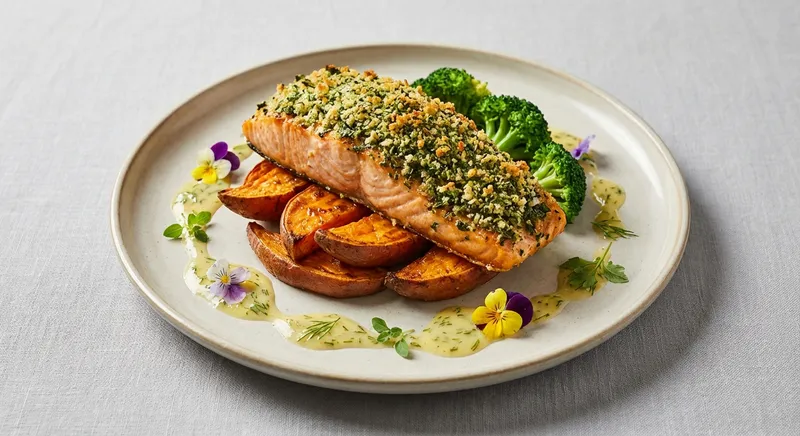
Crisp-topped, tender salmon with a bright lemon-herb breadcrumb crust paired with caramelized roasted sweet potatoes and vibrant steamed broccoli. The crust adds a crunchy, aromatic contrast to the buttery salmon, while the sweet potatoes’ natural sugars caramelize for depth and the broccoli is finished with lemon to lift the plate—restaurant flavor with home-cook ease.
Preheat oven to 425°F (220°C). Set an oven rack in the center position. Preheating to a high temperature lets the sweet potatoes caramelize quickly and allows the salmon crust to brown without overcooking the flesh.
Prepare the sweet potatoes: toss the 1/2" cubes with 2 tbsp olive oil, 1 tsp kosher salt and 1/2 tsp black pepper on a rimmed baking sheet so pieces are in a single layer. Why: a single layer ensures even roasting and caramelization; olive oil promotes browning and crisps the edges.
Roast the sweet potatoes for 20 minutes, then use a spatula to flip/turn them so the exposed sides brown evenly. Return to the oven while you prepare the salmon. Why: turning halfway encourages uniform caramelization and prevents burning on the high heat.
Make the herb-breadcrumb topping: in a bowl combine 3/4 cup breadcrumbs, chopped parsley, chopped dill, the zest of the lemon, 1 tbsp olive oil, 1/4 tsp kosher salt and 1/4 tsp black pepper. Toss to combine and press a small handful in your hand — it should hold together slightly. Why: the small amount of oil transfers flavor and helps the crumbs adhere to the salmon; lemon zest brightens the herbs so the crust tastes fresh, not heavy.
Pat the salmon fillets dry with paper towels (moisture prevents browning). Season both sides lightly with the remaining 1/2 tsp kosher salt and 1/2 tsp pepper. Brush the top (skin-side up if using skin-on) with about 1 tsp lemon juice and a light brush of olive oil. Why: drying ensures the crust sticks and browns; a little acid (lemon) lifts the fish flavor without 'cooking' it as vinegar or too much citrus might.
Press the herb-breadcrumb mixture onto the top of each fillet, covering the surface in a compact layer (about 2–3 tbsp topping per fillet). Place the fillets on a separate lightly oiled baking sheet (or line the sweet potato sheet with foil if there’s space). Why: pressing the topping ensures contact so it crisps rather than falls off during baking.
When the sweet potatoes have roasted for ~20 minutes and are starting to caramelize, place the salmon tray in the oven as well. Bake both trays at 425°F: salmon 10–12 minutes for 1" thick fillets (internal temp ~125–130°F/52–54°C for medium-rare to medium), and continue roasting the sweet potatoes another 5–10 minutes until fork-tender and golden. Why: cooking both at the same temp saves time; high heat cooks the salmon quickly so it remains moist and lets the crust brown.
Optional finishing step for a crisper crust: switch the oven to broil (high) for 1–2 minutes, watching closely, to toast the breadcrumb topping. Why: broiling quickly browns and crisps the crust without overcooking the salmon interior. Do not walk away — breadcrumbs burn fast under a broiler.
While the salmon finishes, steam the broccoli: bring an inch of water to a simmer in a medium pot with a steamer basket. Add the broccoli florets, cover, and steam for 4–6 minutes until bright green and tender‑crisp. Immediately transfer to a bowl and toss with 1 tbsp olive oil (or a pat of butter) and the minced garlic (if using) and 1–2 tsp lemon juice; season to taste with salt and pepper. Why: steaming briefly preserves the broccoli’s vibrant color and snap; finishing with acid and oil balances the plate.
Rest the salmon 2 minutes after it comes out of the oven—this lets residual heat finish cooking gently and the juices redistribute. Plate: spoon roasted sweet potatoes, arrange a salmon fillet (herb crust up), and add a mound of steamed broccoli. Garnish with lemon wedges and a scattering of extra chopped parsley or dill. Why: resting avoids dry fish and gives a polished presentation.
Serve immediately so the crust retains its crunch and the salmon remains tender. Leftovers: store cooled components separately in airtight containers for up to 2 days (salmon texture will change when reheated).
700
Calories
42g
Protein
48g
Carbs
39g
Fat
8g
Fiber
How did this recipe turn out? Let others know!
to rate this recipe
By emensah m
Crisp-topped, tender salmon with a bright lemon-herb breadcrumb crust paired with caramelized roasted sweet potatoes and vibrant steamed broccoli. The crust adds a crunchy, aromatic contrast to the buttery salmon, while the sweet potatoes’ natural sugars caramelize for depth and the broccoli is finished with lemon to lift the plate—restaurant flavor with home-cook ease.
Preheat oven to 425°F (220°C). Set an oven rack in the center position. Preheating to a high temperature lets the sweet potatoes caramelize quickly and allows the salmon crust to brown without overcooking the flesh.
Prepare the sweet potatoes: toss the 1/2" cubes with 2 tbsp olive oil, 1 tsp kosher salt and 1/2 tsp black pepper on a rimmed baking sheet so pieces are in a single layer. Why: a single layer ensures even roasting and caramelization; olive oil promotes browning and crisps the edges.
Roast the sweet potatoes for 20 minutes, then use a spatula to flip/turn them so the exposed sides brown evenly. Return to the oven while you prepare the salmon. Why: turning halfway encourages uniform caramelization and prevents burning on the high heat.
Make the herb-breadcrumb topping: in a bowl combine 3/4 cup breadcrumbs, chopped parsley, chopped dill, the zest of the lemon, 1 tbsp olive oil, 1/4 tsp kosher salt and 1/4 tsp black pepper. Toss to combine and press a small handful in your hand — it should hold together slightly. Why: the small amount of oil transfers flavor and helps the crumbs adhere to the salmon; lemon zest brightens the herbs so the crust tastes fresh, not heavy.
Pat the salmon fillets dry with paper towels (moisture prevents browning). Season both sides lightly with the remaining 1/2 tsp kosher salt and 1/2 tsp pepper. Brush the top (skin-side up if using skin-on) with about 1 tsp lemon juice and a light brush of olive oil. Why: drying ensures the crust sticks and browns; a little acid (lemon) lifts the fish flavor without 'cooking' it as vinegar or too much citrus might.
Press the herb-breadcrumb mixture onto the top of each fillet, covering the surface in a compact layer (about 2–3 tbsp topping per fillet). Place the fillets on a separate lightly oiled baking sheet (or line the sweet potato sheet with foil if there’s space). Why: pressing the topping ensures contact so it crisps rather than falls off during baking.
When the sweet potatoes have roasted for ~20 minutes and are starting to caramelize, place the salmon tray in the oven as well. Bake both trays at 425°F: salmon 10–12 minutes for 1" thick fillets (internal temp ~125–130°F/52–54°C for medium-rare to medium), and continue roasting the sweet potatoes another 5–10 minutes until fork-tender and golden. Why: cooking both at the same temp saves time; high heat cooks the salmon quickly so it remains moist and lets the crust brown.
Optional finishing step for a crisper crust: switch the oven to broil (high) for 1–2 minutes, watching closely, to toast the breadcrumb topping. Why: broiling quickly browns and crisps the crust without overcooking the salmon interior. Do not walk away — breadcrumbs burn fast under a broiler.
While the salmon finishes, steam the broccoli: bring an inch of water to a simmer in a medium pot with a steamer basket. Add the broccoli florets, cover, and steam for 4–6 minutes until bright green and tender‑crisp. Immediately transfer to a bowl and toss with 1 tbsp olive oil (or a pat of butter) and the minced garlic (if using) and 1–2 tsp lemon juice; season to taste with salt and pepper. Why: steaming briefly preserves the broccoli’s vibrant color and snap; finishing with acid and oil balances the plate.
Rest the salmon 2 minutes after it comes out of the oven—this lets residual heat finish cooking gently and the juices redistribute. Plate: spoon roasted sweet potatoes, arrange a salmon fillet (herb crust up), and add a mound of steamed broccoli. Garnish with lemon wedges and a scattering of extra chopped parsley or dill. Why: resting avoids dry fish and gives a polished presentation.
Serve immediately so the crust retains its crunch and the salmon remains tender. Leftovers: store cooled components separately in airtight containers for up to 2 days (salmon texture will change when reheated).
700
Calories
42g
Protein
48g
Carbs
39g
Fat
8g
Fiber
Your Rating:
