By Nabosha Lv
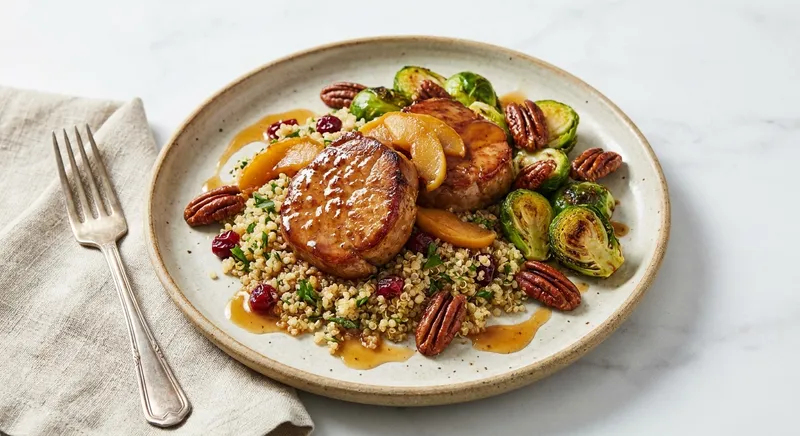
Tender pork medallions are quickly seared and finished in a fragrant apple-cider braise with Dijon and thyme, producing a glossy, slightly sweet-savory sauce. Paired with lemon-bright herbed quinoa, caramel-roasted Brussels sprouts and crisp maple-candied pecans, this dish balances sweet, tangy and savory textures for a restaurant-quality, autumn-forward dinner.
Preheat and prep: Preheat your oven to 220°C (425°F). Rinse the quinoa in a fine-mesh sieve under cold water until the water runs clear—this removes the natural saponins that can taste bitter and ensures a clean, nutty flavor. Pat the pork medallions dry with paper towels and season both sides with salt and a little black pepper; dry meat sears better and develops a more flavorful crust.
Toast pecans and candy them: Heat a small dry skillet over medium heat. Add the chopped pecans and toast, stirring, until fragrant (about 2–3 minutes). Remove to a bowl. In the same skillet add 1 tsp (5 ml) olive oil and 20 g maple syrup over low heat; add the toasted pecans and toss so the syrup coats them. Cook for 1 minute until syrup thickens and clings to the nuts, then spread on parchment to cool—this gives crunchy, glossy candied pecans that contrast the tender pork.
Roast the Brussels sprouts: Toss halved sprouts with 2 tbsp (30 ml) olive oil, salt and pepper on a rimmed baking sheet cut-side down (this encourages caramelization). Roast in the preheated oven for 18–22 minutes, turning once if needed, until deep golden on the cut sides and tender inside. Roasting concentrates their natural sugars and creates a sweet, nutty edge that pairs beautifully with the apple-cider sauce.
Sear the pork medallions: While sprouts roast, heat a large heavy skillet (cast iron preferred) over medium-high heat. Add 1 tbsp (15 ml) olive oil and 10 g butter. When shimmering and butter is foaming, add pork medallions in a single layer without crowding; sear 1.5–2 minutes per side until golden-brown (they will not be fully cooked). Searing builds a Maillard crust which adds deep savory flavor to the finished dish.
Build the braise: Remove seared medallions to a plate. Lower heat to medium, add the minced shallot (and optional garlic) to the pan with a pinch of salt; sauté 1–2 minutes until softened—this mellows sharp raw edges and releases aromatics. Pour in 600 ml apple cider and scrape up brown bits from the pan (deglazing releases concentrated flavor). Stir in 20 g Dijon mustard and a tablespoon of chopped thyme; bring to a simmer.
Simmer the pork: Return the pork medallions to the pan in a single layer, spooning a little liquid over the tops. Simmer gently (low boil) for 6–8 minutes until pork reaches an internal temperature of 63–65°C (145–149°F). A gentle braise at this stage finishes the pork through while keeping it tender and infusing it with cider flavor—overcooking will dry the lean tenderloin.
Rest pork and finish sauce: Transfer pork to a warm plate and tent loosely with foil to rest 4–5 minutes (resting redistributes juices). Meanwhile, skim any excess fat from the braising liquid, increase heat to medium-high and add 200 ml stock. Boil until reduced by about one-third (about 3–4 minutes) to intensify flavor. Swirl in the remaining 10 g butter off the heat to add sheen and roundness, adjust seasoning with salt and pepper—reduction concentrates both flavor and sweetness, so taste before adding more salt.
Cook the quinoa: While sauce reduces, bring 480 ml water to a gentle boil in a medium saucepan. Add the rinsed quinoa, a pinch of salt, reduce heat to low, cover and simmer for 12–15 minutes until water is absorbed. Turn off heat and let stand covered for 5 minutes—resting lets the steam finish any remaining cooking and gives fluffy grains instead of gummy quinoa. Fluff with a fork and stir in lemon zest, 30 ml lemon juice, the chopped parsley, remaining thyme, a drizzle (1 tbsp / 15 ml) olive oil and a pinch of salt to brighten and balance the dish.
Finish and plate: Spoon herbed quinoa onto warmed plates, arrange roasted Brussels sprouts at one side, top with pork medallions, and spoon the glossy apple-cider reduction over the medallions. Scatter the maple-candied pecans over the sprouts and a little extra parsley. The contrasting textures—silky sauce, tender pork, crisp-tender sprouts and crunchy candied pecans—make each bite interesting.
Serve: Offer any remaining sauce at the table. Serve immediately so the pork remains juicy and the candied pecans keep their crunch.
861
Calories
49g
Protein
79g
Carbs
42g
Fat
12g
Fiber
How did this recipe turn out? Let others know!
to rate this recipe
By Nabosha Lv
Tender pork medallions are quickly seared and finished in a fragrant apple-cider braise with Dijon and thyme, producing a glossy, slightly sweet-savory sauce. Paired with lemon-bright herbed quinoa, caramel-roasted Brussels sprouts and crisp maple-candied pecans, this dish balances sweet, tangy and savory textures for a restaurant-quality, autumn-forward dinner.
Preheat and prep: Preheat your oven to 220°C (425°F). Rinse the quinoa in a fine-mesh sieve under cold water until the water runs clear—this removes the natural saponins that can taste bitter and ensures a clean, nutty flavor. Pat the pork medallions dry with paper towels and season both sides with salt and a little black pepper; dry meat sears better and develops a more flavorful crust.
Toast pecans and candy them: Heat a small dry skillet over medium heat. Add the chopped pecans and toast, stirring, until fragrant (about 2–3 minutes). Remove to a bowl. In the same skillet add 1 tsp (5 ml) olive oil and 20 g maple syrup over low heat; add the toasted pecans and toss so the syrup coats them. Cook for 1 minute until syrup thickens and clings to the nuts, then spread on parchment to cool—this gives crunchy, glossy candied pecans that contrast the tender pork.
Roast the Brussels sprouts: Toss halved sprouts with 2 tbsp (30 ml) olive oil, salt and pepper on a rimmed baking sheet cut-side down (this encourages caramelization). Roast in the preheated oven for 18–22 minutes, turning once if needed, until deep golden on the cut sides and tender inside. Roasting concentrates their natural sugars and creates a sweet, nutty edge that pairs beautifully with the apple-cider sauce.
Sear the pork medallions: While sprouts roast, heat a large heavy skillet (cast iron preferred) over medium-high heat. Add 1 tbsp (15 ml) olive oil and 10 g butter. When shimmering and butter is foaming, add pork medallions in a single layer without crowding; sear 1.5–2 minutes per side until golden-brown (they will not be fully cooked). Searing builds a Maillard crust which adds deep savory flavor to the finished dish.
Build the braise: Remove seared medallions to a plate. Lower heat to medium, add the minced shallot (and optional garlic) to the pan with a pinch of salt; sauté 1–2 minutes until softened—this mellows sharp raw edges and releases aromatics. Pour in 600 ml apple cider and scrape up brown bits from the pan (deglazing releases concentrated flavor). Stir in 20 g Dijon mustard and a tablespoon of chopped thyme; bring to a simmer.
Simmer the pork: Return the pork medallions to the pan in a single layer, spooning a little liquid over the tops. Simmer gently (low boil) for 6–8 minutes until pork reaches an internal temperature of 63–65°C (145–149°F). A gentle braise at this stage finishes the pork through while keeping it tender and infusing it with cider flavor—overcooking will dry the lean tenderloin.
Rest pork and finish sauce: Transfer pork to a warm plate and tent loosely with foil to rest 4–5 minutes (resting redistributes juices). Meanwhile, skim any excess fat from the braising liquid, increase heat to medium-high and add 200 ml stock. Boil until reduced by about one-third (about 3–4 minutes) to intensify flavor. Swirl in the remaining 10 g butter off the heat to add sheen and roundness, adjust seasoning with salt and pepper—reduction concentrates both flavor and sweetness, so taste before adding more salt.
Cook the quinoa: While sauce reduces, bring 480 ml water to a gentle boil in a medium saucepan. Add the rinsed quinoa, a pinch of salt, reduce heat to low, cover and simmer for 12–15 minutes until water is absorbed. Turn off heat and let stand covered for 5 minutes—resting lets the steam finish any remaining cooking and gives fluffy grains instead of gummy quinoa. Fluff with a fork and stir in lemon zest, 30 ml lemon juice, the chopped parsley, remaining thyme, a drizzle (1 tbsp / 15 ml) olive oil and a pinch of salt to brighten and balance the dish.
Finish and plate: Spoon herbed quinoa onto warmed plates, arrange roasted Brussels sprouts at one side, top with pork medallions, and spoon the glossy apple-cider reduction over the medallions. Scatter the maple-candied pecans over the sprouts and a little extra parsley. The contrasting textures—silky sauce, tender pork, crisp-tender sprouts and crunchy candied pecans—make each bite interesting.
Serve: Offer any remaining sauce at the table. Serve immediately so the pork remains juicy and the candied pecans keep their crunch.
861
Calories
49g
Protein
79g
Carbs
42g
Fat
12g
Fiber
Your Rating:
