By Mohamed El yakoubi
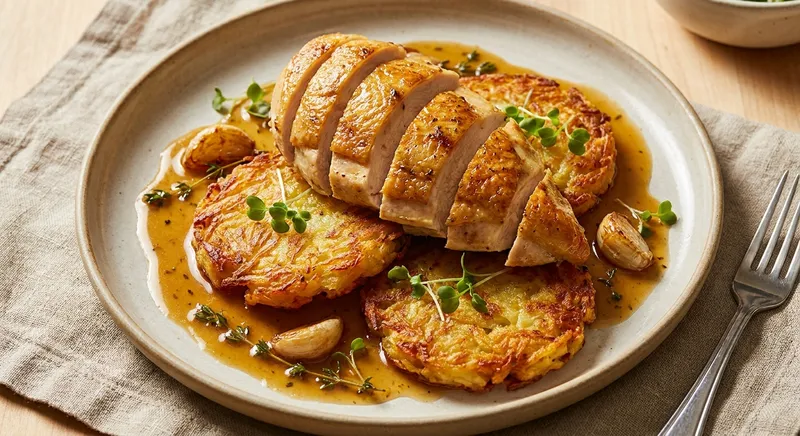
Juicy, seared chicken breasts deliver maximum protein while crispy golden potato cakes bring irresistible texture — finished with a glossy garlic pan jus that ties the plate together. This New American-style dish balances hearty protein (≈98 g per serving) with crunchy potato, bright aromatics and deeply caramelized pan flavor for a restaurant-quality weeknight meal.
Quick brine (optional but recommended for juiciness): In a large bowl dissolve 1 tablespoon kosher salt (about 15 g) in 600 ml cold water. Submerge the chicken breasts and refrigerate for 20–30 minutes. Why: a short brine increases the chicken’s moisture-holding capacity so the finished breasts stay juicy even after high-heat searing.
While the chicken brines, prepare the potatoes: Grate the peeled potatoes on the coarse side of a box grater. Transfer grated potato to a clean kitchen towel or several layers of paper towel and squeeze out as much liquid as possible (wring vigorously). Why: removing excess water concentrates the potato starch and prevents soggy cakes; it helps them brown and crisp properly.
Mix the potato: put the squeezed grated potato into a bowl, add the diced onion, 1/2 teaspoon salt, 1/4 teaspoon black pepper, and 1/2 teaspoon smoked paprika. Stir to combine. Form the mixture into eight even patties (about 90–100 g each). Why: seasoning the potato early distributes flavor throughout; forming equal patties ensures even cooking and consistent crispness.
Pat the chicken dry thoroughly with paper towels (important). If you brined, rinse briefly and pat dry. Pound each breast lightly between plastic wrap to an even thickness (about 1–1.1 cm / 3/4 inch) so they cook evenly; thicker pieces risk being undercooked at the center while the exterior burns. Season both sides with the remaining 1 teaspoon salt, 3/4 teaspoon pepper, 1/2 teaspoon smoked paprika and the dried thyme. Why: drying promotes a good sear; equal thickness yields predictable doneness.
Heat a large oven-safe skillet (cast-iron recommended) over medium-high heat and add 1 tablespoon olive oil. When the oil is shimmering but not smoking, add the potato patties (work in two batches to avoid crowding). Press lightly with a spatula and cook undisturbed 3–4 minutes until deeply golden on the bottom, then flip and cook another 3–4 minutes. Transfer cooked patties to a warm oven (100–120°C / 210–250°F) to keep warm while finishing. Why: high initial contact heat creates a Maillard crust on the potato; keeping them warm prevents them from cooling while you finish the chicken.
In the same skillet wipe out any burned bits but leave flavorful brown fragments (don’t wash). Add remaining 2 tablespoons olive oil and 1 tablespoon butter; when hot add the chicken breasts. Sear 2–3 minutes per side until a golden-brown crust forms. Why: searing caramelizes proteins and sugars to create deep flavor; starting on the stovetop builds the crust you want before finishing in the oven.
Transfer the skillet to a preheated 190°C (375°F) oven and roast for 8–12 minutes, or until an instant-read thermometer inserted into the thickest part reads 66°C (151°F). Remove from oven and rest for 6–8 minutes; the carryover heat will bring the internal temp to about 68–70°C (155–158°F), which is safe and keeps the chicken moist. Why: finishing in the oven cooks evenly without burning the exterior; resting lets juices redistribute so they don’t run out when sliced.
Make the garlic pan jus while chicken rests: return the skillet to medium heat. Add the remaining 1 tablespoon butter and the minced garlic and sauté 20–30 seconds to soften and release aroma (don’t let it brown). Pour in 120 ml water to deglaze, scraping the brown bits off the bottom with a wooden spoon. Simmer briskly for 2–3 minutes to reduce slightly and concentrate flavor. Taste and season with a pinch of salt and black pepper. Why: deglazing extracts the concentrated flavor from the fond (browned bits); reducing creates a glossy, flavorful jus without needing stock or cream.
Slice the rested chicken against the grain into thick slices. Plate two potato cakes per person, fan 150–200 g sliced chicken on each plate, spoon the garlic pan jus over the chicken and garnish with chopped parsley or chives. Serve immediately. Why: slicing against the grain yields tender bites; spooning the jus over the chicken enhances moistness and flavor while the potato cakes provide a contrasting crunch.
805
Calories
98g
Protein
38g
Carbs
27g
Fat
5g
Fiber
How did this recipe turn out? Let others know!
to rate this recipe
By Mohamed El yakoubi
Juicy, seared chicken breasts deliver maximum protein while crispy golden potato cakes bring irresistible texture — finished with a glossy garlic pan jus that ties the plate together. This New American-style dish balances hearty protein (≈98 g per serving) with crunchy potato, bright aromatics and deeply caramelized pan flavor for a restaurant-quality weeknight meal.
Quick brine (optional but recommended for juiciness): In a large bowl dissolve 1 tablespoon kosher salt (about 15 g) in 600 ml cold water. Submerge the chicken breasts and refrigerate for 20–30 minutes. Why: a short brine increases the chicken’s moisture-holding capacity so the finished breasts stay juicy even after high-heat searing.
While the chicken brines, prepare the potatoes: Grate the peeled potatoes on the coarse side of a box grater. Transfer grated potato to a clean kitchen towel or several layers of paper towel and squeeze out as much liquid as possible (wring vigorously). Why: removing excess water concentrates the potato starch and prevents soggy cakes; it helps them brown and crisp properly.
Mix the potato: put the squeezed grated potato into a bowl, add the diced onion, 1/2 teaspoon salt, 1/4 teaspoon black pepper, and 1/2 teaspoon smoked paprika. Stir to combine. Form the mixture into eight even patties (about 90–100 g each). Why: seasoning the potato early distributes flavor throughout; forming equal patties ensures even cooking and consistent crispness.
Pat the chicken dry thoroughly with paper towels (important). If you brined, rinse briefly and pat dry. Pound each breast lightly between plastic wrap to an even thickness (about 1–1.1 cm / 3/4 inch) so they cook evenly; thicker pieces risk being undercooked at the center while the exterior burns. Season both sides with the remaining 1 teaspoon salt, 3/4 teaspoon pepper, 1/2 teaspoon smoked paprika and the dried thyme. Why: drying promotes a good sear; equal thickness yields predictable doneness.
Heat a large oven-safe skillet (cast-iron recommended) over medium-high heat and add 1 tablespoon olive oil. When the oil is shimmering but not smoking, add the potato patties (work in two batches to avoid crowding). Press lightly with a spatula and cook undisturbed 3–4 minutes until deeply golden on the bottom, then flip and cook another 3–4 minutes. Transfer cooked patties to a warm oven (100–120°C / 210–250°F) to keep warm while finishing. Why: high initial contact heat creates a Maillard crust on the potato; keeping them warm prevents them from cooling while you finish the chicken.
In the same skillet wipe out any burned bits but leave flavorful brown fragments (don’t wash). Add remaining 2 tablespoons olive oil and 1 tablespoon butter; when hot add the chicken breasts. Sear 2–3 minutes per side until a golden-brown crust forms. Why: searing caramelizes proteins and sugars to create deep flavor; starting on the stovetop builds the crust you want before finishing in the oven.
Transfer the skillet to a preheated 190°C (375°F) oven and roast for 8–12 minutes, or until an instant-read thermometer inserted into the thickest part reads 66°C (151°F). Remove from oven and rest for 6–8 minutes; the carryover heat will bring the internal temp to about 68–70°C (155–158°F), which is safe and keeps the chicken moist. Why: finishing in the oven cooks evenly without burning the exterior; resting lets juices redistribute so they don’t run out when sliced.
Make the garlic pan jus while chicken rests: return the skillet to medium heat. Add the remaining 1 tablespoon butter and the minced garlic and sauté 20–30 seconds to soften and release aroma (don’t let it brown). Pour in 120 ml water to deglaze, scraping the brown bits off the bottom with a wooden spoon. Simmer briskly for 2–3 minutes to reduce slightly and concentrate flavor. Taste and season with a pinch of salt and black pepper. Why: deglazing extracts the concentrated flavor from the fond (browned bits); reducing creates a glossy, flavorful jus without needing stock or cream.
Slice the rested chicken against the grain into thick slices. Plate two potato cakes per person, fan 150–200 g sliced chicken on each plate, spoon the garlic pan jus over the chicken and garnish with chopped parsley or chives. Serve immediately. Why: slicing against the grain yields tender bites; spooning the jus over the chicken enhances moistness and flavor while the potato cakes provide a contrasting crunch.
805
Calories
98g
Protein
38g
Carbs
27g
Fat
5g
Fiber
Your Rating:
