By emensah m
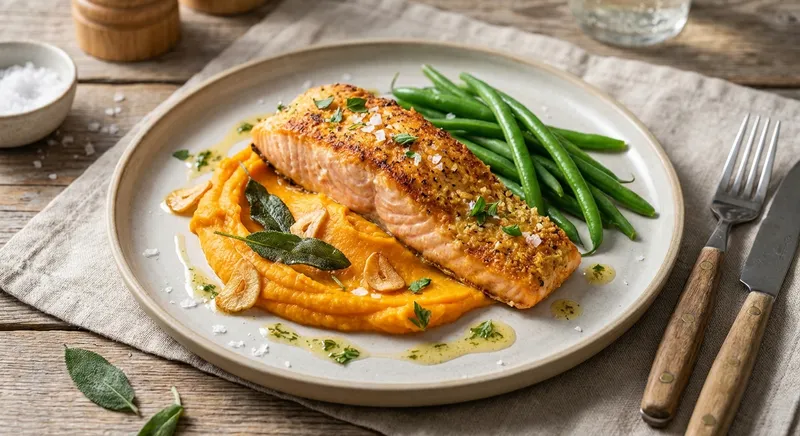
Tender, oven-roasted salmon with a crisped exterior sits atop a silky garlic–sage sweet potato mash, finished with bright lemon and buttered steamed green beans. The sweet, earthy sage and roasted garlic lift the sweet potatoes while the lemon and olive oil on the salmon keep the dish light and vibrant—restaurant-quality comfort that’s quick enough for a weeknight.
Bring a medium pot of salted water to a boil for the sweet potatoes. Salt the water like the sea (about 1 tsp per liter) — this seasons the potatoes from the inside and builds flavor instead of leaving them bland.
Peel and cube 500 g sweet potatoes into roughly 2–3 cm pieces so they cook evenly. Place the cubes into the boiling water and cook until fork-tender, about 12–16 minutes depending on size. Test with a fork—if it slides in easily the potatoes are done; this ensures the mash will be silky rather than lumpy or undercooked.
While the potatoes cook, preheat the oven to 200°C (400°F). Pat the 300 g of salmon fillets very dry with paper towel — removing surface moisture helps the exterior caramelize rather than steam — then brush both sides lightly with 1 tbsp olive oil and season with salt and freshly ground black pepper.
Place the salmon skin-side down (if it has skin) on a baking sheet lined with parchment or a lightly oiled baking dish. Roast in the preheated oven for 10–14 minutes depending on thickness (roughly 10 minutes for 2 cm thick fillets). Roast until the flesh flakes easily and a thermometer inserted into the thickest part reads 52–57°C (125–135°F) for medium; carryover will raise it a couple of degrees as it rests. This method yields a moist interior and a gentle crust on the outside.
Trim and steam the 200 g green beans while the salmon roasts. Place them in a steamer basket over simmering water for 4–6 minutes until bright green and tender-crisp. Steaming preserves their color, nutrients, and a pleasant snap — avoid overcooking, which makes them mushy and dulls the flavor.
Reserve 2–3 tablespoons of the sweet potato cooking water, then drain the potatoes and return them to the warm pot. Warm the 20 g unsalted butter (or 1 tbsp olive oil if you prefer) with 1 clove minced garlic and 1 tsp chopped fresh sage (or 1 tsp dried) briefly in a small pan for 30–45 seconds until fragrant; this blooms the sage and mellows the garlic so the mash takes on an aromatic, savory note without any raw bite.
Mash the potatoes with the butter–sage–garlic mixture, adding reserved cooking water a tablespoon at a time to reach a creamy but slightly rustic texture. Season with salt and pepper and a little lemon zest (from 1 lemon). Adding hot potato water loosens the mash without adding extra fat and helps you control the final texture; lemon zest brightens and lifts the richness.
When the salmon comes out of the oven, let it rest 3 minutes — the short rest lets the juices redistribute and guarantees a moist fillet. If using skin-on, you can briefly run a spatula between the skin and flesh to separate if you prefer to plate without skin.
Dress the steamed green beans: toss them with a little butter or olive oil, a pinch of salt, cracked black pepper, and a squeeze of lemon to finish. The acid wakes the beans and balances the richness of the mash and salmon.
To plate: spoon a generous mound of garlic–sage sweet potato mash onto each plate, top with a salmon fillet, then arrange the green beans alongside. Finish with a twist of black pepper and a lemon wedge for squeezing. Serve immediately so the textures — creamy mash, tender salmon, and crisp-tender beans — are at their peak.
695
Calories
37g
Protein
58g
Carbs
35g
Fat
11g
Fiber
How did this recipe turn out? Let others know!
to rate this recipe
By emensah m
Tender, oven-roasted salmon with a crisped exterior sits atop a silky garlic–sage sweet potato mash, finished with bright lemon and buttered steamed green beans. The sweet, earthy sage and roasted garlic lift the sweet potatoes while the lemon and olive oil on the salmon keep the dish light and vibrant—restaurant-quality comfort that’s quick enough for a weeknight.
Bring a medium pot of salted water to a boil for the sweet potatoes. Salt the water like the sea (about 1 tsp per liter) — this seasons the potatoes from the inside and builds flavor instead of leaving them bland.
Peel and cube 500 g sweet potatoes into roughly 2–3 cm pieces so they cook evenly. Place the cubes into the boiling water and cook until fork-tender, about 12–16 minutes depending on size. Test with a fork—if it slides in easily the potatoes are done; this ensures the mash will be silky rather than lumpy or undercooked.
While the potatoes cook, preheat the oven to 200°C (400°F). Pat the 300 g of salmon fillets very dry with paper towel — removing surface moisture helps the exterior caramelize rather than steam — then brush both sides lightly with 1 tbsp olive oil and season with salt and freshly ground black pepper.
Place the salmon skin-side down (if it has skin) on a baking sheet lined with parchment or a lightly oiled baking dish. Roast in the preheated oven for 10–14 minutes depending on thickness (roughly 10 minutes for 2 cm thick fillets). Roast until the flesh flakes easily and a thermometer inserted into the thickest part reads 52–57°C (125–135°F) for medium; carryover will raise it a couple of degrees as it rests. This method yields a moist interior and a gentle crust on the outside.
Trim and steam the 200 g green beans while the salmon roasts. Place them in a steamer basket over simmering water for 4–6 minutes until bright green and tender-crisp. Steaming preserves their color, nutrients, and a pleasant snap — avoid overcooking, which makes them mushy and dulls the flavor.
Reserve 2–3 tablespoons of the sweet potato cooking water, then drain the potatoes and return them to the warm pot. Warm the 20 g unsalted butter (or 1 tbsp olive oil if you prefer) with 1 clove minced garlic and 1 tsp chopped fresh sage (or 1 tsp dried) briefly in a small pan for 30–45 seconds until fragrant; this blooms the sage and mellows the garlic so the mash takes on an aromatic, savory note without any raw bite.
Mash the potatoes with the butter–sage–garlic mixture, adding reserved cooking water a tablespoon at a time to reach a creamy but slightly rustic texture. Season with salt and pepper and a little lemon zest (from 1 lemon). Adding hot potato water loosens the mash without adding extra fat and helps you control the final texture; lemon zest brightens and lifts the richness.
When the salmon comes out of the oven, let it rest 3 minutes — the short rest lets the juices redistribute and guarantees a moist fillet. If using skin-on, you can briefly run a spatula between the skin and flesh to separate if you prefer to plate without skin.
Dress the steamed green beans: toss them with a little butter or olive oil, a pinch of salt, cracked black pepper, and a squeeze of lemon to finish. The acid wakes the beans and balances the richness of the mash and salmon.
To plate: spoon a generous mound of garlic–sage sweet potato mash onto each plate, top with a salmon fillet, then arrange the green beans alongside. Finish with a twist of black pepper and a lemon wedge for squeezing. Serve immediately so the textures — creamy mash, tender salmon, and crisp-tender beans — are at their peak.
695
Calories
37g
Protein
58g
Carbs
35g
Fat
11g
Fiber
Your Rating:
