By Chef
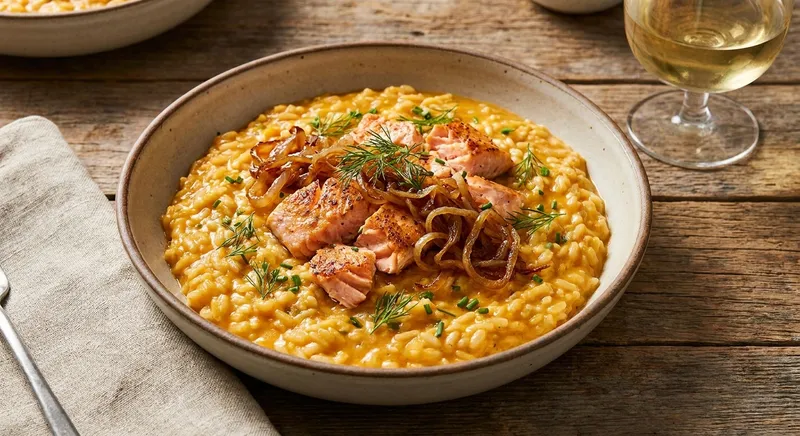
Silky, Parmesan-rich risotto studded with tender flakes of seared salmon and sweet, deeply caramelized onions — a luxurious one-pan-style main that balances richness with bright lemon and herbs. The rice cooks slowly in warm stock so the released starch creates a lusciously creamy texture, while the caramelized onions add a jammy sweetness that makes every bite irresistible.
Bring the stock to a gentle simmer in a medium saucepan and keep it over the lowest heat. Keeping the stock warm helps the rice maintain an even cooking temperature; adding cold stock would lower the pot temperature and interrupt the gentle release of starch that makes risotto creamy.
Caramelize the onions: In a wide sauté pan or shallow Dutch oven, heat 1 tablespoon olive oil over medium-low. Add the thinly sliced onions with a big pinch of salt and a teaspoon of sugar (optional — sugar helps accelerate and deepen caramelization). Cook, stirring occasionally, for 20–30 minutes until deep golden-brown and jammy. Lower, steady heat is essential so the onions slowly break down and develop sweet, nutty flavors rather than burning.
While the onions cook, pat the salmon dry and season both sides with salt and pepper. Heat a separate 1 tablespoon olive oil and 1 tablespoon butter in a nonstick or stainless pan over medium-high heat until shimmering. Sear the salmon 3–4 minutes skin-side down (if skinless, start on the presentation side) until a golden crust forms, then flip and sear 2–3 minutes for medium doneness. Searing builds a flavorful Maillard crust; slightly undercooking the fish by a minute or two prevents it from drying when you finish it in the risotto. Remove from heat and let rest 5 minutes, then flake into large chunks. Reserve a few nice pieces for garnish.
In the pan with the caramelized onions, push the onions to one side and add the remaining 1 tablespoon olive oil and 1 tablespoon butter. Add the minced garlic and cook briefly (30 seconds) until fragrant — garlic browns quickly, so short time on heat prevents bitterness. Add the Arborio rice and stir to coat the grains in fat for 1–2 minutes; this toasting step (called ‘tostatura’) warms and slightly dries the rice and helps the grains hold their shape while releasing starch during cooking.
Pour in the white wine and stir. Allow the wine to reduce almost completely — this deglazes the pan, lifting any caramelized bits into the rice and adding acidity to balance the richness. Reduce until the alcohol aroma fades and there's only a glossy film on the rice.
Begin adding the warm stock one ladleful (about 1/2 cup) at a time, stirring slowly and consistently but not obsessively. Wait until most of the liquid is absorbed before adding the next ladle. This gradual addition promotes steady starch release from the rice and creates the characteristic creamy emulsion of a risotto. Continue this process for 18–22 minutes, tasting the rice from minute 16; you want tender grains with a slight firm center (al dente).
When the rice is just shy of your preferred doneness (a slight bite at the center), stir in the heavy cream, grated Parmesan, lemon juice, and 1 tablespoon of butter off the heat. The cream and butter add silk and gloss while the Parmesan brings umami and salt. Stir gently to incorporate; this is 'mantecatura' — the final emulsion that enriches the risotto.
Gently fold in the flaked salmon and chopped parsley, taking care not to break the salmon into tiny bits. Folding at the end keeps the salmon visually appealing and prevents it from overcooking. Season to taste with salt and plenty of black pepper. If the risotto seems too thick, loosen with a splash of warm stock to reach a creamy, slightly flowing consistency — risotto should spread slowly on the plate rather than be stiff.
Plate immediately in warm bowls, garnish with reserved salmon pieces, extra grated Parmesan, lemon zest, and a drizzle of good olive oil or a few flakes of finishing salt. Serve right away; risotto is best enjoyed hot and creamy.
898
Calories
44g
Protein
68g
Carbs
47g
Fat
2g
Fiber
How did this recipe turn out? Let others know!
to rate this recipe
Silky, Parmesan-rich risotto studded with tender flakes of seared salmon and sweet, deeply caramelized onions — a luxurious one-pan-style main that balances richness with bright lemon and herbs. The rice cooks slowly in warm stock so the released starch creates a lusciously creamy texture, while the caramelized onions add a jammy sweetness that makes every bite irresistible.
Bring the stock to a gentle simmer in a medium saucepan and keep it over the lowest heat. Keeping the stock warm helps the rice maintain an even cooking temperature; adding cold stock would lower the pot temperature and interrupt the gentle release of starch that makes risotto creamy.
Caramelize the onions: In a wide sauté pan or shallow Dutch oven, heat 1 tablespoon olive oil over medium-low. Add the thinly sliced onions with a big pinch of salt and a teaspoon of sugar (optional — sugar helps accelerate and deepen caramelization). Cook, stirring occasionally, for 20–30 minutes until deep golden-brown and jammy. Lower, steady heat is essential so the onions slowly break down and develop sweet, nutty flavors rather than burning.
While the onions cook, pat the salmon dry and season both sides with salt and pepper. Heat a separate 1 tablespoon olive oil and 1 tablespoon butter in a nonstick or stainless pan over medium-high heat until shimmering. Sear the salmon 3–4 minutes skin-side down (if skinless, start on the presentation side) until a golden crust forms, then flip and sear 2–3 minutes for medium doneness. Searing builds a flavorful Maillard crust; slightly undercooking the fish by a minute or two prevents it from drying when you finish it in the risotto. Remove from heat and let rest 5 minutes, then flake into large chunks. Reserve a few nice pieces for garnish.
In the pan with the caramelized onions, push the onions to one side and add the remaining 1 tablespoon olive oil and 1 tablespoon butter. Add the minced garlic and cook briefly (30 seconds) until fragrant — garlic browns quickly, so short time on heat prevents bitterness. Add the Arborio rice and stir to coat the grains in fat for 1–2 minutes; this toasting step (called ‘tostatura’) warms and slightly dries the rice and helps the grains hold their shape while releasing starch during cooking.
Pour in the white wine and stir. Allow the wine to reduce almost completely — this deglazes the pan, lifting any caramelized bits into the rice and adding acidity to balance the richness. Reduce until the alcohol aroma fades and there's only a glossy film on the rice.
Begin adding the warm stock one ladleful (about 1/2 cup) at a time, stirring slowly and consistently but not obsessively. Wait until most of the liquid is absorbed before adding the next ladle. This gradual addition promotes steady starch release from the rice and creates the characteristic creamy emulsion of a risotto. Continue this process for 18–22 minutes, tasting the rice from minute 16; you want tender grains with a slight firm center (al dente).
When the rice is just shy of your preferred doneness (a slight bite at the center), stir in the heavy cream, grated Parmesan, lemon juice, and 1 tablespoon of butter off the heat. The cream and butter add silk and gloss while the Parmesan brings umami and salt. Stir gently to incorporate; this is 'mantecatura' — the final emulsion that enriches the risotto.
Gently fold in the flaked salmon and chopped parsley, taking care not to break the salmon into tiny bits. Folding at the end keeps the salmon visually appealing and prevents it from overcooking. Season to taste with salt and plenty of black pepper. If the risotto seems too thick, loosen with a splash of warm stock to reach a creamy, slightly flowing consistency — risotto should spread slowly on the plate rather than be stiff.
Plate immediately in warm bowls, garnish with reserved salmon pieces, extra grated Parmesan, lemon zest, and a drizzle of good olive oil or a few flakes of finishing salt. Serve right away; risotto is best enjoyed hot and creamy.
898
Calories
44g
Protein
68g
Carbs
47g
Fat
2g
Fiber
Your Rating:
