By abbey f
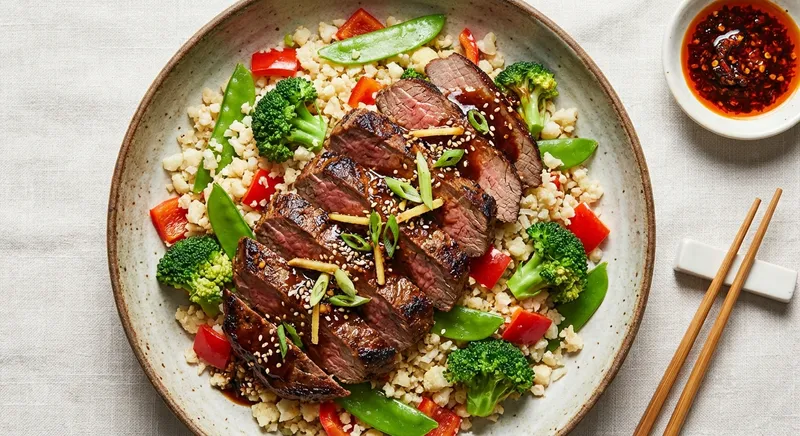
A glossy, high‑heat flank steak stir‑fry that marries caramelized beef with bright broccoli and crisp red pepper, served over fragrant cauliflower "fried rice". Coconut aminos and toasted sesame oil lend savory‑sweet umami while ginger and garlic cut through the richness — a fast, restaurant‑quality Paleo dinner with wok‑charred texture and fresh herb brightness.
Score and marinate the beef: Pat the thinly sliced flank steak dry with paper towels (dry surface = better sear). In a bowl toss the beef with 1 tablespoon coconut aminos, 1/4 teaspoon black pepper and 1/2 teaspoon grated ginger and 1 clove minced garlic. Let sit 10–15 minutes while you prep the veg. Why: the short marinade seasons the surface and the coconut aminos begin to tenderize and add umami without overpowering the quick sear.
Prep your mise en place: Trim and cut broccoli into even florets; thinly slice the red pepper; mince remaining garlic and grate remaining ginger; chop green onions and cilantro; if your cauliflower isn't already riced, pulse florets in a food processor to rice size (4 cups ~ 400–430 g). Why: Stir‑fries move quickly — having everything at hand keeps the vegetables crisp and avoids overcooking.
Make the sauce and optional slurry: In a small bowl combine the remaining 1 tablespoon coconut aminos, 1/2 tablespoon sesame oil (reserve the rest for finishing), and if you like a glossy coating mix 1 teaspoon arrowroot with 1 tablespoon cold water to make a slurry. Why: Coconut aminos provides the backbone of the sauce; arrowroot slurry will thicken rapidly when hit with heat giving a restaurant‑style glossy finish.
Cook the cauliflower rice: Heat a large nonstick skillet or a 12" wok over medium‑high heat and add 1 teaspoon avocado oil. When hot, add the riced cauliflower, season lightly with salt and cook, stirring, 4–6 minutes until tender but with some bite and just starting to color. Toward the end, stir in a pinch of salt, 1/2 teaspoon sesame oil (if using) and half the chopped green onions. Transfer the cauliflower rice to a warm bowl and keep covered. Why: Cooking cauliflower rice separately ensures it absorbs seasoning and stays fluffy rather than steaming soggy under the stir‑fry.
Heat the wok and get your pan screaming hot: Wipe out the skillet, return to high heat until very hot (a drop of water should sizzle and evaporate). Add 1 tablespoon avocado oil and swirl. Why: High heat is essential for quick caramelization (Maillard reaction) — it creates a savory crust and the wok char that lifts the flavor.
Sear the steak in a single layer: Add half the steak in a single layer and let it sit without moving for 45–60 seconds to develop color, then toss/push and sear another 30–45 seconds until browned but still medium‑rare in the center (it will finish cooking later). Remove to a plate and repeat with remaining steak. Why: Searing in batches avoids overcrowding, which causes steaming instead of browning. Quick cooking preserves tenderness for thin flank slices.
Stir‑fry the vegetables: Add the remaining 1 tablespoon avocado oil to the hot wok. Add broccoli florets and a pinch of salt, stir constantly for 2 minutes. Push broccoli to the sides, add red pepper slices and stir 1–2 minutes until bright and just tender. Add the remaining garlic and ginger, stirring 30–45 seconds to bloom the aromatics — don’t let them burn. Why: Staggering the veg keeps textures distinct: broccoli needs a little more time while pepper benefits from a short blast of heat.
Return beef and add sauce: Return the seared steak to the wok and pour in the coconut aminos/sesame sauce. If using arrowroot slurry, stir the slurry again and drizzle it in now. Toss everything together for 30–60 seconds until the sauce thickens and coats the beef and vegetables. Taste and adjust with a tiny pinch of salt or extra coconut aminos if needed. Why: Adding sauce at the end keeps vegetables crisp and lets the sauce cling to the charred surfaces for concentrated flavor.
Finish and rest briefly: Turn off the heat and drizzle the reserved small amount of sesame oil for fragrance, squeeze half a lime over if using, and stir in half the cilantro. Transfer the stir‑fry over the warm cauliflower rice or serve on the side. Why: Adding aromatic fats and citrus off the heat preserves their bright flavors and makes the dish smell restaurant‑fresh.
Plate and garnish: Divide the cauliflower rice among 4 plates, top with the beef and broccoli stir‑fry, and finish with the remaining green onions and cilantro. Serve immediately. Why: A hot plate keeps the textures crisp; fresh herbs add contrast and visual brightness.
383
Calories
30g
Protein
16g
Carbs
22g
Fat
5g
Fiber
How did this recipe turn out? Let others know!
to rate this recipe
By abbey f
A glossy, high‑heat flank steak stir‑fry that marries caramelized beef with bright broccoli and crisp red pepper, served over fragrant cauliflower "fried rice". Coconut aminos and toasted sesame oil lend savory‑sweet umami while ginger and garlic cut through the richness — a fast, restaurant‑quality Paleo dinner with wok‑charred texture and fresh herb brightness.
Score and marinate the beef: Pat the thinly sliced flank steak dry with paper towels (dry surface = better sear). In a bowl toss the beef with 1 tablespoon coconut aminos, 1/4 teaspoon black pepper and 1/2 teaspoon grated ginger and 1 clove minced garlic. Let sit 10–15 minutes while you prep the veg. Why: the short marinade seasons the surface and the coconut aminos begin to tenderize and add umami without overpowering the quick sear.
Prep your mise en place: Trim and cut broccoli into even florets; thinly slice the red pepper; mince remaining garlic and grate remaining ginger; chop green onions and cilantro; if your cauliflower isn't already riced, pulse florets in a food processor to rice size (4 cups ~ 400–430 g). Why: Stir‑fries move quickly — having everything at hand keeps the vegetables crisp and avoids overcooking.
Make the sauce and optional slurry: In a small bowl combine the remaining 1 tablespoon coconut aminos, 1/2 tablespoon sesame oil (reserve the rest for finishing), and if you like a glossy coating mix 1 teaspoon arrowroot with 1 tablespoon cold water to make a slurry. Why: Coconut aminos provides the backbone of the sauce; arrowroot slurry will thicken rapidly when hit with heat giving a restaurant‑style glossy finish.
Cook the cauliflower rice: Heat a large nonstick skillet or a 12" wok over medium‑high heat and add 1 teaspoon avocado oil. When hot, add the riced cauliflower, season lightly with salt and cook, stirring, 4–6 minutes until tender but with some bite and just starting to color. Toward the end, stir in a pinch of salt, 1/2 teaspoon sesame oil (if using) and half the chopped green onions. Transfer the cauliflower rice to a warm bowl and keep covered. Why: Cooking cauliflower rice separately ensures it absorbs seasoning and stays fluffy rather than steaming soggy under the stir‑fry.
Heat the wok and get your pan screaming hot: Wipe out the skillet, return to high heat until very hot (a drop of water should sizzle and evaporate). Add 1 tablespoon avocado oil and swirl. Why: High heat is essential for quick caramelization (Maillard reaction) — it creates a savory crust and the wok char that lifts the flavor.
Sear the steak in a single layer: Add half the steak in a single layer and let it sit without moving for 45–60 seconds to develop color, then toss/push and sear another 30–45 seconds until browned but still medium‑rare in the center (it will finish cooking later). Remove to a plate and repeat with remaining steak. Why: Searing in batches avoids overcrowding, which causes steaming instead of browning. Quick cooking preserves tenderness for thin flank slices.
Stir‑fry the vegetables: Add the remaining 1 tablespoon avocado oil to the hot wok. Add broccoli florets and a pinch of salt, stir constantly for 2 minutes. Push broccoli to the sides, add red pepper slices and stir 1–2 minutes until bright and just tender. Add the remaining garlic and ginger, stirring 30–45 seconds to bloom the aromatics — don’t let them burn. Why: Staggering the veg keeps textures distinct: broccoli needs a little more time while pepper benefits from a short blast of heat.
Return beef and add sauce: Return the seared steak to the wok and pour in the coconut aminos/sesame sauce. If using arrowroot slurry, stir the slurry again and drizzle it in now. Toss everything together for 30–60 seconds until the sauce thickens and coats the beef and vegetables. Taste and adjust with a tiny pinch of salt or extra coconut aminos if needed. Why: Adding sauce at the end keeps vegetables crisp and lets the sauce cling to the charred surfaces for concentrated flavor.
Finish and rest briefly: Turn off the heat and drizzle the reserved small amount of sesame oil for fragrance, squeeze half a lime over if using, and stir in half the cilantro. Transfer the stir‑fry over the warm cauliflower rice or serve on the side. Why: Adding aromatic fats and citrus off the heat preserves their bright flavors and makes the dish smell restaurant‑fresh.
Plate and garnish: Divide the cauliflower rice among 4 plates, top with the beef and broccoli stir‑fry, and finish with the remaining green onions and cilantro. Serve immediately. Why: A hot plate keeps the textures crisp; fresh herbs add contrast and visual brightness.
383
Calories
30g
Protein
16g
Carbs
22g
Fat
5g
Fiber
Your Rating:
