By emensah m
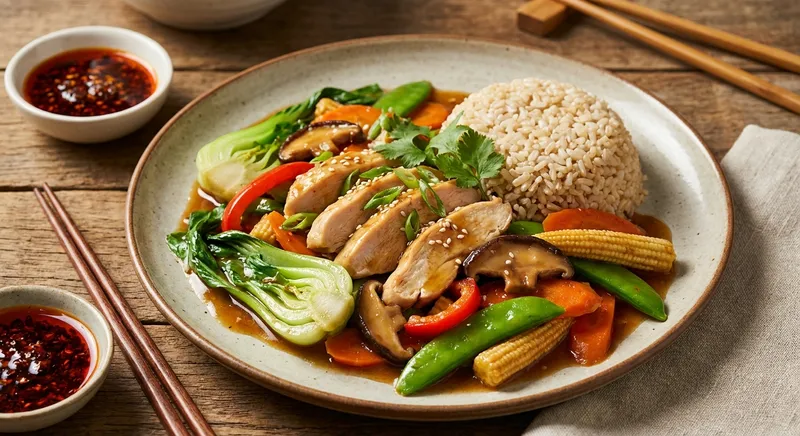
A vibrant, restaurant-quality stir-fry: tender, thin-sliced chicken tossed with crisp-tender broccoli, carrots, red bell pepper and snap peas in a glossy ginger-garlic soy-sesame sauce, served over nutty brown rice. Bright aromatics and a quick, high-heat technique give pronounced wok-char and a satisfying contrast of textures—comforting, healthy, and ready on a weeknight.
Start the brown rice first (why: brown rice takes the longest; starting it early ensures everything finishes together). Rinse 1.5 cups brown rice under cold water until water runs mostly clear to remove excess starch. Combine rice with 3 cups water and a pinch of salt in a medium saucepan; bring to a boil uncovered, then reduce to a low simmer, cover, and cook 40–45 minutes until tender. Remove from heat and let sit, covered, 10 minutes before fluffing with a fork.
Slice and season the chicken (why: thin, even slices cook instantly and stay tender). Pat 1.25 lb chicken breasts dry and slice across the grain into 1/4-inch slices. In a medium bowl, toss the chicken with 1 tbsp low-sodium soy sauce and 1 tbsp cornstarch (this light 'velveting' coating seals moisture and gives a silky texture). Let it rest while you prep vegetables.
Prep the vegetables (why: stir-fries cook very quickly, so mise en place keeps everything moving). Trim broccoli into bite-size florets (≈4 cups), peel and slice 2 medium carrots on the bias, core and slice 1 large red bell pepper into 1/2-inch strips, and trim 1 cup snap peas. Mince 4 cloves garlic and 2 tbsp fresh ginger. Arrange everything within reach.
Make the sauce mix (why: combining sauce ingredients ahead means you can finish the dish quickly and control sauce thickness). In a small bowl whisk together remaining 2 tbsp soy sauce, 1 tbsp sesame oil, 1 tbsp water, and a pinch of freshly ground black pepper. Keep near the stove. In a separate small cup mix 1 tbsp cornstarch with 2 tbsp cold water to make a slurry—this will thicken the sauce at the end.
Heat the pan and sear the chicken (why: very high heat gives a quick golden edge without overcooking the inside). Heat a large wok or 12-inch heavy skillet over high heat until shimmering. Add 1 tbsp neutral oil and swirl. Add the marinated chicken in a single layer (don’t overcrowd—work in 2 batches if needed). Let cook undisturbed 60–90 seconds so the surface browns, then stir-fry another 30–60 seconds until just cooked through. Remove chicken to a plate (it will finish cooking in the sauce).
Blanch the broccoli briefly (why: blanching jump-starts cooking so the broccoli becomes bright green and tender-crisp, not mushy). Add the broccoli to the wok with 2–3 tbsp water, cover or tilt a lid for 50–60 seconds to steam, then uncover and remove any remaining water. Transfer broccoli to the plate with chicken if you want to keep very crisp vegetables.
Stir-fry the remaining vegetables (why: layering vegetables by density prevents overcooking delicate pieces). Add the remaining 1 tbsp neutral oil, then add the carrots and cook 1–2 minutes until they begin to soften. Add the red bell pepper and snap peas and stir-fry 1–2 minutes until bright and crisp-tender. Add the minced garlic and ginger in the last 30 seconds—sautéing them briefly releases aromatic oils but prevents burning and bitterness.
Combine everything and finish the sauce (why: returning chicken and broccoli to the wok lets flavors meld and the cornstarch slurry create a glossy coating). Return the chicken and broccoli to the wok, pour the soy-sesame sauce, then give the cornstarch slurry a quick stir and add it to the pan. Stir constantly for 45–60 seconds until the sauce bubbles and thickens, coating the chicken and vegetables.
Adjust seasoning and finish with sesame oil (why: final adjustments ensure balance; sesame oil is aromatic and should be added at the end to preserve its fragrance). Taste and add up to 1/2 tsp kosher salt or additional soy sauce if needed. Remove from heat and drizzle the remaining 1 tsp (or so) of sesame oil if desired. Toss to combine.
Serve immediately over the warm brown rice (why: stir-fry is best hot and fresh—serve at once to preserve texture). Divide the fluffed brown rice among 4 bowls or plates, spoon the chicken and vegetable stir-fry over top, and garnish with sliced scallions and a sprinkle of toasted sesame seeds, if using.
Clean-as-you-go tip (why: the wok heats intensely and cools quickly; washing prep bowls while rice cooks speeds cleanup and keeps the workspace clear).
670
Calories
54g
Protein
72g
Carbs
18g
Fat
7g
Fiber
How did this recipe turn out? Let others know!
to rate this recipe
By emensah m
A vibrant, restaurant-quality stir-fry: tender, thin-sliced chicken tossed with crisp-tender broccoli, carrots, red bell pepper and snap peas in a glossy ginger-garlic soy-sesame sauce, served over nutty brown rice. Bright aromatics and a quick, high-heat technique give pronounced wok-char and a satisfying contrast of textures—comforting, healthy, and ready on a weeknight.
Start the brown rice first (why: brown rice takes the longest; starting it early ensures everything finishes together). Rinse 1.5 cups brown rice under cold water until water runs mostly clear to remove excess starch. Combine rice with 3 cups water and a pinch of salt in a medium saucepan; bring to a boil uncovered, then reduce to a low simmer, cover, and cook 40–45 minutes until tender. Remove from heat and let sit, covered, 10 minutes before fluffing with a fork.
Slice and season the chicken (why: thin, even slices cook instantly and stay tender). Pat 1.25 lb chicken breasts dry and slice across the grain into 1/4-inch slices. In a medium bowl, toss the chicken with 1 tbsp low-sodium soy sauce and 1 tbsp cornstarch (this light 'velveting' coating seals moisture and gives a silky texture). Let it rest while you prep vegetables.
Prep the vegetables (why: stir-fries cook very quickly, so mise en place keeps everything moving). Trim broccoli into bite-size florets (≈4 cups), peel and slice 2 medium carrots on the bias, core and slice 1 large red bell pepper into 1/2-inch strips, and trim 1 cup snap peas. Mince 4 cloves garlic and 2 tbsp fresh ginger. Arrange everything within reach.
Make the sauce mix (why: combining sauce ingredients ahead means you can finish the dish quickly and control sauce thickness). In a small bowl whisk together remaining 2 tbsp soy sauce, 1 tbsp sesame oil, 1 tbsp water, and a pinch of freshly ground black pepper. Keep near the stove. In a separate small cup mix 1 tbsp cornstarch with 2 tbsp cold water to make a slurry—this will thicken the sauce at the end.
Heat the pan and sear the chicken (why: very high heat gives a quick golden edge without overcooking the inside). Heat a large wok or 12-inch heavy skillet over high heat until shimmering. Add 1 tbsp neutral oil and swirl. Add the marinated chicken in a single layer (don’t overcrowd—work in 2 batches if needed). Let cook undisturbed 60–90 seconds so the surface browns, then stir-fry another 30–60 seconds until just cooked through. Remove chicken to a plate (it will finish cooking in the sauce).
Blanch the broccoli briefly (why: blanching jump-starts cooking so the broccoli becomes bright green and tender-crisp, not mushy). Add the broccoli to the wok with 2–3 tbsp water, cover or tilt a lid for 50–60 seconds to steam, then uncover and remove any remaining water. Transfer broccoli to the plate with chicken if you want to keep very crisp vegetables.
Stir-fry the remaining vegetables (why: layering vegetables by density prevents overcooking delicate pieces). Add the remaining 1 tbsp neutral oil, then add the carrots and cook 1–2 minutes until they begin to soften. Add the red bell pepper and snap peas and stir-fry 1–2 minutes until bright and crisp-tender. Add the minced garlic and ginger in the last 30 seconds—sautéing them briefly releases aromatic oils but prevents burning and bitterness.
Combine everything and finish the sauce (why: returning chicken and broccoli to the wok lets flavors meld and the cornstarch slurry create a glossy coating). Return the chicken and broccoli to the wok, pour the soy-sesame sauce, then give the cornstarch slurry a quick stir and add it to the pan. Stir constantly for 45–60 seconds until the sauce bubbles and thickens, coating the chicken and vegetables.
Adjust seasoning and finish with sesame oil (why: final adjustments ensure balance; sesame oil is aromatic and should be added at the end to preserve its fragrance). Taste and add up to 1/2 tsp kosher salt or additional soy sauce if needed. Remove from heat and drizzle the remaining 1 tsp (or so) of sesame oil if desired. Toss to combine.
Serve immediately over the warm brown rice (why: stir-fry is best hot and fresh—serve at once to preserve texture). Divide the fluffed brown rice among 4 bowls or plates, spoon the chicken and vegetable stir-fry over top, and garnish with sliced scallions and a sprinkle of toasted sesame seeds, if using.
Clean-as-you-go tip (why: the wok heats intensely and cools quickly; washing prep bowls while rice cooks speeds cleanup and keeps the workspace clear).
670
Calories
54g
Protein
72g
Carbs
18g
Fat
7g
Fiber
Your Rating:
