By emensah m
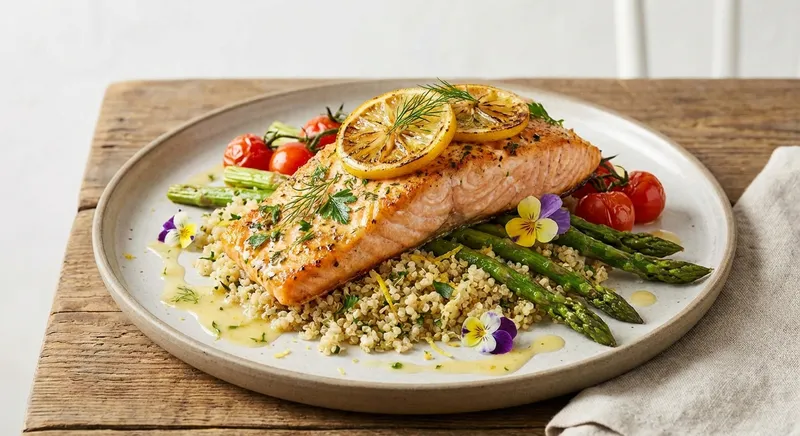
A bright, elegant weeknight plate: crisp-roasted asparagus, flaky oven-baked salmon, and fluffy quinoa tossed in a lemon-garlic herb dressing. The dish balances rich, buttery salmon with the citrus lift of lemon, fresh herb brightness, and the satisfying, nutty texture of quinoa — a restaurant-quality meal that’s fast enough for any evening.
Preheat your oven to 425°F (220°C). A hot oven gives the asparagus a quick caramelizing blast for color and crisp-tender texture and helps the salmon develop a lightly roasted exterior without drying through.
Pat the salmon dry with paper towels and let it sit at room temperature for 5–10 minutes while you prep other ingredients. Drying the fish removes surface moisture so the exterior browns cleanly; bringing it closer to room temperature promotes even cooking.
Trim the woody ends from the asparagus (bend each spear near the base and it will naturally snap where the tender part begins). Toss the asparagus in a small bowl with 1 tsp of the olive oil, 1/4 tsp kosher salt, and a pinch of the black pepper to season evenly. Coating the spears lightly in oil encourages even roasting and browning.
Make the lemon‑garlic herb dressing for the quinoa: in a small bowl whisk together the remaining olive oil (about 2 tsp), the juice and zest of 1/2 lemon, the minced garlic, the chopped dill or parsley, 1/4 tsp kosher salt, and 1/8 tsp black pepper. Whisking the oil and lemon together emulsifies the dressing so it clings to the quinoa for even flavor with every bite.
Warm the cooked quinoa briefly: place the 3/4 cup cooked quinoa in a microwave-safe bowl and heat for 20–30 seconds, or warm gently in a small saucepan over low heat with a splash of water, covered, just until steam rises. Warm quinoa better absorbs the lemon dressing and tastes fresher than cold, straight-from-fridge quinoa.
Toss the warm quinoa with about three-quarters of the lemon-herb dressing (reserve a little for finishing). Taste and adjust seasoning—warm quinoa will assimilate flavors, so adjust salt or lemon now if needed. The reserved dressing will be used to brush the salmon and finish the plate for brightness.
Arrange the asparagus in a single layer on a rimmed baking sheet. Place the salmon fillet skin-side down (if it has skin) on the same sheet with a little space between the fish and the spears. Brushing the salmon with the reserved dressing (or a quick brush of the olive oil) adds flavor and helps the surface brown.
Roast everything on the center rack of the oven: for a 6 oz salmon fillet about 3/4–1 inch thick, roast 10–12 minutes for medium (125–130°F/52–54°C) or 12–14 minutes for fully cooked (145°F/63°C). The asparagus should take 8–12 minutes depending on thickness—you want bright green spears with lightly blistered tips. Cooking at high heat sears the exterior quickly, preserving moisture inside the salmon while caramelizing the asparagus.
Remove the tray from the oven and let the salmon rest 2–3 minutes — this short rest lets juices redistribute and the carryover heat finishes gentle cooking. If you prefer a little extra crust on the salmon, use the oven’s broiler for 45–60 seconds at the end, watching carefully to prevent burning.
To plate: mound the lemon‑herb quinoa in the center of a warm plate, place the salmon on top or beside it, and fan the roasted asparagus alongside. Finish with a drizzle of any remaining dressing or a squeeze of fresh lemon, a scattering of fresh dill or parsley, and a light grinding of black pepper. The contrast of textures — fluffy quinoa, flaky salmon and crisp-tender asparagus — makes each forkful interesting.
Optional finishing touch: zest a little extra lemon over the salmon and asparagus for a bright pop; or melt a small pat of butter on the hot fillet (about 1/2 tsp) for extra gloss and richness.
675
Calories
44g
Protein
37g
Carbs
39g
Fat
7g
Fiber
How did this recipe turn out? Let others know!
to rate this recipe
By emensah m
A bright, elegant weeknight plate: crisp-roasted asparagus, flaky oven-baked salmon, and fluffy quinoa tossed in a lemon-garlic herb dressing. The dish balances rich, buttery salmon with the citrus lift of lemon, fresh herb brightness, and the satisfying, nutty texture of quinoa — a restaurant-quality meal that’s fast enough for any evening.
Preheat your oven to 425°F (220°C). A hot oven gives the asparagus a quick caramelizing blast for color and crisp-tender texture and helps the salmon develop a lightly roasted exterior without drying through.
Pat the salmon dry with paper towels and let it sit at room temperature for 5–10 minutes while you prep other ingredients. Drying the fish removes surface moisture so the exterior browns cleanly; bringing it closer to room temperature promotes even cooking.
Trim the woody ends from the asparagus (bend each spear near the base and it will naturally snap where the tender part begins). Toss the asparagus in a small bowl with 1 tsp of the olive oil, 1/4 tsp kosher salt, and a pinch of the black pepper to season evenly. Coating the spears lightly in oil encourages even roasting and browning.
Make the lemon‑garlic herb dressing for the quinoa: in a small bowl whisk together the remaining olive oil (about 2 tsp), the juice and zest of 1/2 lemon, the minced garlic, the chopped dill or parsley, 1/4 tsp kosher salt, and 1/8 tsp black pepper. Whisking the oil and lemon together emulsifies the dressing so it clings to the quinoa for even flavor with every bite.
Warm the cooked quinoa briefly: place the 3/4 cup cooked quinoa in a microwave-safe bowl and heat for 20–30 seconds, or warm gently in a small saucepan over low heat with a splash of water, covered, just until steam rises. Warm quinoa better absorbs the lemon dressing and tastes fresher than cold, straight-from-fridge quinoa.
Toss the warm quinoa with about three-quarters of the lemon-herb dressing (reserve a little for finishing). Taste and adjust seasoning—warm quinoa will assimilate flavors, so adjust salt or lemon now if needed. The reserved dressing will be used to brush the salmon and finish the plate for brightness.
Arrange the asparagus in a single layer on a rimmed baking sheet. Place the salmon fillet skin-side down (if it has skin) on the same sheet with a little space between the fish and the spears. Brushing the salmon with the reserved dressing (or a quick brush of the olive oil) adds flavor and helps the surface brown.
Roast everything on the center rack of the oven: for a 6 oz salmon fillet about 3/4–1 inch thick, roast 10–12 minutes for medium (125–130°F/52–54°C) or 12–14 minutes for fully cooked (145°F/63°C). The asparagus should take 8–12 minutes depending on thickness—you want bright green spears with lightly blistered tips. Cooking at high heat sears the exterior quickly, preserving moisture inside the salmon while caramelizing the asparagus.
Remove the tray from the oven and let the salmon rest 2–3 minutes — this short rest lets juices redistribute and the carryover heat finishes gentle cooking. If you prefer a little extra crust on the salmon, use the oven’s broiler for 45–60 seconds at the end, watching carefully to prevent burning.
To plate: mound the lemon‑herb quinoa in the center of a warm plate, place the salmon on top or beside it, and fan the roasted asparagus alongside. Finish with a drizzle of any remaining dressing or a squeeze of fresh lemon, a scattering of fresh dill or parsley, and a light grinding of black pepper. The contrast of textures — fluffy quinoa, flaky salmon and crisp-tender asparagus — makes each forkful interesting.
Optional finishing touch: zest a little extra lemon over the salmon and asparagus for a bright pop; or melt a small pat of butter on the hot fillet (about 1/2 tsp) for extra gloss and richness.
675
Calories
44g
Protein
37g
Carbs
39g
Fat
7g
Fiber
Your Rating:
