By Barry Hamilton
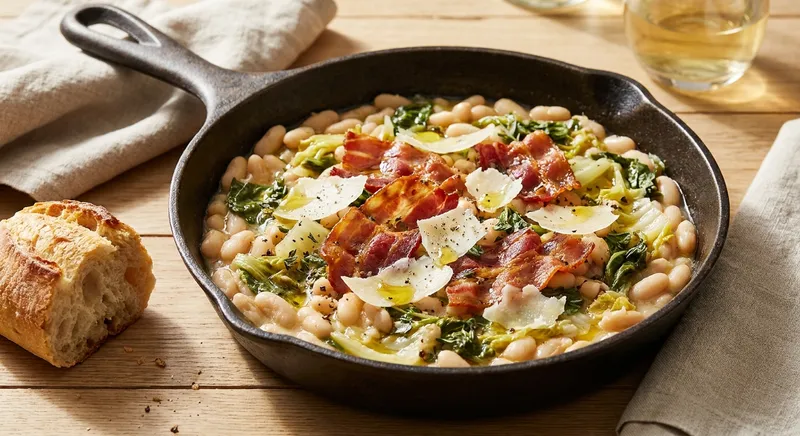
A rustic, Tuscan-inspired skillet of creamy, braised cannellini beans swaddled with tender escarole and crowned with crackly pancetta and nutty Parmesan. The beans are lightly smashed to create a silky sauce while the rendered pancetta fat and a splash of vegetable stock build savory depth — brightened at the end with a shower of cheese and red pepper for contrast.
Prep everything first: drain and rinse the canned cannellini beans, roughly chop the escarole (remove any very thick stems if using Swiss chard), mince the shallot and garlic, and grate the Parmesan. Mise en place speeds the cooking and ensures ingredients go into the pan at the right time to preserve texture and flavor.
Crisp the pancetta in a cold skillet: place the diced pancetta in a dry 10–12-inch (25–30 cm) cast-iron or heavy skillet and set over medium heat. Start in a cold pan so the fat renders slowly and the cubes crisp evenly; cook, stirring occasionally, until deeply golden and crackly, about 6–8 minutes. Use a slotted spoon to transfer the pancetta to a paper-towel-lined plate, leaving the rendered fat in the pan.
Warm the olive oil with the pancetta fat and sweat the shallot: add 1 tablespoon olive oil to the hot skillet with the reserved fat and lower the heat to medium-low. Add the minced shallot and a pinch of salt and cook for 2–3 minutes until soft and translucent. Sweating the shallot rather than browning keeps a sweet, gentle onion flavor that forms a good aromatic base for the beans.
Bloom the garlic and red pepper flakes: add the minced garlic and a pinch of red pepper flakes and cook for 30–45 seconds, stirring constantly, just until fragrant. Garlic cooks quickly; this brief cook time releases its aroma without turning bitter.
Add the escarole (or chard) and wilt: add the chopped greens and toss to coat in the aromatic oil. Cook 1–2 minutes until the leaves just begin to wilt. You want the greens tender but still bright — overcooking will make them limp and dull the color.
Introduce the beans and stock and build the braise: add the drained cannellini beans and pour in 100 ml low-sodium vegetable stock. Stir to combine, scraping any browned bits from the pan to incorporate that flavor. The stock gives you a loose braising liquid that will soften the beans and allow flavors to meld without becoming soupy.
Simmer gently and reduce: bring the pan to a low simmer and cook, uncovered, for 6–8 minutes. During this time the beans will heat through, the liquid will reduce slightly, and flavors will concentrate. Keep the heat low to avoid breaking apart all the beans — you want some whole beans for texture.
Muddle some beans to thicken the sauce: with the back of a spoon or a potato masher, press about one-third of the beans against the side of the pan to release starch and create a creamy body for the dish. This is the key technique that turns the mixture into a silky, saucy bed for the greens and pancetta without adding cream or extra fat.
Finish with Parmesan and seasoning: stir in 15 g of the grated Parmesan (reserve the rest for serving) and taste. Add salt sparingly — the pancetta and Parmesan are salty — and fresh ground black pepper to taste. The cheese melts into the beans to add umami, fat and a silky sheen.
Plate and garnish: divide the braised beans and greens between two shallow bowls. Scatter the crisped pancetta on top, sprinkle the remaining 5 g Parmesan, and finish with an extra pinch of red pepper flakes and a drizzle of good olive oil if desired. Serve hot so you enjoy the contrast between crunchy pancetta and tender beans.
Optional resting note: if you make this ahead, reheat gently with a splash more stock or water — the beans will absorb liquid as they sit. Re-crisp the pancetta briefly in a hot pan before serving to restore texture.
363
Calories
17g
Protein
28g
Carbs
20g
Fat
8g
Fiber
How did this recipe turn out? Let others know!
to rate this recipe
By Barry Hamilton
A rustic, Tuscan-inspired skillet of creamy, braised cannellini beans swaddled with tender escarole and crowned with crackly pancetta and nutty Parmesan. The beans are lightly smashed to create a silky sauce while the rendered pancetta fat and a splash of vegetable stock build savory depth — brightened at the end with a shower of cheese and red pepper for contrast.
Prep everything first: drain and rinse the canned cannellini beans, roughly chop the escarole (remove any very thick stems if using Swiss chard), mince the shallot and garlic, and grate the Parmesan. Mise en place speeds the cooking and ensures ingredients go into the pan at the right time to preserve texture and flavor.
Crisp the pancetta in a cold skillet: place the diced pancetta in a dry 10–12-inch (25–30 cm) cast-iron or heavy skillet and set over medium heat. Start in a cold pan so the fat renders slowly and the cubes crisp evenly; cook, stirring occasionally, until deeply golden and crackly, about 6–8 minutes. Use a slotted spoon to transfer the pancetta to a paper-towel-lined plate, leaving the rendered fat in the pan.
Warm the olive oil with the pancetta fat and sweat the shallot: add 1 tablespoon olive oil to the hot skillet with the reserved fat and lower the heat to medium-low. Add the minced shallot and a pinch of salt and cook for 2–3 minutes until soft and translucent. Sweating the shallot rather than browning keeps a sweet, gentle onion flavor that forms a good aromatic base for the beans.
Bloom the garlic and red pepper flakes: add the minced garlic and a pinch of red pepper flakes and cook for 30–45 seconds, stirring constantly, just until fragrant. Garlic cooks quickly; this brief cook time releases its aroma without turning bitter.
Add the escarole (or chard) and wilt: add the chopped greens and toss to coat in the aromatic oil. Cook 1–2 minutes until the leaves just begin to wilt. You want the greens tender but still bright — overcooking will make them limp and dull the color.
Introduce the beans and stock and build the braise: add the drained cannellini beans and pour in 100 ml low-sodium vegetable stock. Stir to combine, scraping any browned bits from the pan to incorporate that flavor. The stock gives you a loose braising liquid that will soften the beans and allow flavors to meld without becoming soupy.
Simmer gently and reduce: bring the pan to a low simmer and cook, uncovered, for 6–8 minutes. During this time the beans will heat through, the liquid will reduce slightly, and flavors will concentrate. Keep the heat low to avoid breaking apart all the beans — you want some whole beans for texture.
Muddle some beans to thicken the sauce: with the back of a spoon or a potato masher, press about one-third of the beans against the side of the pan to release starch and create a creamy body for the dish. This is the key technique that turns the mixture into a silky, saucy bed for the greens and pancetta without adding cream or extra fat.
Finish with Parmesan and seasoning: stir in 15 g of the grated Parmesan (reserve the rest for serving) and taste. Add salt sparingly — the pancetta and Parmesan are salty — and fresh ground black pepper to taste. The cheese melts into the beans to add umami, fat and a silky sheen.
Plate and garnish: divide the braised beans and greens between two shallow bowls. Scatter the crisped pancetta on top, sprinkle the remaining 5 g Parmesan, and finish with an extra pinch of red pepper flakes and a drizzle of good olive oil if desired. Serve hot so you enjoy the contrast between crunchy pancetta and tender beans.
Optional resting note: if you make this ahead, reheat gently with a splash more stock or water — the beans will absorb liquid as they sit. Re-crisp the pancetta briefly in a hot pan before serving to restore texture.
363
Calories
17g
Protein
28g
Carbs
20g
Fat
8g
Fiber
Your Rating:
