By emensah m
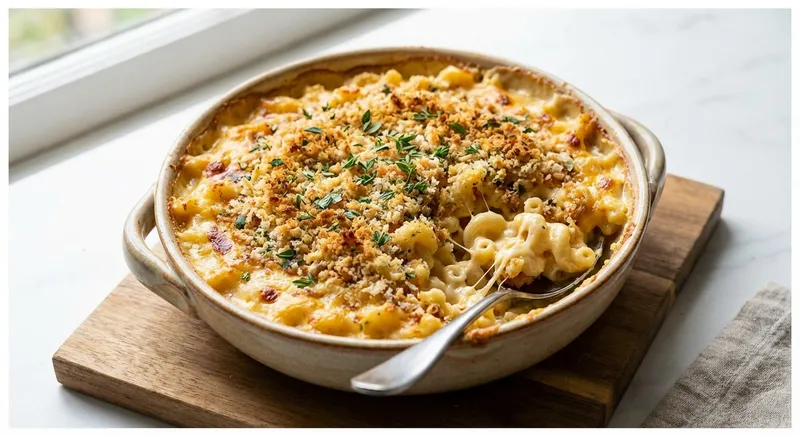
Silky, ultra-creamy macaroni tossed in a tangy, cheesy sauce and finished with a golden, crunchy breadcrumb gratin. The sauce combines a velvety roux-thickened béchamel with sharp cheddar and nutty Parmesan for deep umami, brightened by Dijon and a hint of nutmeg — a restaurant-quality mac that's rich but balanced.
Bring a large pot of water to a rolling boil and salt it generously (about 1 tablespoon salt per 4–5 liters). Add the dry macaroni and cook until just shy of al dente (about 1 minute less than the package recommends). Cooking to slightly under al dente prevents the pasta from becoming mushy when it finishes in the sauce—it will absorb sauce and soften a little during the final simmer.
While the pasta cooks, finely chop the onion and mince the garlic. Reserve 1/2 cup (120 ml) of the hot pasta cooking water before draining; the starchy water will help the sauce cling to the pasta and smooth any thick spots. Drain the pasta and set aside.
In a large, heavy-bottomed skillet or sauté pan over medium heat, melt 2 tablespoons of the butter. Add the chopped onion and a pinch of salt and sweat gently for 5–6 minutes until translucent and sweet but not browned. Sweating at moderate heat softens the onion and releases natural sugars—browning would change the flavor profile and make it more caramelized.
Add the minced garlic and cook for 30–45 seconds until fragrant. Garlic cooks quickly; brief cooking tames raw harshness while preserving aroma—don't let it brown or it will taste bitter.
Sprinkle the flour evenly over the softened onions and garlic and stir to combine, cooking the raw flour taste out for about 1 minute. This creates a light roux which will thicken the sauce and give it body.
Slowly whisk in the warm whole milk and then the heavy cream in a steady stream, starting with a small amount to loosen the roux and then adding the rest. Bring the mixture to a gentle simmer, whisking constantly. Heating the dairy gradually and whisking prevents lumps and yields a silky béchamel base that’s smooth rather than grainy.
Simmer the sauce gently for 4–6 minutes until it thickens enough to coat the back of a spoon. Stir frequently to prevent scorching on the pan bottom. Once thickened, remove the pan from the heat and whisk in the Dijon mustard, nutmeg, and about 3/4 of the Parmesan until melted. Dijon adds a subtle tang that brightens the cheese flavors; nutmeg is traditional in béchamel and adds warmth without perceptible spice.
Add the shredded cheddar a handful at a time, stirring until each addition melts fully before adding more. This controlled method prevents the cheese from seizing into oily clumps and keeps the sauce smooth. Taste and season with salt and plenty of freshly ground black pepper.
Stir the drained macaroni into the cheese sauce. If the sauce feels too thick, add 2–4 tablespoons of the reserved pasta water at a time until you reach a glossy, clingy consistency—starch in the water helps emulsify the sauce and makes it adhere to the pasta.
In a small skillet over medium heat, melt the remaining 1 tablespoon butter. Add the breadcrumbs and toast, stirring, until evenly golden and aromatic (about 3–4 minutes). Toasting breadcrumbs in butter gives them a nutty flavor and crunchy texture that contrasts the creamy pasta.
Transfer the macaroni and cheese to a warm shallow serving dish or individual bowls. Sprinkle the remaining Parmesan over the top, then scatter the toasted breadcrumbs. Finish with a little chopped parsley and a grind of black pepper. If you prefer a deeper crust, briefly broil in an oven-safe dish on high for 1–2 minutes—watch closely so the topping doesn’t burn.
Serve immediately so the contrast between the creamy interior and crunchy topping is at its best. Leftovers can be gently reheated on the stove with a splash of milk to revive creaminess.
735
Calories
25g
Protein
63g
Carbs
42g
Fat
3g
Fiber
How did this recipe turn out? Let others know!
to rate this recipe
By emensah m
Silky, ultra-creamy macaroni tossed in a tangy, cheesy sauce and finished with a golden, crunchy breadcrumb gratin. The sauce combines a velvety roux-thickened béchamel with sharp cheddar and nutty Parmesan for deep umami, brightened by Dijon and a hint of nutmeg — a restaurant-quality mac that's rich but balanced.
Bring a large pot of water to a rolling boil and salt it generously (about 1 tablespoon salt per 4–5 liters). Add the dry macaroni and cook until just shy of al dente (about 1 minute less than the package recommends). Cooking to slightly under al dente prevents the pasta from becoming mushy when it finishes in the sauce—it will absorb sauce and soften a little during the final simmer.
While the pasta cooks, finely chop the onion and mince the garlic. Reserve 1/2 cup (120 ml) of the hot pasta cooking water before draining; the starchy water will help the sauce cling to the pasta and smooth any thick spots. Drain the pasta and set aside.
In a large, heavy-bottomed skillet or sauté pan over medium heat, melt 2 tablespoons of the butter. Add the chopped onion and a pinch of salt and sweat gently for 5–6 minutes until translucent and sweet but not browned. Sweating at moderate heat softens the onion and releases natural sugars—browning would change the flavor profile and make it more caramelized.
Add the minced garlic and cook for 30–45 seconds until fragrant. Garlic cooks quickly; brief cooking tames raw harshness while preserving aroma—don't let it brown or it will taste bitter.
Sprinkle the flour evenly over the softened onions and garlic and stir to combine, cooking the raw flour taste out for about 1 minute. This creates a light roux which will thicken the sauce and give it body.
Slowly whisk in the warm whole milk and then the heavy cream in a steady stream, starting with a small amount to loosen the roux and then adding the rest. Bring the mixture to a gentle simmer, whisking constantly. Heating the dairy gradually and whisking prevents lumps and yields a silky béchamel base that’s smooth rather than grainy.
Simmer the sauce gently for 4–6 minutes until it thickens enough to coat the back of a spoon. Stir frequently to prevent scorching on the pan bottom. Once thickened, remove the pan from the heat and whisk in the Dijon mustard, nutmeg, and about 3/4 of the Parmesan until melted. Dijon adds a subtle tang that brightens the cheese flavors; nutmeg is traditional in béchamel and adds warmth without perceptible spice.
Add the shredded cheddar a handful at a time, stirring until each addition melts fully before adding more. This controlled method prevents the cheese from seizing into oily clumps and keeps the sauce smooth. Taste and season with salt and plenty of freshly ground black pepper.
Stir the drained macaroni into the cheese sauce. If the sauce feels too thick, add 2–4 tablespoons of the reserved pasta water at a time until you reach a glossy, clingy consistency—starch in the water helps emulsify the sauce and makes it adhere to the pasta.
In a small skillet over medium heat, melt the remaining 1 tablespoon butter. Add the breadcrumbs and toast, stirring, until evenly golden and aromatic (about 3–4 minutes). Toasting breadcrumbs in butter gives them a nutty flavor and crunchy texture that contrasts the creamy pasta.
Transfer the macaroni and cheese to a warm shallow serving dish or individual bowls. Sprinkle the remaining Parmesan over the top, then scatter the toasted breadcrumbs. Finish with a little chopped parsley and a grind of black pepper. If you prefer a deeper crust, briefly broil in an oven-safe dish on high for 1–2 minutes—watch closely so the topping doesn’t burn.
Serve immediately so the contrast between the creamy interior and crunchy topping is at its best. Leftovers can be gently reheated on the stove with a splash of milk to revive creaminess.
735
Calories
25g
Protein
63g
Carbs
42g
Fat
3g
Fiber
Your Rating:
