By Mohamed El yakoubi
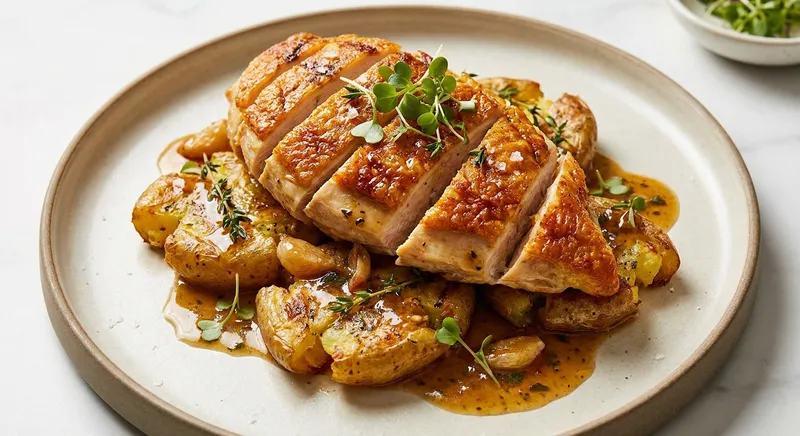
A protein-forward, restaurant-style plate: herbs-and-olive-oil–seared chicken breasts with a deeply savory garlic brown-butter pan jus, served alongside crisp, smashed golden potatoes. Expect a crunchy exterior, tender high-protein chicken, bright roasted garlic notes, and rich, nutty butter sauce — simple ingredients elevated through precise technique.
Bring the chicken and potatoes to room temperature (15–20 minutes). This ensures even cooking: cold chicken hits the pan and can seize, overcooking the exterior before the center reaches the right temperature; room-temperature potatoes will roast more evenly.
Prep the potatoes: place the 800 g Yukon Golds in a medium pot and cover with cold water by 1 inch. Add 1/2 teaspoon kosher salt. Bring to a simmer and cook until just fork-tender, about 12–15 minutes depending on size. Cooking from cold and to fork-tender (not falling apart) ensures the interior is soft enough to smash but still holds shape for maximum surface contact and crispiness when pan-fried.
While potatoes cook, butterfly (or halve horizontally) the chicken breasts if they are uneven in thickness, then pat them dry with paper towels. For extra protein density and even cooking, you can lightly pound thicker breasts to an even 1-inch thickness. Drying the surface removes moisture so the meat can develop a brown crust (Maillard reaction) rather than steam.
Season the chicken evenly with 1 teaspoon kosher salt, 1/2 teaspoon black pepper, and 1 teaspoon dried thyme (or 1 tsp fresh leaves). The salt draws flavors into the meat; seasoning early (but not hours ahead) helps build flavor without drawing out too much moisture.
Prepare the smashed potatoes: when the potatoes are tender, drain and let them steam-dry in the colander 2–3 minutes to remove surface moisture. Transfer to a rimmed baking sheet. Using the bottom of a small bowl or a wide spatula, press each potato flat to about 1/2-inch thickness—this increases the surface area so you get more crisp, golden edges when frying.
Heat a large heavy skillet (cast-iron preferred) over medium-high heat until hot, about 2–3 minutes. Add 2 tablespoons of olive oil and swirl to coat. A hot pan and enough oil are essential to develop a deep brown crust quickly without overcooking the interior.
Fry the smashed potatoes in a single layer (work in two batches if needed) until deeply golden and crisp, about 4–5 minutes per side. Press gently with a spatula halfway through to ensure good contact. Transfer to a paper towel-lined tray and season immediately with a pinch of salt. Crispy edges come from direct contact with the hot pan—smashing exposes more starch to the heat for that irresistible crunch.
Wipe the skillet nearly clean with paper towels and return to medium-high heat. Add the remaining 1 tablespoon olive oil. Add the seasoned chicken breasts and sear without moving for 4–5 minutes until the underside is deeply golden. Don’t crowd the pan—crowding cools the surface and prevents browning. The initial sear locks flavor and creates textures that contrast the tender meat.
Flip the chicken and reduce heat to medium. Add the diced onion and whole garlic cloves to the pan, tucking them beside the chicken. Continue cooking, spooning pan juices over the breasts occasionally, for 4–6 more minutes, until an instant-read thermometer inserted into the thickest part reads 62–64°C (144–147°F). We target 62–64°C because the chicken will rise a few degrees while resting, arriving at a juicy, fully cooked 66–68°C (150–155°F) without drying.
Remove the chicken to a cutting board and tent loosely with foil to rest for 6–8 minutes. Resting lets the proteins relax and reabsorb juices; cutting immediately will cause moisture to run out and produce drier meat.
While the chicken rests, make the garlic brown-butter jus: with the pan still over medium heat, add the 2 tablespoons butter. Cook the butter, swirling frequently, until it foams and turns a light golden-brown with a nutty aroma (about 2–3 minutes). This browning adds complex, toasted flavors that lift the simple pan sauce. Add the cooked onion and garlic you browned earlier back into the pan and stir to combine.
Deglaze the pan briefly by scraping up any brown bits (fond) with a splash of water (about 2 tablespoons; more if needed) — those browned bits are concentrated flavor. Reduce the liquid slightly so the jus is glossy but spoonable; taste and adjust seasoning with remaining 1/4 teaspoon salt and remaining pinch of pepper. Keep the sauce warm but don't boil hard — you want glossy texture, not a reduced gritty glaze.
To serve: slice each rested chicken breast against the grain into 3–4 thick slices. Arrange a bed of smashed potatoes on each plate, fan 1 chicken breast over the potatoes, and spoon warm garlic brown-butter jus over the chicken. Finish with a light dusting of smoked paprika if using — it adds color and a subtle warmth.
Serve immediately so the potatoes remain crisp and the jus is warm. Leftovers will keep in an airtight container for up to 3 days; re-crisp potatoes in a 200°C (400°F) oven for 6–8 minutes and reheat chicken gently covered in a 160°C (325°F) oven to avoid drying.
669
Calories
73g
Protein
38g
Carbs
24g
Fat
5g
Fiber
How did this recipe turn out? Let others know!
to rate this recipe
By Mohamed El yakoubi
A protein-forward, restaurant-style plate: herbs-and-olive-oil–seared chicken breasts with a deeply savory garlic brown-butter pan jus, served alongside crisp, smashed golden potatoes. Expect a crunchy exterior, tender high-protein chicken, bright roasted garlic notes, and rich, nutty butter sauce — simple ingredients elevated through precise technique.
Bring the chicken and potatoes to room temperature (15–20 minutes). This ensures even cooking: cold chicken hits the pan and can seize, overcooking the exterior before the center reaches the right temperature; room-temperature potatoes will roast more evenly.
Prep the potatoes: place the 800 g Yukon Golds in a medium pot and cover with cold water by 1 inch. Add 1/2 teaspoon kosher salt. Bring to a simmer and cook until just fork-tender, about 12–15 minutes depending on size. Cooking from cold and to fork-tender (not falling apart) ensures the interior is soft enough to smash but still holds shape for maximum surface contact and crispiness when pan-fried.
While potatoes cook, butterfly (or halve horizontally) the chicken breasts if they are uneven in thickness, then pat them dry with paper towels. For extra protein density and even cooking, you can lightly pound thicker breasts to an even 1-inch thickness. Drying the surface removes moisture so the meat can develop a brown crust (Maillard reaction) rather than steam.
Season the chicken evenly with 1 teaspoon kosher salt, 1/2 teaspoon black pepper, and 1 teaspoon dried thyme (or 1 tsp fresh leaves). The salt draws flavors into the meat; seasoning early (but not hours ahead) helps build flavor without drawing out too much moisture.
Prepare the smashed potatoes: when the potatoes are tender, drain and let them steam-dry in the colander 2–3 minutes to remove surface moisture. Transfer to a rimmed baking sheet. Using the bottom of a small bowl or a wide spatula, press each potato flat to about 1/2-inch thickness—this increases the surface area so you get more crisp, golden edges when frying.
Heat a large heavy skillet (cast-iron preferred) over medium-high heat until hot, about 2–3 minutes. Add 2 tablespoons of olive oil and swirl to coat. A hot pan and enough oil are essential to develop a deep brown crust quickly without overcooking the interior.
Fry the smashed potatoes in a single layer (work in two batches if needed) until deeply golden and crisp, about 4–5 minutes per side. Press gently with a spatula halfway through to ensure good contact. Transfer to a paper towel-lined tray and season immediately with a pinch of salt. Crispy edges come from direct contact with the hot pan—smashing exposes more starch to the heat for that irresistible crunch.
Wipe the skillet nearly clean with paper towels and return to medium-high heat. Add the remaining 1 tablespoon olive oil. Add the seasoned chicken breasts and sear without moving for 4–5 minutes until the underside is deeply golden. Don’t crowd the pan—crowding cools the surface and prevents browning. The initial sear locks flavor and creates textures that contrast the tender meat.
Flip the chicken and reduce heat to medium. Add the diced onion and whole garlic cloves to the pan, tucking them beside the chicken. Continue cooking, spooning pan juices over the breasts occasionally, for 4–6 more minutes, until an instant-read thermometer inserted into the thickest part reads 62–64°C (144–147°F). We target 62–64°C because the chicken will rise a few degrees while resting, arriving at a juicy, fully cooked 66–68°C (150–155°F) without drying.
Remove the chicken to a cutting board and tent loosely with foil to rest for 6–8 minutes. Resting lets the proteins relax and reabsorb juices; cutting immediately will cause moisture to run out and produce drier meat.
While the chicken rests, make the garlic brown-butter jus: with the pan still over medium heat, add the 2 tablespoons butter. Cook the butter, swirling frequently, until it foams and turns a light golden-brown with a nutty aroma (about 2–3 minutes). This browning adds complex, toasted flavors that lift the simple pan sauce. Add the cooked onion and garlic you browned earlier back into the pan and stir to combine.
Deglaze the pan briefly by scraping up any brown bits (fond) with a splash of water (about 2 tablespoons; more if needed) — those browned bits are concentrated flavor. Reduce the liquid slightly so the jus is glossy but spoonable; taste and adjust seasoning with remaining 1/4 teaspoon salt and remaining pinch of pepper. Keep the sauce warm but don't boil hard — you want glossy texture, not a reduced gritty glaze.
To serve: slice each rested chicken breast against the grain into 3–4 thick slices. Arrange a bed of smashed potatoes on each plate, fan 1 chicken breast over the potatoes, and spoon warm garlic brown-butter jus over the chicken. Finish with a light dusting of smoked paprika if using — it adds color and a subtle warmth.
Serve immediately so the potatoes remain crisp and the jus is warm. Leftovers will keep in an airtight container for up to 3 days; re-crisp potatoes in a 200°C (400°F) oven for 6–8 minutes and reheat chicken gently covered in a 160°C (325°F) oven to avoid drying.
669
Calories
73g
Protein
38g
Carbs
24g
Fat
5g
Fiber
Your Rating:
