By Chef
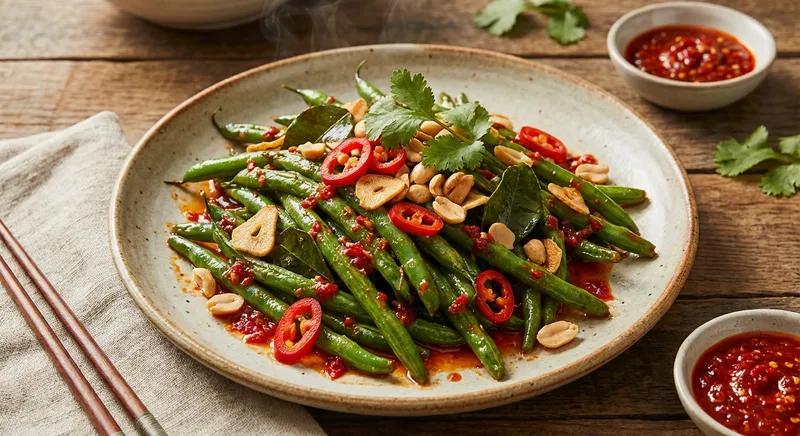
Crisp-tender green beans tossed in a sizzling, garlicky chili-lime sauce with fragrant sesame and umami from soy and fish sauce. Bright lime, blistered edges, and fierce heat from fresh Thai chilies make this a bold, low-carb side (or light main) that tastes like a street-food favorite elevated for the home kitchen.
Prepare the beans: trim the stem ends and pat the green beans dry. Dry beans sear better and blister quickly — moisture will steam them and prevent the charred edges that add texture and smoky flavor.
Blanch (optional shortcut for very even tender-crisp texture): bring a large pot of salted water to a rolling boil. Add the beans and cook 1 1/2 to 2 minutes until bright green and just pliable. Immediately transfer to an ice bath to stop cooking and set the color. Drain and pat dry. Why: blanching shortens high-heat time and ensures a vivid green color while preserving crunch. Skip if you prefer a deeper blistered char and don't mind cooking a bit longer.
Make the sauce base: in a small bowl combine soy sauce, fish sauce, and lime juice. Taste-adjust now — acidity and salt are the backbone of Thai flavors. Why: mixing ahead gives you control and prevents over-reducing salty components while stir-frying.
Heat a large heavy skillet or wok over medium-high heat until smoking begins to appear from the metal (30–60 seconds). Add the neutral oil and swirl to coat. Why: a hot pan gives immediate contact heat that creates blistered, caramelized spots on the beans instead of soggy steaming.
Add the sliced shallot and sauté 45–60 seconds until fragrant and just starting to brown at the edges. Then add the minced garlic and sliced chilies — stir constantly for 20–30 seconds until aromatic. Why: cooking shallot first mellows its rawness and allows garlic and chilies to bloom without burning; burnt garlic tastes bitter.
Add the green beans (blanched or raw) in a single layer as much as the pan allows. Let them sit, undisturbed, for 45–60 seconds to develop brown blisters on one side, then toss or stir-fry for another 2–3 minutes until they have even blistering and are tender-crisp. Why: searing in batches or allowing contact with the hot surface creates the Maillard reaction — complex, savory flavors and a satisfying texture contrast.
Pour the sauce mixture over the beans and quickly toss to coat. Cook another 30–45 seconds, just to warm the sauce through and let the flavors marry. Why: finishing on high heat evaporates excess water quickly, concentrating the sauce without overcooking the beans.
Turn off the heat and stir in the toasted sesame oil, a pinch of salt and black pepper to taste. The sesame oil is aromatic — add at the end so its flavor remains bright and toasted rather than cooked off.
Taste and adjust: if you want it brighter, squeeze a little more lime; if too spicy, add a tiny splash of water and a pinch more soy sauce to balance. Transfer to a warmed platter and garnish with chopped cilantro and lime wedges. Why: finishing adjustments let you balance heat, salt, and acidity for the most restaurant-quality result.
Serve immediately while hot and slightly blistered. This dish pairs beautifully with grilled proteins or can be enjoyed as a lively low-carb main with cauliflower rice. Why: the contrast of textures—crispy blisters and tender insides—are best right off the pan.
127
Calories
3g
Protein
12g
Carbs
8g
Fat
4g
Fiber
How did this recipe turn out? Let others know!
to rate this recipe
By Chef
Crisp-tender green beans tossed in a sizzling, garlicky chili-lime sauce with fragrant sesame and umami from soy and fish sauce. Bright lime, blistered edges, and fierce heat from fresh Thai chilies make this a bold, low-carb side (or light main) that tastes like a street-food favorite elevated for the home kitchen.
Prepare the beans: trim the stem ends and pat the green beans dry. Dry beans sear better and blister quickly — moisture will steam them and prevent the charred edges that add texture and smoky flavor.
Blanch (optional shortcut for very even tender-crisp texture): bring a large pot of salted water to a rolling boil. Add the beans and cook 1 1/2 to 2 minutes until bright green and just pliable. Immediately transfer to an ice bath to stop cooking and set the color. Drain and pat dry. Why: blanching shortens high-heat time and ensures a vivid green color while preserving crunch. Skip if you prefer a deeper blistered char and don't mind cooking a bit longer.
Make the sauce base: in a small bowl combine soy sauce, fish sauce, and lime juice. Taste-adjust now — acidity and salt are the backbone of Thai flavors. Why: mixing ahead gives you control and prevents over-reducing salty components while stir-frying.
Heat a large heavy skillet or wok over medium-high heat until smoking begins to appear from the metal (30–60 seconds). Add the neutral oil and swirl to coat. Why: a hot pan gives immediate contact heat that creates blistered, caramelized spots on the beans instead of soggy steaming.
Add the sliced shallot and sauté 45–60 seconds until fragrant and just starting to brown at the edges. Then add the minced garlic and sliced chilies — stir constantly for 20–30 seconds until aromatic. Why: cooking shallot first mellows its rawness and allows garlic and chilies to bloom without burning; burnt garlic tastes bitter.
Add the green beans (blanched or raw) in a single layer as much as the pan allows. Let them sit, undisturbed, for 45–60 seconds to develop brown blisters on one side, then toss or stir-fry for another 2–3 minutes until they have even blistering and are tender-crisp. Why: searing in batches or allowing contact with the hot surface creates the Maillard reaction — complex, savory flavors and a satisfying texture contrast.
Pour the sauce mixture over the beans and quickly toss to coat. Cook another 30–45 seconds, just to warm the sauce through and let the flavors marry. Why: finishing on high heat evaporates excess water quickly, concentrating the sauce without overcooking the beans.
Turn off the heat and stir in the toasted sesame oil, a pinch of salt and black pepper to taste. The sesame oil is aromatic — add at the end so its flavor remains bright and toasted rather than cooked off.
Taste and adjust: if you want it brighter, squeeze a little more lime; if too spicy, add a tiny splash of water and a pinch more soy sauce to balance. Transfer to a warmed platter and garnish with chopped cilantro and lime wedges. Why: finishing adjustments let you balance heat, salt, and acidity for the most restaurant-quality result.
Serve immediately while hot and slightly blistered. This dish pairs beautifully with grilled proteins or can be enjoyed as a lively low-carb main with cauliflower rice. Why: the contrast of textures—crispy blisters and tender insides—are best right off the pan.
127
Calories
3g
Protein
12g
Carbs
8g
Fat
4g
Fiber
Your Rating:
