By Diana Hockin
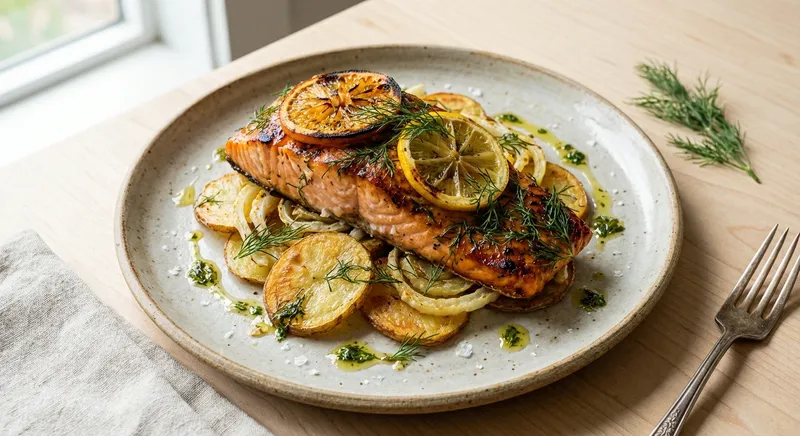
A bright, Scandinavian‑inspired weeknight showstopper: tender, citrus‑kissed broiled salmon perched over a bed of ultra‑crispy, thinly sliced potatoes and sweet‑anise fennel. The high heat caramelizes the potato edges while the lemon, dill and capers cut through the salmon's richness — the result is a perfect balance of crisp texture, fresh acidity and herbaceous perfume.
Prep and preheat: Position a rack in the upper third of the oven (about 6–8 cm / 2–3 in below the broiler element) and preheat to 230°C/450°F (or set to broil if your oven has only a broil setting). Line a large rimmed baking sheet with foil for easy cleanup and lightly oil it. Preheating the oven and using a hot broiler rack ensures rapid browning and crisping when you finish the dish.
Slice the potatoes and fennel very thin: Using a mandoline or a sharp knife, slice the new potatoes paper‑thin (2–3 mm) and the fennel into similar thickness. Why: thin slices cook quickly and expose more surface area to the heat so the edges turn golden and crisp rather than leaving raw centers.
Par‑cook the potato/fennel layer (shortcut for even crisping): Toss the sliced potatoes and fennel with 3 tbsp (45 ml) olive oil, 1 tsp garlic powder, 1 to 1 1/2 tsp kosher salt (adjust to taste), and 1/2 tsp freshly ground black pepper. Spread in a single, slightly overlapping layer on the prepared sheet pan — crowding is OK if slices overlap slightly; it helps form a cohesive crisped bed. Bake at 200°C/400°F (or in the preheated oven before switching to broil) for 18–22 minutes until the potatoes are mostly tender and edges are beginning to brown. Why: par‑cooking ensures the potatoes are tender through without burning under the broiler and gives the fennel time to soften and sweeten.
Prepare the citrus‑dill topping: While the potatoes roast, zest and juice the lemons (reserve about 1 tsp zest per fillet). In a small bowl combine the lemon zest, juice of both lemons, chopped dill (reserve a little for finishing), the rinsed capers (roughly chop if large), 1/4 tsp garlic powder, 1/4 tsp salt and a few grinds of black pepper. Whisk in the remaining 1 tbsp (15 ml) olive oil to make a loose dressing. This bright dressing both seasons the salmon and acts as a finishing vinaigrette for the potatoes — the acid will cut through the fish's richness.
Season the salmon: Pat each salmon fillet dry with paper towel (dry surface = better browning). Taste the dressing and reserve 2 tbsp for the potatoes; toss the rest with the salmon flesh side (not the skin) so the citrus, dill and capers adhere. Sprinkle each fillet lightly with salt and pepper and a touch of lemon zest. Why: oil and acid help carry the herbs and capers onto the fish and the dry surface encourages a golden exterior under the broiler.
Finish the potatoes & fennel under high heat: When the potato/fennel base is mostly tender and starting to brown, switch the oven to broil (or increase to 230–250°C / 450–480°F) and move the sheet pan to the upper rack. Arrange the salmon fillets, skin side down, directly on top of the potato/fennel bed — the potatoes will protect the skin from immediate scorching while the hot air crisps the exposed flesh. Why: placing the fish on the hot potatoes lets flavors mingle (lemon-dill juices seep into the potatoes) while the broiler quickly cooks the salmon without drying it.
Broil to doneness: Broil the salmon 6–9 minutes depending on thickness (for 160 g fillets about 6–7 minutes for medium, up to 9 minutes for well done). Look for opaque flesh that flakes easily with a fork and a lightly charred top. Important: start checking at 6 minutes — overcooked salmon becomes dry. Internal target temperature: 50–52°C (122–125°F) for medium‑rare, 55–60°C (131–140°F) for medium to well done. If you have an instant‑read thermometer, use it for precision.
Rest and finish: Remove the pan from the oven. Spoon any resting juices from the pan into the reserved lemon‑dill dressing and stir. Let salmon rest 2 minutes (resting lets carryover heat finish gently). If using, dot fillets with 1/4 tbsp butter each to add gloss and silk — it melts into the hot juices.
Plate: Using a spatula, transfer generous portions of the crispy potato and fennel bed to plates, top each with a broiled salmon fillet (skin side down or curl the skin up for presentation). Spoon the lemon‑dill‑caper vinaigrette over the fish and scatter remaining chopped dill and a few capers. Finish with a twist of black pepper and, if desired, a small drizzle (1 tsp) of extra virgin olive oil for shine. Why: the warm vinaigrette brightens the dish and the capers add bursts of briny contrast.
Serve immediately: Serve while the potatoes are still crisp and the salmon warm. Suggested accompaniments: a green salad or steamed greens dressed simply in lemon and olive oil to echo flavors.
635
Calories
37g
Protein
41g
Carbs
35g
Fat
6g
Fiber
How did this recipe turn out? Let others know!
to rate this recipe
By Diana Hockin
A bright, Scandinavian‑inspired weeknight showstopper: tender, citrus‑kissed broiled salmon perched over a bed of ultra‑crispy, thinly sliced potatoes and sweet‑anise fennel. The high heat caramelizes the potato edges while the lemon, dill and capers cut through the salmon's richness — the result is a perfect balance of crisp texture, fresh acidity and herbaceous perfume.
Prep and preheat: Position a rack in the upper third of the oven (about 6–8 cm / 2–3 in below the broiler element) and preheat to 230°C/450°F (or set to broil if your oven has only a broil setting). Line a large rimmed baking sheet with foil for easy cleanup and lightly oil it. Preheating the oven and using a hot broiler rack ensures rapid browning and crisping when you finish the dish.
Slice the potatoes and fennel very thin: Using a mandoline or a sharp knife, slice the new potatoes paper‑thin (2–3 mm) and the fennel into similar thickness. Why: thin slices cook quickly and expose more surface area to the heat so the edges turn golden and crisp rather than leaving raw centers.
Par‑cook the potato/fennel layer (shortcut for even crisping): Toss the sliced potatoes and fennel with 3 tbsp (45 ml) olive oil, 1 tsp garlic powder, 1 to 1 1/2 tsp kosher salt (adjust to taste), and 1/2 tsp freshly ground black pepper. Spread in a single, slightly overlapping layer on the prepared sheet pan — crowding is OK if slices overlap slightly; it helps form a cohesive crisped bed. Bake at 200°C/400°F (or in the preheated oven before switching to broil) for 18–22 minutes until the potatoes are mostly tender and edges are beginning to brown. Why: par‑cooking ensures the potatoes are tender through without burning under the broiler and gives the fennel time to soften and sweeten.
Prepare the citrus‑dill topping: While the potatoes roast, zest and juice the lemons (reserve about 1 tsp zest per fillet). In a small bowl combine the lemon zest, juice of both lemons, chopped dill (reserve a little for finishing), the rinsed capers (roughly chop if large), 1/4 tsp garlic powder, 1/4 tsp salt and a few grinds of black pepper. Whisk in the remaining 1 tbsp (15 ml) olive oil to make a loose dressing. This bright dressing both seasons the salmon and acts as a finishing vinaigrette for the potatoes — the acid will cut through the fish's richness.
Season the salmon: Pat each salmon fillet dry with paper towel (dry surface = better browning). Taste the dressing and reserve 2 tbsp for the potatoes; toss the rest with the salmon flesh side (not the skin) so the citrus, dill and capers adhere. Sprinkle each fillet lightly with salt and pepper and a touch of lemon zest. Why: oil and acid help carry the herbs and capers onto the fish and the dry surface encourages a golden exterior under the broiler.
Finish the potatoes & fennel under high heat: When the potato/fennel base is mostly tender and starting to brown, switch the oven to broil (or increase to 230–250°C / 450–480°F) and move the sheet pan to the upper rack. Arrange the salmon fillets, skin side down, directly on top of the potato/fennel bed — the potatoes will protect the skin from immediate scorching while the hot air crisps the exposed flesh. Why: placing the fish on the hot potatoes lets flavors mingle (lemon-dill juices seep into the potatoes) while the broiler quickly cooks the salmon without drying it.
Broil to doneness: Broil the salmon 6–9 minutes depending on thickness (for 160 g fillets about 6–7 minutes for medium, up to 9 minutes for well done). Look for opaque flesh that flakes easily with a fork and a lightly charred top. Important: start checking at 6 minutes — overcooked salmon becomes dry. Internal target temperature: 50–52°C (122–125°F) for medium‑rare, 55–60°C (131–140°F) for medium to well done. If you have an instant‑read thermometer, use it for precision.
Rest and finish: Remove the pan from the oven. Spoon any resting juices from the pan into the reserved lemon‑dill dressing and stir. Let salmon rest 2 minutes (resting lets carryover heat finish gently). If using, dot fillets with 1/4 tbsp butter each to add gloss and silk — it melts into the hot juices.
Plate: Using a spatula, transfer generous portions of the crispy potato and fennel bed to plates, top each with a broiled salmon fillet (skin side down or curl the skin up for presentation). Spoon the lemon‑dill‑caper vinaigrette over the fish and scatter remaining chopped dill and a few capers. Finish with a twist of black pepper and, if desired, a small drizzle (1 tsp) of extra virgin olive oil for shine. Why: the warm vinaigrette brightens the dish and the capers add bursts of briny contrast.
Serve immediately: Serve while the potatoes are still crisp and the salmon warm. Suggested accompaniments: a green salad or steamed greens dressed simply in lemon and olive oil to echo flavors.
635
Calories
37g
Protein
41g
Carbs
35g
Fat
6g
Fiber
Your Rating:
