By Amber
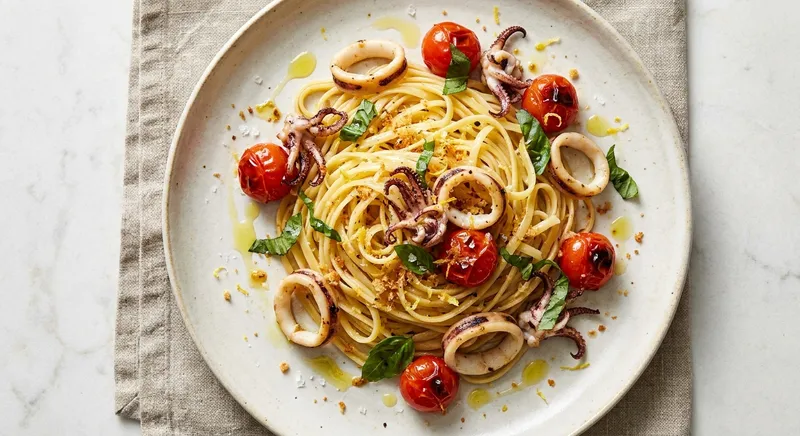
Bright, silky linguine tossed in a lemony, olive-oil emulsion studded with blistered cherry tomatoes and tender, quickly grilled calamari. The dish balances citrusy brightness, sweet tomatoes, peppery basil and a hint of chili — a light yet restaurant-quality seafood pasta that sings of summer.
Bring a large pot of water to a rolling boil and salt it generously (about 1 tbsp kosher salt per 4 liters). Salting early seasons the pasta from the inside as it cooks — properly seasoned pasta is essential because the sauce clings to the strands.
While the water heats, pat the calamari dry with paper towels and season lightly with salt and a little cracked pepper. Patting dry removes surface moisture so the calamari sears quickly instead of steaming; quick, intense heat is what keeps it tender rather than rubbery.
Heat a grill pan or outdoor grill over high heat until very hot. Brush the grate or pan with a thin film of oil (use a high-smoke oil or just wipe with oil-soaked paper towel). Preheat is crucial to get immediate contact sear which gives flavor without long cooking.
When the water is boiling, add the linguine and cook until al dente according to package directions (usually 9–11 minutes). Reserve 1 to 1 1/2 cups of the pasta cooking water before draining — starchy water is the emulsifier that will bind lemon and oil into a silky sauce.
Place the calamari on the hot grill in a single layer. Grill for 30–45 seconds per side for rings and thin tubes — you want a quick color change and light charring. Overcooking calamari causes it to become tough; the brief, high-heat sear cooks it through while staying tender.
In a large sauté pan over medium heat, add 3 tablespoons (45 ml) of extra-virgin olive oil. Add the thinly sliced garlic and the red pepper flakes; cook gently until the garlic just begins to turn golden at the edges (about 45–60 seconds). This temp gives aroma without burning; burned garlic tastes bitter.
Add the halved cherry tomatoes to the pan, season with a pinch of salt, and sauté for 2–3 minutes until they begin to soften and blister. Blistering concentrates the tomato sweetness and releases juices that will mingle with the lemon for brightness.
Add the grilled calamari to the tomato-garlic pan to gently warm through for 30–45 seconds, then remove the pan from the heat. Bringing the calamari back into the pan integrates its grilled flavor without further cooking it significantly.
Add the drained hot linguine to the pan. Over low heat, pour in the remaining 1 tbsp (15 ml) extra-virgin olive oil and all of the reserved pasta water, starting with 1/2 cup. Sprinkle in the lemon zest and the 4 tablespoons (60 ml) lemon juice, and toss vigorously or use tongs to lift and fold the pasta. Tossing with hot starchy water and oil creates an emulsion that coats each strand with a glossy, silky sauce; add more pasta water as needed to reach the right saucy consistency.
Toss in the torn basil leaves and taste; adjust salt, cracked pepper and red pepper flakes. The basil will release a peppery herb lift; add it at the end to preserve its fresh aroma and color.
Divide the pasta among warmed plates, making sure each portion gets generous calamari and blistered tomatoes. Finish with a small drizzle of extra-virgin olive oil, a few extra gratings of lemon zest, and an optional crack of black pepper. The final drizzle and zest heighten aroma and make the dish shine.
Serve immediately. Linguine al Limone is best eaten right away while the sauce is glossy and the calamari is at peak tenderness.
554
Calories
30g
Protein
70g
Carbs
17g
Fat
4g
Fiber
How did this recipe turn out? Let others know!
to rate this recipe
By Amber
Bright, silky linguine tossed in a lemony, olive-oil emulsion studded with blistered cherry tomatoes and tender, quickly grilled calamari. The dish balances citrusy brightness, sweet tomatoes, peppery basil and a hint of chili — a light yet restaurant-quality seafood pasta that sings of summer.
Bring a large pot of water to a rolling boil and salt it generously (about 1 tbsp kosher salt per 4 liters). Salting early seasons the pasta from the inside as it cooks — properly seasoned pasta is essential because the sauce clings to the strands.
While the water heats, pat the calamari dry with paper towels and season lightly with salt and a little cracked pepper. Patting dry removes surface moisture so the calamari sears quickly instead of steaming; quick, intense heat is what keeps it tender rather than rubbery.
Heat a grill pan or outdoor grill over high heat until very hot. Brush the grate or pan with a thin film of oil (use a high-smoke oil or just wipe with oil-soaked paper towel). Preheat is crucial to get immediate contact sear which gives flavor without long cooking.
When the water is boiling, add the linguine and cook until al dente according to package directions (usually 9–11 minutes). Reserve 1 to 1 1/2 cups of the pasta cooking water before draining — starchy water is the emulsifier that will bind lemon and oil into a silky sauce.
Place the calamari on the hot grill in a single layer. Grill for 30–45 seconds per side for rings and thin tubes — you want a quick color change and light charring. Overcooking calamari causes it to become tough; the brief, high-heat sear cooks it through while staying tender.
In a large sauté pan over medium heat, add 3 tablespoons (45 ml) of extra-virgin olive oil. Add the thinly sliced garlic and the red pepper flakes; cook gently until the garlic just begins to turn golden at the edges (about 45–60 seconds). This temp gives aroma without burning; burned garlic tastes bitter.
Add the halved cherry tomatoes to the pan, season with a pinch of salt, and sauté for 2–3 minutes until they begin to soften and blister. Blistering concentrates the tomato sweetness and releases juices that will mingle with the lemon for brightness.
Add the grilled calamari to the tomato-garlic pan to gently warm through for 30–45 seconds, then remove the pan from the heat. Bringing the calamari back into the pan integrates its grilled flavor without further cooking it significantly.
Add the drained hot linguine to the pan. Over low heat, pour in the remaining 1 tbsp (15 ml) extra-virgin olive oil and all of the reserved pasta water, starting with 1/2 cup. Sprinkle in the lemon zest and the 4 tablespoons (60 ml) lemon juice, and toss vigorously or use tongs to lift and fold the pasta. Tossing with hot starchy water and oil creates an emulsion that coats each strand with a glossy, silky sauce; add more pasta water as needed to reach the right saucy consistency.
Toss in the torn basil leaves and taste; adjust salt, cracked pepper and red pepper flakes. The basil will release a peppery herb lift; add it at the end to preserve its fresh aroma and color.
Divide the pasta among warmed plates, making sure each portion gets generous calamari and blistered tomatoes. Finish with a small drizzle of extra-virgin olive oil, a few extra gratings of lemon zest, and an optional crack of black pepper. The final drizzle and zest heighten aroma and make the dish shine.
Serve immediately. Linguine al Limone is best eaten right away while the sauce is glossy and the calamari is at peak tenderness.
554
Calories
30g
Protein
70g
Carbs
17g
Fat
4g
Fiber
Your Rating:
