By emensah m
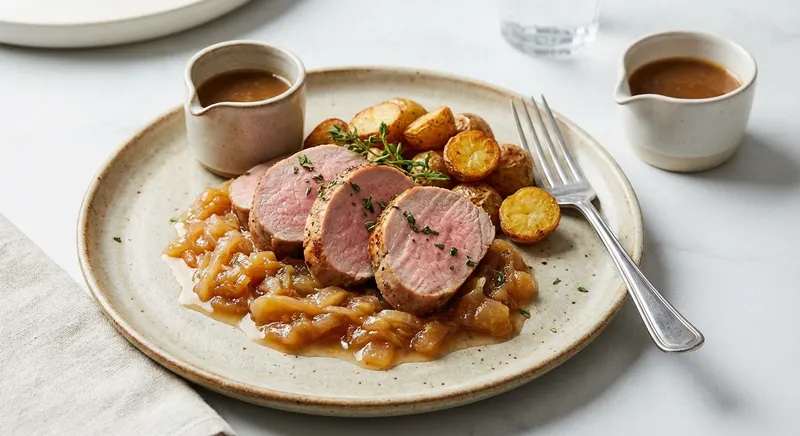
A warm, modern comfort dish that pairs juicy, seared pork tenderloin with a sweet-tangy apple–onion compote and golden, herb-scented roasted baby potatoes. The compote’s balance of caramelized onion, apples, cider vinegar and a touch of mustard cuts through the richness of the pork, while high-heat roasting and a brief parboil give the potatoes an irresistibly crisp exterior and tender interior.
Preheat and organize: Preheat the oven to 220°C (425°F). Arrange a rimmed baking sheet for the potatoes and place a heavy, oven-safe skillet (cast-iron or stainless steel) nearby for the pork sear and compote. Preheating the oven and tools ensures immediate high heat for crisp roasting and that the skillet is hot for a proper sear—both are key to texture and flavor.
Parboil the potatoes: Place the 500 g baby potatoes in a pot, cover with cold salted water, bring to a boil and simmer for 8–10 minutes until just tender when pierced with a knife. Drain and shake the pot gently to roughen the skins. Parboiling gives the potatoes a tender interior; roughening the skins creates more surface area so they crisp better in the oven.
Prep potatoes for roasting: Toss the drained, slightly roughed potatoes with 1 tbsp olive oil, 3–4 thyme sprigs (leaves stripped), 1/2 tsp kosher salt and 1/4 tsp black pepper on the rimmed baking sheet. Spread in a single layer with space between pieces. Drizzle a final 1 tbsp olive oil just before they go in if needed. High heat and dry surfaces create Maillard browning—don’t overcrowd the pan or they’ll steam instead of roast.
Roast the potatoes: Put the potatoes in the preheated oven on the top rack and roast for 25–30 minutes, turning once halfway, until golden and crisp. Roasting while you prepare the pork saves time and lets each component finish hot together.
Season and tie the pork (optional): Pat the 600 g pork tenderloin very dry with paper towels (dry meat browns better). Trim any silver skin. Season generously with kosher salt and freshly ground black pepper. If the tenderloin is uneven, you can tie it with kitchen twine to promote even cooking. Even thickness ensures the pork reaches a uniform doneness.
Sear the pork: Heat a large oven-safe skillet over medium-high heat until shimmering. Add 1 tbsp olive oil. Place the pork in the skillet and sear without moving for 2–3 minutes per side, rotating to develop an even, golden crust (including the ends). Searing creates the Maillard reaction—deep flavor and an attractive crust—which also helps the meat keep juices while it finishes in the oven.
Finish the pork in the oven: Transfer the searing skillet with the pork to the oven and roast for 10–14 minutes, or until an instant-read thermometer inserted into the thickest part reads 63°C (145°F). Carryover cooking during a short rest will bring it to about 65°C. Using a thermometer is the most reliable way to achieve juicy, slightly pink pork—avoid overcooking.
Rest the pork: Remove the pork from the oven and transfer to a cutting board. Tent loosely with foil and rest for 8–10 minutes. Resting lets the muscle fibers relax and the juices redistribute; slicing too soon causes dry slices.
Make the apple–onion compote while the pork rests (use the skillet): Return the skillet used for searing to medium heat on the stovetop. Add 1 tbsp butter. When it melts, add the sliced onion and a pinch of salt and sweat for 6–8 minutes, stirring occasionally, until soft and beginning to caramelize. Sweating releases onion sugars; slow caramelization deepens the compote’s flavor.
Add apples and aromatics: Add the sliced apples and the minced garlic to the skillet, stir and cook for 3–4 minutes until apples begin to soften. Sprinkle in 1 tbsp brown sugar and stir to coat. The sugar aids gentle caramelization of the apples and helps balance the savory notes.
Deglaze and simmer: Pour in 120 ml chicken broth and 1 tbsp apple cider vinegar, add 1 tsp Dijon mustard and the remaining thyme sprigs. Scrape up browned bits from the pan (those bits are concentrated flavor). Simmer gently for 5–7 minutes until the compote is saucy and the apples are tender but not falling apart.
Adjust texture: If the compote is too thin, mix 1 tsp cornstarch with 1 tbsp cold water to make a slurry, then stir it in and simmer 1 minute until thickened. Taste and season with salt and pepper. Thickening lets the compote cling to the pork and potatoes; add slurry sparingly—you can always add more, can’t take it away.
Slice and plate: Slice the rested pork into 1–1.5 cm medallions (slice against the grain for tenderness). Place a spoonful of warm apple–onion compote on each plate, fan the pork slices atop it and arrange roasted potatoes alongside. Spoon any extra pan juices over the meat. Finishing hot provides the best texture and aroma.
474
Calories
39g
Protein
41g
Carbs
15g
Fat
5g
Fiber
How did this recipe turn out? Let others know!
to rate this recipe
By emensah m
A warm, modern comfort dish that pairs juicy, seared pork tenderloin with a sweet-tangy apple–onion compote and golden, herb-scented roasted baby potatoes. The compote’s balance of caramelized onion, apples, cider vinegar and a touch of mustard cuts through the richness of the pork, while high-heat roasting and a brief parboil give the potatoes an irresistibly crisp exterior and tender interior.
Preheat and organize: Preheat the oven to 220°C (425°F). Arrange a rimmed baking sheet for the potatoes and place a heavy, oven-safe skillet (cast-iron or stainless steel) nearby for the pork sear and compote. Preheating the oven and tools ensures immediate high heat for crisp roasting and that the skillet is hot for a proper sear—both are key to texture and flavor.
Parboil the potatoes: Place the 500 g baby potatoes in a pot, cover with cold salted water, bring to a boil and simmer for 8–10 minutes until just tender when pierced with a knife. Drain and shake the pot gently to roughen the skins. Parboiling gives the potatoes a tender interior; roughening the skins creates more surface area so they crisp better in the oven.
Prep potatoes for roasting: Toss the drained, slightly roughed potatoes with 1 tbsp olive oil, 3–4 thyme sprigs (leaves stripped), 1/2 tsp kosher salt and 1/4 tsp black pepper on the rimmed baking sheet. Spread in a single layer with space between pieces. Drizzle a final 1 tbsp olive oil just before they go in if needed. High heat and dry surfaces create Maillard browning—don’t overcrowd the pan or they’ll steam instead of roast.
Roast the potatoes: Put the potatoes in the preheated oven on the top rack and roast for 25–30 minutes, turning once halfway, until golden and crisp. Roasting while you prepare the pork saves time and lets each component finish hot together.
Season and tie the pork (optional): Pat the 600 g pork tenderloin very dry with paper towels (dry meat browns better). Trim any silver skin. Season generously with kosher salt and freshly ground black pepper. If the tenderloin is uneven, you can tie it with kitchen twine to promote even cooking. Even thickness ensures the pork reaches a uniform doneness.
Sear the pork: Heat a large oven-safe skillet over medium-high heat until shimmering. Add 1 tbsp olive oil. Place the pork in the skillet and sear without moving for 2–3 minutes per side, rotating to develop an even, golden crust (including the ends). Searing creates the Maillard reaction—deep flavor and an attractive crust—which also helps the meat keep juices while it finishes in the oven.
Finish the pork in the oven: Transfer the searing skillet with the pork to the oven and roast for 10–14 minutes, or until an instant-read thermometer inserted into the thickest part reads 63°C (145°F). Carryover cooking during a short rest will bring it to about 65°C. Using a thermometer is the most reliable way to achieve juicy, slightly pink pork—avoid overcooking.
Rest the pork: Remove the pork from the oven and transfer to a cutting board. Tent loosely with foil and rest for 8–10 minutes. Resting lets the muscle fibers relax and the juices redistribute; slicing too soon causes dry slices.
Make the apple–onion compote while the pork rests (use the skillet): Return the skillet used for searing to medium heat on the stovetop. Add 1 tbsp butter. When it melts, add the sliced onion and a pinch of salt and sweat for 6–8 minutes, stirring occasionally, until soft and beginning to caramelize. Sweating releases onion sugars; slow caramelization deepens the compote’s flavor.
Add apples and aromatics: Add the sliced apples and the minced garlic to the skillet, stir and cook for 3–4 minutes until apples begin to soften. Sprinkle in 1 tbsp brown sugar and stir to coat. The sugar aids gentle caramelization of the apples and helps balance the savory notes.
Deglaze and simmer: Pour in 120 ml chicken broth and 1 tbsp apple cider vinegar, add 1 tsp Dijon mustard and the remaining thyme sprigs. Scrape up browned bits from the pan (those bits are concentrated flavor). Simmer gently for 5–7 minutes until the compote is saucy and the apples are tender but not falling apart.
Adjust texture: If the compote is too thin, mix 1 tsp cornstarch with 1 tbsp cold water to make a slurry, then stir it in and simmer 1 minute until thickened. Taste and season with salt and pepper. Thickening lets the compote cling to the pork and potatoes; add slurry sparingly—you can always add more, can’t take it away.
Slice and plate: Slice the rested pork into 1–1.5 cm medallions (slice against the grain for tenderness). Place a spoonful of warm apple–onion compote on each plate, fan the pork slices atop it and arrange roasted potatoes alongside. Spoon any extra pan juices over the meat. Finishing hot provides the best texture and aroma.
474
Calories
39g
Protein
41g
Carbs
15g
Fat
5g
Fiber
Your Rating:
