By abbey f
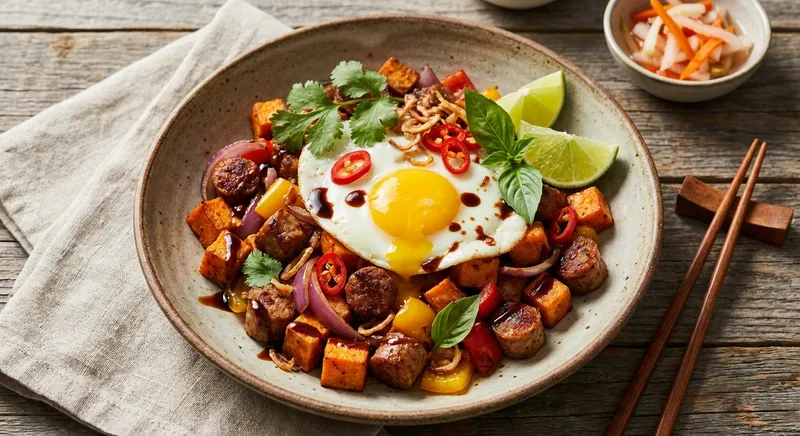
A caramelized, savory-sweet hash that balances the rich, juicy pork with the natural sweetness and creamy texture of sweet potatoes. Bright ginger, garlic and coconut aminos give an umami-forward, slightly tangy lift while scallions and cilantro add freshness — perfect for brunch, a weeknight dinner, or as a shareable small plate.
Prep everything first: peel and dice the sweet potatoes into roughly 1/2-inch cubes so they cook evenly; separate the white and green parts of the scallions and slice them thinly; grate the ginger and mince the garlic. Mise en place keeps the cook time short and prevents burning when ingredients are added to the hot pan.
Par-cook the sweet potatoes for faster, more even browning: place the diced sweet potato in a microwave-safe bowl, add a tablespoon of water, cover loosely and microwave on high for 3–4 minutes until just beginning to soften but not falling apart. Alternatively, boil in salted water for 4–5 minutes. Par-cooking reduces total pan time and helps the cubes develop a crisp, golden exterior instead of steaming to mush.
Heat a large heavy skillet (cast-iron preferred) over medium-high heat until hot, then add 1 tablespoon of olive oil. A hot pan creates immediate sizzle, which sears meat and vegetables to build flavor through Maillard browning.
Add the ground pork to the hot pan, breaking it into large-ish pieces (bite-size crumbles). Let it sit undisturbed for 2–3 minutes to brown before stirring — this gives good caramelization. Season lightly with 1/4 teaspoon kosher salt and a pinch of black pepper while it browns. Continue cooking and breaking the meat until it's well-browned and most of the pink is gone, about 5–6 minutes total. Browning develops deep savory flavor and renders fat that will flavor the sweet potatoes.
Using a slotted spoon or spatula, transfer most of the browned pork to a bowl and leave about 1–2 tablespoons of fat in the pan. If your pork is very lean, add the second tablespoon of olive oil now. Leaving some pork fat in the pan (or using a little oil) helps the sweet potatoes crisp and pick up flavor from the meat.
Add the par-cooked sweet potatoes to the skillet in a single layer if possible; let them sear undisturbed for 3–4 minutes. Flip or stir only when you see a deep golden crust forming. This patience produces the textural contrast — a crisp exterior with a tender interior — that makes a hash feel special.
When most cubes have developed color, push the potatoes to the side and add the grated ginger and minced garlic to the cleared space. Sauté for 30–45 seconds until fragrant — this blooms their aromatics without burning. Then toss everything together to combine.
Return the browned pork to the pan, drizzle the coconut aminos over the mixture, and stir to combine. Let the pan cook for another 2–3 minutes so the coconut aminos reduce slightly and glaze the meat and potatoes. Coconut aminos add umami and a touch of sweetness that stands in for soy sauce while keeping the flavor bright.
Taste and adjust seasoning: add the remaining 1/2 teaspoon kosher salt if needed and the remaining pinch of black pepper. Remember coconut aminos are less salty than soy, so adjust to your palate. If the hash seems dry, add up to 1 tablespoon water and cover for a minute to steam and finish cooking.
Stir in the white parts of the scallions and cook for 30 seconds to soften, then remove from heat. Sprinkle in the green parts of the scallions and chopped cilantro and toss to distribute the fresh herb notes. Fresh herbs added at the end preserve their brightness and color.
Serve immediately, with lime wedges on the side for a squeeze of acid if you like. The acid will lift the richness and make the dish pop. Spoon into shallow bowls or serve family-style from the skillet.
497
Calories
21g
Protein
35g
Carbs
31g
Fat
5g
Fiber
How did this recipe turn out? Let others know!
to rate this recipe
By abbey f
A caramelized, savory-sweet hash that balances the rich, juicy pork with the natural sweetness and creamy texture of sweet potatoes. Bright ginger, garlic and coconut aminos give an umami-forward, slightly tangy lift while scallions and cilantro add freshness — perfect for brunch, a weeknight dinner, or as a shareable small plate.
Prep everything first: peel and dice the sweet potatoes into roughly 1/2-inch cubes so they cook evenly; separate the white and green parts of the scallions and slice them thinly; grate the ginger and mince the garlic. Mise en place keeps the cook time short and prevents burning when ingredients are added to the hot pan.
Par-cook the sweet potatoes for faster, more even browning: place the diced sweet potato in a microwave-safe bowl, add a tablespoon of water, cover loosely and microwave on high for 3–4 minutes until just beginning to soften but not falling apart. Alternatively, boil in salted water for 4–5 minutes. Par-cooking reduces total pan time and helps the cubes develop a crisp, golden exterior instead of steaming to mush.
Heat a large heavy skillet (cast-iron preferred) over medium-high heat until hot, then add 1 tablespoon of olive oil. A hot pan creates immediate sizzle, which sears meat and vegetables to build flavor through Maillard browning.
Add the ground pork to the hot pan, breaking it into large-ish pieces (bite-size crumbles). Let it sit undisturbed for 2–3 minutes to brown before stirring — this gives good caramelization. Season lightly with 1/4 teaspoon kosher salt and a pinch of black pepper while it browns. Continue cooking and breaking the meat until it's well-browned and most of the pink is gone, about 5–6 minutes total. Browning develops deep savory flavor and renders fat that will flavor the sweet potatoes.
Using a slotted spoon or spatula, transfer most of the browned pork to a bowl and leave about 1–2 tablespoons of fat in the pan. If your pork is very lean, add the second tablespoon of olive oil now. Leaving some pork fat in the pan (or using a little oil) helps the sweet potatoes crisp and pick up flavor from the meat.
Add the par-cooked sweet potatoes to the skillet in a single layer if possible; let them sear undisturbed for 3–4 minutes. Flip or stir only when you see a deep golden crust forming. This patience produces the textural contrast — a crisp exterior with a tender interior — that makes a hash feel special.
When most cubes have developed color, push the potatoes to the side and add the grated ginger and minced garlic to the cleared space. Sauté for 30–45 seconds until fragrant — this blooms their aromatics without burning. Then toss everything together to combine.
Return the browned pork to the pan, drizzle the coconut aminos over the mixture, and stir to combine. Let the pan cook for another 2–3 minutes so the coconut aminos reduce slightly and glaze the meat and potatoes. Coconut aminos add umami and a touch of sweetness that stands in for soy sauce while keeping the flavor bright.
Taste and adjust seasoning: add the remaining 1/2 teaspoon kosher salt if needed and the remaining pinch of black pepper. Remember coconut aminos are less salty than soy, so adjust to your palate. If the hash seems dry, add up to 1 tablespoon water and cover for a minute to steam and finish cooking.
Stir in the white parts of the scallions and cook for 30 seconds to soften, then remove from heat. Sprinkle in the green parts of the scallions and chopped cilantro and toss to distribute the fresh herb notes. Fresh herbs added at the end preserve their brightness and color.
Serve immediately, with lime wedges on the side for a squeeze of acid if you like. The acid will lift the richness and make the dish pop. Spoon into shallow bowls or serve family-style from the skillet.
497
Calories
21g
Protein
35g
Carbs
31g
Fat
5g
Fiber
Your Rating:
