By Cheyanne McPherson
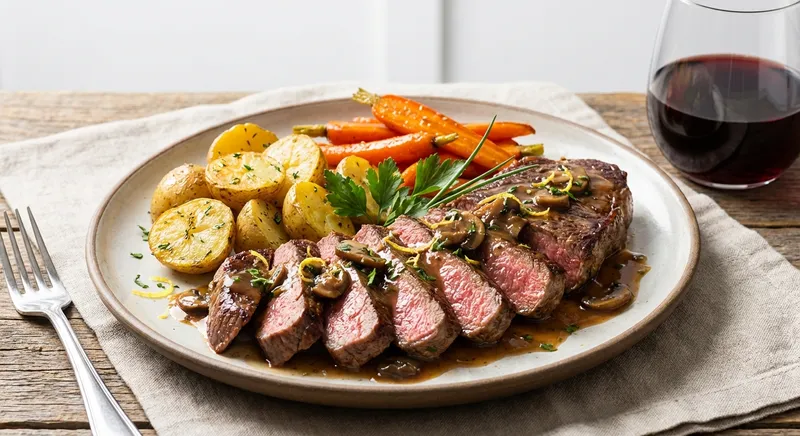
A restaurant-quality, low-sodium beef entree: tender, well-seared sirloin finished with a glossy mushroom–sherry pan sauce, paired with caramelized lemon-herb roasted potatoes and gently honey-roasted carrots. Bright lemon, fresh herbs and reduced wine concentrate savory umami so we can keep added salt to a minimum while delivering deep, layered flavor and a gorgeous plate.
Preheat the oven to 220°C (425°F). This hot oven will roast the potatoes and carrots quickly so they caramelize on the outside while staying tender inside — caramelization adds natural sweetness and depth, helping compensate for reduced added salt.
Toss potatoes and carrots with 1 tbsp olive oil, half the thyme, half the rosemary, the lemon zest, smoked paprika (if using) and a very light sprinkle of kosher salt (or omit). Spread them cut-side down on a rimmed baking sheet in a single layer. Roast for 25–30 minutes, turning once halfway, until golden and tender. Why: high dry heat promotes Maillard browning on the vegetables, building savory flavors without relying on sodium.
Bring the sirloin to room temperature for 20 minutes while the vegetables roast. Pat the beef very dry with paper towels — moisture inhibits browning. Season both sides with freshly ground black pepper and (optionally) the remaining 1/8–1/4 tsp kosher salt. Why: equalized meat temperature and a dry surface produce a more even sear and a better crust, which adds flavor even when limiting salt.
Heat a large heavy skillet (cast iron preferred) over medium–high heat until smoking slightly. Add 1 tbsp olive oil and swirl to coat. Place the sirloin in the pan and sear without moving for 3–4 minutes to develop a deep brown crust (the Maillard reaction). Flip and sear the other side 2–3 minutes for medium-rare (internal temp 52–55°C / 125–130°F). Why: searing at high heat creates flavor from browning; timing varies with thickness — use an instant-read thermometer to be precise.
Transfer the steak to a cutting board and tent loosely with foil to rest for 6–8 minutes. Resting lets muscle fibers relax and reabsorb juices so slices stay moist. While the beef rests, return the skillet (with the fond — the browned bits) to medium heat to build the pan sauce.
Add the shallot to the hot skillet and sauté for 30–45 seconds to soften and release sweet aromatics (do not let it burn). Add mushrooms and a pinch of pepper and cook, stirring, until the mushrooms release their liquid and it evaporates and they begin to brown, about 4–5 minutes. Why: browning the mushrooms concentrates umami and creates additional fond to flavor the sauce.
Push the vegetables to the side and add the minced garlic for 20–30 seconds to bloom its aromatics (garlic cooks quickly). Deglaze the pan with the dry sherry or white wine, scraping up the fond with a wooden spoon. Allow the alcohol to reduce by about half (1–2 minutes) — this concentrates flavor and removes harsh alcohol notes.
Add the low-sodium beef broth and balsamic vinegar; bring to a simmer and reduce until slightly thickened, about 4–6 minutes. Taste — reduced liquids concentrate flavor. If you need more balance, add lemon juice (from the zested lemon) 1 tsp at a time to brighten. Why: deglazing and reducing turns fond and aromatics into a glossy sauce that carries deep beef flavor without much added salt.
Finish the sauce off the heat by whisking in the unsalted butter (this enriches and slightly thickens the sauce) and stir in remaining thyme and rosemary. Adjust seasoning with a final grind of black pepper and, if using, a tiny pinch of salt — remember the dish is intentionally low-sodium.
Slice the rested sirloin across the grain into 1/4- to 1/2-inch slices. Why: slicing against the grain shortens muscle fibers so each bite is tender and easier to chew, important for people avoiding strain on the jaw or digestion.
Plate: mound roasted potatoes and carrots, fan slices of sirloin on top, spoon generous mushroom–sherry sauce over the meat, and finish with a squeeze of lemon juice and chopped parsley for brightness and color. Serve immediately. Why: hot components and acidic finish awaken flavors and create a balanced plate while keeping salt low.
589
Calories
44g
Protein
33g
Carbs
28g
Fat
5g
Fiber
How did this recipe turn out? Let others know!
to rate this recipe
By Cheyanne McPherson
A restaurant-quality, low-sodium beef entree: tender, well-seared sirloin finished with a glossy mushroom–sherry pan sauce, paired with caramelized lemon-herb roasted potatoes and gently honey-roasted carrots. Bright lemon, fresh herbs and reduced wine concentrate savory umami so we can keep added salt to a minimum while delivering deep, layered flavor and a gorgeous plate.
Preheat the oven to 220°C (425°F). This hot oven will roast the potatoes and carrots quickly so they caramelize on the outside while staying tender inside — caramelization adds natural sweetness and depth, helping compensate for reduced added salt.
Toss potatoes and carrots with 1 tbsp olive oil, half the thyme, half the rosemary, the lemon zest, smoked paprika (if using) and a very light sprinkle of kosher salt (or omit). Spread them cut-side down on a rimmed baking sheet in a single layer. Roast for 25–30 minutes, turning once halfway, until golden and tender. Why: high dry heat promotes Maillard browning on the vegetables, building savory flavors without relying on sodium.
Bring the sirloin to room temperature for 20 minutes while the vegetables roast. Pat the beef very dry with paper towels — moisture inhibits browning. Season both sides with freshly ground black pepper and (optionally) the remaining 1/8–1/4 tsp kosher salt. Why: equalized meat temperature and a dry surface produce a more even sear and a better crust, which adds flavor even when limiting salt.
Heat a large heavy skillet (cast iron preferred) over medium–high heat until smoking slightly. Add 1 tbsp olive oil and swirl to coat. Place the sirloin in the pan and sear without moving for 3–4 minutes to develop a deep brown crust (the Maillard reaction). Flip and sear the other side 2–3 minutes for medium-rare (internal temp 52–55°C / 125–130°F). Why: searing at high heat creates flavor from browning; timing varies with thickness — use an instant-read thermometer to be precise.
Transfer the steak to a cutting board and tent loosely with foil to rest for 6–8 minutes. Resting lets muscle fibers relax and reabsorb juices so slices stay moist. While the beef rests, return the skillet (with the fond — the browned bits) to medium heat to build the pan sauce.
Add the shallot to the hot skillet and sauté for 30–45 seconds to soften and release sweet aromatics (do not let it burn). Add mushrooms and a pinch of pepper and cook, stirring, until the mushrooms release their liquid and it evaporates and they begin to brown, about 4–5 minutes. Why: browning the mushrooms concentrates umami and creates additional fond to flavor the sauce.
Push the vegetables to the side and add the minced garlic for 20–30 seconds to bloom its aromatics (garlic cooks quickly). Deglaze the pan with the dry sherry or white wine, scraping up the fond with a wooden spoon. Allow the alcohol to reduce by about half (1–2 minutes) — this concentrates flavor and removes harsh alcohol notes.
Add the low-sodium beef broth and balsamic vinegar; bring to a simmer and reduce until slightly thickened, about 4–6 minutes. Taste — reduced liquids concentrate flavor. If you need more balance, add lemon juice (from the zested lemon) 1 tsp at a time to brighten. Why: deglazing and reducing turns fond and aromatics into a glossy sauce that carries deep beef flavor without much added salt.
Finish the sauce off the heat by whisking in the unsalted butter (this enriches and slightly thickens the sauce) and stir in remaining thyme and rosemary. Adjust seasoning with a final grind of black pepper and, if using, a tiny pinch of salt — remember the dish is intentionally low-sodium.
Slice the rested sirloin across the grain into 1/4- to 1/2-inch slices. Why: slicing against the grain shortens muscle fibers so each bite is tender and easier to chew, important for people avoiding strain on the jaw or digestion.
Plate: mound roasted potatoes and carrots, fan slices of sirloin on top, spoon generous mushroom–sherry sauce over the meat, and finish with a squeeze of lemon juice and chopped parsley for brightness and color. Serve immediately. Why: hot components and acidic finish awaken flavors and create a balanced plate while keeping salt low.
589
Calories
44g
Protein
33g
Carbs
28g
Fat
5g
Fiber
Your Rating:
