By Nicole Schlenk
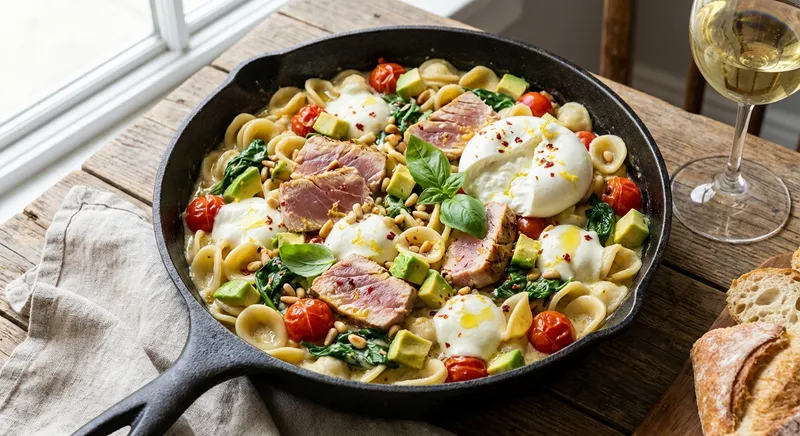
Silky strands of pasta cooked right in a fragrant, garlicky broth, then tossed with flaky canned tuna, creamy diced avocado and pillowy fresh mozzarella. The dish balances rich, buttery avocado and melty cheese with bright lemon and basil — a luxurious, one‑pan Mediterranean‑style weeknight meal that looks restaurant‑worthy but comes together in under 40 minutes.
Prep everything before you start: dice the onion, mince the garlic, drain the tuna well (press in a sieve to remove as much liquid as possible), peel and dice the avocado and tear the mozzarella. Why: one‑pan pasta cooks quickly and requires your mise en place so you can add liquids and stir without stopping — it prevents overcooking and sticking.
Heat a large, deep skillet or sauté pan (at least 12-inch/30 cm) over medium heat. Add the olive oil and butter. When the butter foams and the oil shimmers (about 30–45 seconds), add the diced onion. Why: medium heat and the oil‑butter combo give a gentle fond (the browned bits) and flavor without burning; butter adds silkiness to the sauce.
Sauté the onion for 4–5 minutes until soft and translucent, then add the minced garlic and red pepper flakes and cook for 30–45 seconds until fragrant. Why: softened onion releases natural sugars for sweetness; briefly cooking garlic blooms its aromatic oils — cook just long enough to perfume the pan but not so long it turns bitter.
Add the dry pasta to the pan and give it a quick toss with the onions and garlic to coat the strands (30 seconds). Why: coating the pasta in fat first helps prevent immediate sticking and allows the starch release to mingle with the fat, giving a more cohesive sauce.
Carefully pour in the broth (all at once) and bring to a lively simmer. Use a wooden spoon to press any pasta under the surface so it hydrates evenly. Season with 1 tsp kosher salt and 1/4 tsp black pepper. Why: cooking pasta in flavored liquid concentrates taste into the pasta and creates a starchy, silky cooking liquid that becomes the sauce — bringing to a simmer rather than a boil keeps the pasta from over-agitating and breaking.
Maintain a gentle simmer, stirring every 2–3 minutes and scraping the bottom to prevent sticking. Cook uncovered for 10–12 minutes, or until the pasta is al dente and most of the liquid has been absorbed. Why: frequent stirring releases starch evenly, helps the pasta cook uniformly, and helps the liquid reduce into a glossy sauce rather than evaporating too quickly in spots.
When the pasta is about 1–2 minutes from your preferred doneness, gently fold in the drained tuna and warm through for 1–2 minutes. Taste and add up to another 1/2 tsp salt if needed (broth brands vary). Why: adding tuna near the end prevents it from drying out and keeps the flakes tender and flaky.
Remove the pan from the heat. Stir in the lemon juice and cracked black pepper. Fold in the diced avocado and torn mozzarella gently so the avocado keeps some texture and the mozzarella begins to soften but does not completely melt. Why: removing from heat prevents avocado from overheating and turning mushy; gentle folding preserves avocado shape and gives pockets of cool creaminess against warm pasta.
If the sauce is dry, add 2–3 tablespoons of reserved warm broth (or a splash of olive oil) to loosen it — the sauce should be glossy and cling to the pasta. Why: small amounts of liquid correct texture without diluting flavor; the goal is a silky emulsion, not soupy pasta.
Scatter torn basil over the skillet, sprinkle with the optional grated Parmesan, and finish with a quick drizzle of extra‑virgin olive oil and a pinch of flaky sea salt. Serve immediately. Why: fresh herbs and a finishing oil elevate aroma and mouthfeel; serve right away so the mozzarella is melty in spots and the avocado remains creamy.
750
Calories
43g
Protein
72g
Carbs
29g
Fat
7g
Fiber
How did this recipe turn out? Let others know!
to rate this recipe
By Nicole Schlenk
Silky strands of pasta cooked right in a fragrant, garlicky broth, then tossed with flaky canned tuna, creamy diced avocado and pillowy fresh mozzarella. The dish balances rich, buttery avocado and melty cheese with bright lemon and basil — a luxurious, one‑pan Mediterranean‑style weeknight meal that looks restaurant‑worthy but comes together in under 40 minutes.
Prep everything before you start: dice the onion, mince the garlic, drain the tuna well (press in a sieve to remove as much liquid as possible), peel and dice the avocado and tear the mozzarella. Why: one‑pan pasta cooks quickly and requires your mise en place so you can add liquids and stir without stopping — it prevents overcooking and sticking.
Heat a large, deep skillet or sauté pan (at least 12-inch/30 cm) over medium heat. Add the olive oil and butter. When the butter foams and the oil shimmers (about 30–45 seconds), add the diced onion. Why: medium heat and the oil‑butter combo give a gentle fond (the browned bits) and flavor without burning; butter adds silkiness to the sauce.
Sauté the onion for 4–5 minutes until soft and translucent, then add the minced garlic and red pepper flakes and cook for 30–45 seconds until fragrant. Why: softened onion releases natural sugars for sweetness; briefly cooking garlic blooms its aromatic oils — cook just long enough to perfume the pan but not so long it turns bitter.
Add the dry pasta to the pan and give it a quick toss with the onions and garlic to coat the strands (30 seconds). Why: coating the pasta in fat first helps prevent immediate sticking and allows the starch release to mingle with the fat, giving a more cohesive sauce.
Carefully pour in the broth (all at once) and bring to a lively simmer. Use a wooden spoon to press any pasta under the surface so it hydrates evenly. Season with 1 tsp kosher salt and 1/4 tsp black pepper. Why: cooking pasta in flavored liquid concentrates taste into the pasta and creates a starchy, silky cooking liquid that becomes the sauce — bringing to a simmer rather than a boil keeps the pasta from over-agitating and breaking.
Maintain a gentle simmer, stirring every 2–3 minutes and scraping the bottom to prevent sticking. Cook uncovered for 10–12 minutes, or until the pasta is al dente and most of the liquid has been absorbed. Why: frequent stirring releases starch evenly, helps the pasta cook uniformly, and helps the liquid reduce into a glossy sauce rather than evaporating too quickly in spots.
When the pasta is about 1–2 minutes from your preferred doneness, gently fold in the drained tuna and warm through for 1–2 minutes. Taste and add up to another 1/2 tsp salt if needed (broth brands vary). Why: adding tuna near the end prevents it from drying out and keeps the flakes tender and flaky.
Remove the pan from the heat. Stir in the lemon juice and cracked black pepper. Fold in the diced avocado and torn mozzarella gently so the avocado keeps some texture and the mozzarella begins to soften but does not completely melt. Why: removing from heat prevents avocado from overheating and turning mushy; gentle folding preserves avocado shape and gives pockets of cool creaminess against warm pasta.
If the sauce is dry, add 2–3 tablespoons of reserved warm broth (or a splash of olive oil) to loosen it — the sauce should be glossy and cling to the pasta. Why: small amounts of liquid correct texture without diluting flavor; the goal is a silky emulsion, not soupy pasta.
Scatter torn basil over the skillet, sprinkle with the optional grated Parmesan, and finish with a quick drizzle of extra‑virgin olive oil and a pinch of flaky sea salt. Serve immediately. Why: fresh herbs and a finishing oil elevate aroma and mouthfeel; serve right away so the mozzarella is melty in spots and the avocado remains creamy.
750
Calories
43g
Protein
72g
Carbs
29g
Fat
7g
Fiber
Your Rating:
