By emensah m
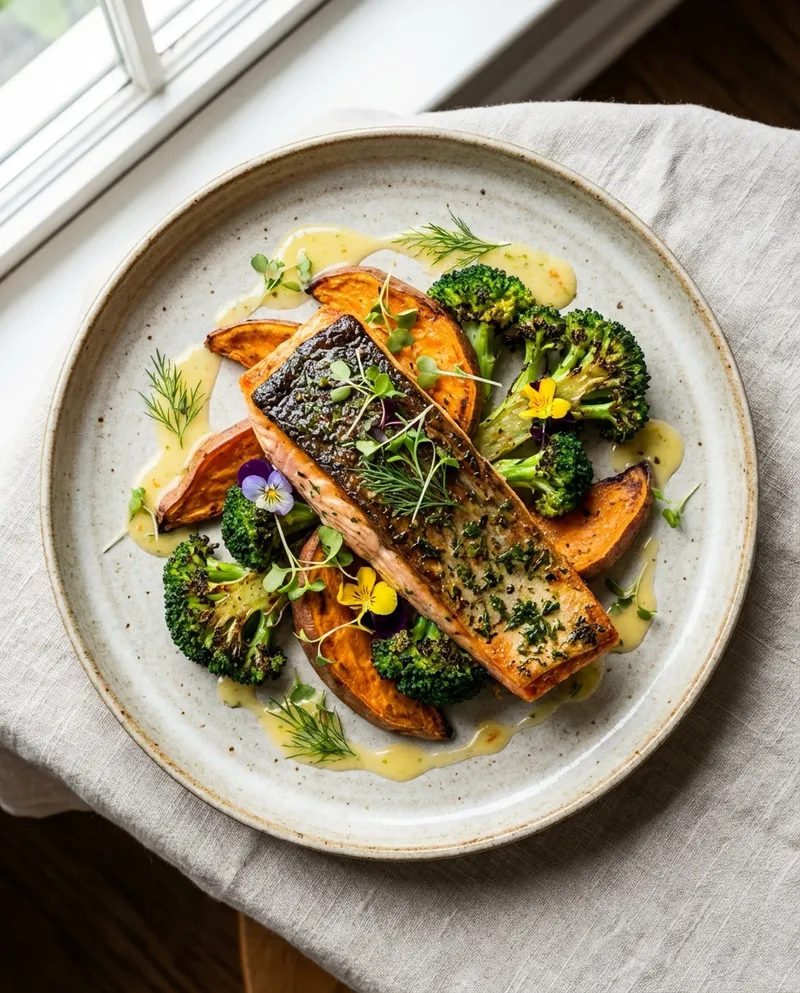
A bright, restaurant-style weeknight plate: a tender, lemon-garlic baked salmon fillet with crisped edges served alongside caramelized roasted sweet potato cubes and charred broccoli florets. The dish balances silky, rich salmon with sweet, earthy potatoes and lightly smoky broccoli, finished with fresh dill (or parsley) and a quick lemon-butter drizzle for a glossy, flavorful finish.
Preheat and prepare: Preheat your oven to 425°F (220°C). Line a rimmed baking sheet with parchment or lightly oil it. A hot oven gives a quick roast that caramelizes the sweet potato and crisps the salmon edges without drying the fish.
Prep the sweet potato: Peel (optional) and cut the sweet potato into 1/2-inch (1.2 cm) cubes so they cook quickly and evenly. Toss the cubes with 1 tablespoon olive oil, 1/4 tsp kosher salt and a pinch of black pepper in a bowl. Cutting uniform pieces ensures even caramelization; oil and salt help the surface brown rather than steam.
Start roasting the sweet potato: Spread the sweet potato cubes in a single layer on one side of the baking sheet, leaving space for the broccoli and salmon later. Roast for 12 minutes. We start the sweet potato first because it needs more time to soften and caramelize than the broccoli and salmon.
While the sweet potato roasts, prep salmon and broccoli: Pat the salmon dry with paper towels (dry skin crisps better and prevents steaming). Season the flesh side with the remaining 1/4 tsp kosher salt and 1/8 tsp black pepper. In a small bowl combine the remaining 1/2 tablespoon olive oil, minced garlic, and the juice of half a lemon. Toss the broccoli florets with the garlic-lemon oil and a pinch of salt. Rubbing the salmon with oil helps transfer heat for even searing; lemon-garlic on the broccoli builds a bright, aromatic base.
Add broccoli to the sheet: After the sweet potato has roasted 12 minutes, remove the sheet and give the sweet potato a quick toss to ensure even browning. Push the potatoes to one side and add the broccoli florets in a single layer. Return the pan to the oven for another 6 minutes. The broccoli will begin to brown and develop char without overcooking when added later.
Place the salmon on the sheet: After the broccoli has roasted 6 minutes, remove the pan again and make a small space for the salmon (skin side down if skin-on). Brush the garlic-lemon oil over the top of the salmon fillet. Return the sheet to the oven and roast for 8–12 more minutes, depending on thickness (roughly 10 minutes for a typical 6 oz, ~1-inch thick fillet). At high heat, the oven will create a lightly roasted exterior while keeping the center moist; timing depends on thickness and desired doneness.
Check for doneness: Salmon is best at 120–125°F (49–52°C) for medium-rare and 130–135°F (54–57°C) for medium. Use an instant-read thermometer inserted into the thickest part to avoid overcooking. If you don’t have a thermometer, the salmon should flake easily with a fork but still look slightly translucent in the center.
Finish with lemon-butter and herbs: Remove the pan from the oven. If using butter, melt 1 tsp in a small heatproof dish and stir in a drizzle of the hot pan juices (or a squeeze of lemon) to emulsify. Spoon the warm butter (or a little additional olive oil) and the chopped dill/parsley over the salmon and vegetables. The warm butter adds gloss and a round, rich mouthfeel, while the fresh herb lifts the overall flavor.
Rest briefly and plate: Let the salmon rest for 2–3 minutes so residual heat finishes cooking it gently and juices redistribute. Arrange the sweet potato and broccoli on a plate, place the salmon on top or alongside, and finish with a lemon wedge for squeezing. Resting prevents the fish from drying and keeps the texture silky.
Serve suggestion: Serve immediately with the lemon wedge and an extra sprinkling of flaky sea salt if desired. A light salad or a spoonful of yogurt-dill sauce pairs nicely if you want a cool contrast.
804
Calories
41g
Protein
54g
Carbs
48g
Fat
9g
Fiber
How did this recipe turn out? Let others know!
to rate this recipe
By emensah m
A bright, restaurant-style weeknight plate: a tender, lemon-garlic baked salmon fillet with crisped edges served alongside caramelized roasted sweet potato cubes and charred broccoli florets. The dish balances silky, rich salmon with sweet, earthy potatoes and lightly smoky broccoli, finished with fresh dill (or parsley) and a quick lemon-butter drizzle for a glossy, flavorful finish.
Preheat and prepare: Preheat your oven to 425°F (220°C). Line a rimmed baking sheet with parchment or lightly oil it. A hot oven gives a quick roast that caramelizes the sweet potato and crisps the salmon edges without drying the fish.
Prep the sweet potato: Peel (optional) and cut the sweet potato into 1/2-inch (1.2 cm) cubes so they cook quickly and evenly. Toss the cubes with 1 tablespoon olive oil, 1/4 tsp kosher salt and a pinch of black pepper in a bowl. Cutting uniform pieces ensures even caramelization; oil and salt help the surface brown rather than steam.
Start roasting the sweet potato: Spread the sweet potato cubes in a single layer on one side of the baking sheet, leaving space for the broccoli and salmon later. Roast for 12 minutes. We start the sweet potato first because it needs more time to soften and caramelize than the broccoli and salmon.
While the sweet potato roasts, prep salmon and broccoli: Pat the salmon dry with paper towels (dry skin crisps better and prevents steaming). Season the flesh side with the remaining 1/4 tsp kosher salt and 1/8 tsp black pepper. In a small bowl combine the remaining 1/2 tablespoon olive oil, minced garlic, and the juice of half a lemon. Toss the broccoli florets with the garlic-lemon oil and a pinch of salt. Rubbing the salmon with oil helps transfer heat for even searing; lemon-garlic on the broccoli builds a bright, aromatic base.
Add broccoli to the sheet: After the sweet potato has roasted 12 minutes, remove the sheet and give the sweet potato a quick toss to ensure even browning. Push the potatoes to one side and add the broccoli florets in a single layer. Return the pan to the oven for another 6 minutes. The broccoli will begin to brown and develop char without overcooking when added later.
Place the salmon on the sheet: After the broccoli has roasted 6 minutes, remove the pan again and make a small space for the salmon (skin side down if skin-on). Brush the garlic-lemon oil over the top of the salmon fillet. Return the sheet to the oven and roast for 8–12 more minutes, depending on thickness (roughly 10 minutes for a typical 6 oz, ~1-inch thick fillet). At high heat, the oven will create a lightly roasted exterior while keeping the center moist; timing depends on thickness and desired doneness.
Check for doneness: Salmon is best at 120–125°F (49–52°C) for medium-rare and 130–135°F (54–57°C) for medium. Use an instant-read thermometer inserted into the thickest part to avoid overcooking. If you don’t have a thermometer, the salmon should flake easily with a fork but still look slightly translucent in the center.
Finish with lemon-butter and herbs: Remove the pan from the oven. If using butter, melt 1 tsp in a small heatproof dish and stir in a drizzle of the hot pan juices (or a squeeze of lemon) to emulsify. Spoon the warm butter (or a little additional olive oil) and the chopped dill/parsley over the salmon and vegetables. The warm butter adds gloss and a round, rich mouthfeel, while the fresh herb lifts the overall flavor.
Rest briefly and plate: Let the salmon rest for 2–3 minutes so residual heat finishes cooking it gently and juices redistribute. Arrange the sweet potato and broccoli on a plate, place the salmon on top or alongside, and finish with a lemon wedge for squeezing. Resting prevents the fish from drying and keeps the texture silky.
Serve suggestion: Serve immediately with the lemon wedge and an extra sprinkling of flaky sea salt if desired. A light salad or a spoonful of yogurt-dill sauce pairs nicely if you want a cool contrast.
804
Calories
41g
Protein
54g
Carbs
48g
Fat
9g
Fiber
Your Rating:
