By emensah m
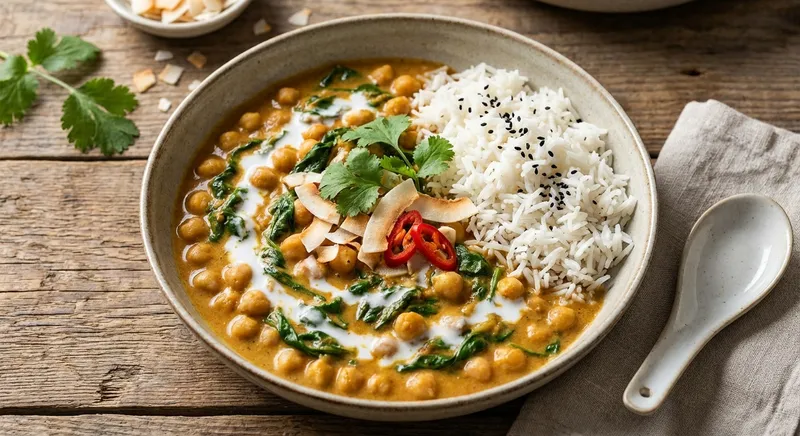
A silky, fragrant chickpea and spinach curry simmered in light coconut milk and warm curry spices, served over fluffy basmati rice. Bright tomato paste and fresh ginger/garlic deepen the savory base while cilantro and lemon lift the finish — a restaurant-quality, plant-forward main that’s rich in texture and layered flavor.
Rinse the basmati rice under cold running water until it runs clear (about 30 seconds). Then drain. Rinsing removes surface starch so the rice cooks up light and separate rather than gummy.
Cook the rice: In a medium saucepan combine the rinsed 1.5 cups basmati rice and 2.25 cups water with a pinch (1/4 tsp) of salt. Bring to a gentle boil over medium-high heat, then reduce to the lowest simmer, cover tightly, and cook 12–15 minutes. Turn off heat and let rest, covered, for 10 minutes. This low-and-steady method keeps basmati grains long and fluffy.
While the rice is cooking, prep aromatics: finely dice the onion, mince garlic, and grate the ginger. Having everything prepped lets you move quickly to bloom spices while they’re hot and fragrant.
Heat a large, heavy-bottomed skillet or sauté pan over medium heat and add 2 tbsp vegetable oil. When the oil shimmers, add the diced onion and 1/2 tsp salt. Sauté 6–8 minutes until the onion is soft and starting to color at the edges. Sweating and lightly caramelizing the onion builds sweet, savory depth for the curry base.
Add the minced garlic and grated ginger and cook 30–45 seconds until very fragrant. Then add 2 tbsp curry powder and 1 tsp ground cumin; stir immediately and cook 20–30 seconds to bloom the spices. Toasting spices like this in oil releases their essential oils and multiplies aroma and flavor.
Stir in 2 tbsp tomato paste and cook 1–2 minutes, stirring constantly, until it darkens slightly. Cooking tomato paste removes raw tinny notes and allows it to caramelize, deepening the umami of the sauce.
Add the drained chickpeas to the pan and stir to coat in the spiced onion-tomato mixture. Add 3/4 cup water to deglaze any browned bits from the pan and loosen the sauce. The water helps the chickpeas absorb flavor and prevents the mixture from becoming greasy.
Pour in the 1 can (400 ml) light coconut milk and stir to combine. Bring the curry to a gentle simmer, then reduce heat to medium-low. Simmer uncovered for 10–12 minutes to let the sauce thicken slightly and the flavors meld. Simmering concentrates flavors and integrates the coconut milk without separating it.
Season with 1 to 1.5 tsp kosher salt (taste and adjust) and 1/2 tsp freshly ground black pepper. If you want heat, add 1/4 tsp cayenne or red pepper flakes now. Seasoning during simmering ensures salt distributes through the sauce and draws flavors forward.
Add the fresh spinach in batches, turning the leaves into the warm sauce until just wilted — 2–3 minutes. Add the last handful and stir until all spinach is bright green and tender but not overcooked. Wilting at the end preserves color, texture, and nutrients.
Finish the curry: squeeze in 1 tbsp fresh lemon juice and taste; adjust salt, pepper, or acid as needed. Finish with 1/4 cup chopped cilantro. The acid brightens the rich coconut sauce and cilantro adds herbaceous lift, making the dish feel finished and balanced.
Fluff the rice with a fork and divide between 4 plates. Spoon the chickpea and spinach coconut curry over the rice, garnish with extra cilantro and a wedge of lemon on the side. Serve immediately. The hot curry over warm, fluffy rice is the ideal contrast of textures and temperatures.
637
Calories
20g
Protein
101g
Carbs
18g
Fat
14g
Fiber
How did this recipe turn out? Let others know!
to rate this recipe
By emensah m
A silky, fragrant chickpea and spinach curry simmered in light coconut milk and warm curry spices, served over fluffy basmati rice. Bright tomato paste and fresh ginger/garlic deepen the savory base while cilantro and lemon lift the finish — a restaurant-quality, plant-forward main that’s rich in texture and layered flavor.
Rinse the basmati rice under cold running water until it runs clear (about 30 seconds). Then drain. Rinsing removes surface starch so the rice cooks up light and separate rather than gummy.
Cook the rice: In a medium saucepan combine the rinsed 1.5 cups basmati rice and 2.25 cups water with a pinch (1/4 tsp) of salt. Bring to a gentle boil over medium-high heat, then reduce to the lowest simmer, cover tightly, and cook 12–15 minutes. Turn off heat and let rest, covered, for 10 minutes. This low-and-steady method keeps basmati grains long and fluffy.
While the rice is cooking, prep aromatics: finely dice the onion, mince garlic, and grate the ginger. Having everything prepped lets you move quickly to bloom spices while they’re hot and fragrant.
Heat a large, heavy-bottomed skillet or sauté pan over medium heat and add 2 tbsp vegetable oil. When the oil shimmers, add the diced onion and 1/2 tsp salt. Sauté 6–8 minutes until the onion is soft and starting to color at the edges. Sweating and lightly caramelizing the onion builds sweet, savory depth for the curry base.
Add the minced garlic and grated ginger and cook 30–45 seconds until very fragrant. Then add 2 tbsp curry powder and 1 tsp ground cumin; stir immediately and cook 20–30 seconds to bloom the spices. Toasting spices like this in oil releases their essential oils and multiplies aroma and flavor.
Stir in 2 tbsp tomato paste and cook 1–2 minutes, stirring constantly, until it darkens slightly. Cooking tomato paste removes raw tinny notes and allows it to caramelize, deepening the umami of the sauce.
Add the drained chickpeas to the pan and stir to coat in the spiced onion-tomato mixture. Add 3/4 cup water to deglaze any browned bits from the pan and loosen the sauce. The water helps the chickpeas absorb flavor and prevents the mixture from becoming greasy.
Pour in the 1 can (400 ml) light coconut milk and stir to combine. Bring the curry to a gentle simmer, then reduce heat to medium-low. Simmer uncovered for 10–12 minutes to let the sauce thicken slightly and the flavors meld. Simmering concentrates flavors and integrates the coconut milk without separating it.
Season with 1 to 1.5 tsp kosher salt (taste and adjust) and 1/2 tsp freshly ground black pepper. If you want heat, add 1/4 tsp cayenne or red pepper flakes now. Seasoning during simmering ensures salt distributes through the sauce and draws flavors forward.
Add the fresh spinach in batches, turning the leaves into the warm sauce until just wilted — 2–3 minutes. Add the last handful and stir until all spinach is bright green and tender but not overcooked. Wilting at the end preserves color, texture, and nutrients.
Finish the curry: squeeze in 1 tbsp fresh lemon juice and taste; adjust salt, pepper, or acid as needed. Finish with 1/4 cup chopped cilantro. The acid brightens the rich coconut sauce and cilantro adds herbaceous lift, making the dish feel finished and balanced.
Fluff the rice with a fork and divide between 4 plates. Spoon the chickpea and spinach coconut curry over the rice, garnish with extra cilantro and a wedge of lemon on the side. Serve immediately. The hot curry over warm, fluffy rice is the ideal contrast of textures and temperatures.
637
Calories
20g
Protein
101g
Carbs
18g
Fat
14g
Fiber
Your Rating:
