By emensah m
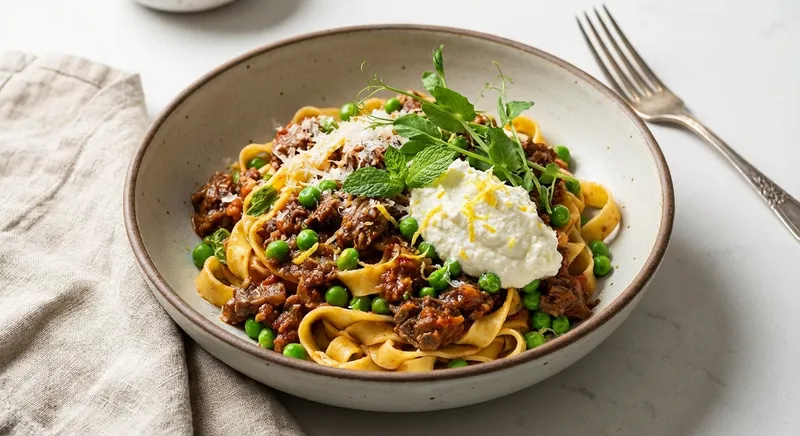
A bright, comforting Italian-style pasta that pairs a quick, deeply flavored beef ragù with the freshness of spring peas and a silky lemon-scented ricotta finish. The ragù is caramelized for savory depth, deglazed with white wine or stock, and finished with crushed tomatoes so it stays light but full-flavored — finished with herb-bright basil/parsley and dollops of zesty lemon ricotta for contrast.
Make the lemon ricotta: in a small bowl combine 120 g ricotta with 1 tsp finely grated lemon zest and a pinch of salt. Stir until smooth and set in the refrigerator. Chilling helps the ricotta firm slightly so it will hold a bright spot on the finished plate rather than fully melting into the sauce.
Bring a large pot of salted water to a rolling boil for the pasta. Salt the water well (it should taste like the sea) because this is the primary seasoning for the pasta itself — under‑seasoned water equals flat pasta.
Heat a large sauté pan or shallow Dutch oven over medium‑high heat and add 4 tsp extra‑virgin olive oil. When the oil shimmers (but not smoking), add the finely diced onion and carrot and a pinch of salt. Sauté for 4–6 minutes until the vegetables are softened and beginning to color. Softening these aromatics first builds sweetness and a base flavor for the ragù.
Add the minced garlic and cook for 30–45 seconds, just until fragrant — garlic burns quickly and will turn bitter, so keep it moving in the pan and stop when you smell it.
Increase the heat to high and add the 560 g ground beef in one layer. Let it sit undisturbed for 60–90 seconds to brown on the first side — this initial sear develops Maillard flavors that make the ragù taste meaty and complex. Then break the meat up with a wooden spoon and continue to cook, stirring occasionally, until no pink remains and the meat has nicely browned (about 5–7 minutes total).
Season the browned beef with a generous pinch of salt, several grinds of black pepper, and a pinch of red pepper flakes if you want heat. If you see excess fat pooling (depends on how lean your beef is), spoon off a small amount — you want flavor but not a greasy sauce.
Deglaze the pan with 4 tbsp dry white wine or 4 tbsp extra stock: pour it into the hot pan and scrape up the brown bits from the bottom with a wooden spoon. Deglazing lifts concentrated browned flavor into the sauce and adds acidity to balance the beef and tomatoes. Let the wine reduce by half, about 1–2 minutes.
Add the 400 g crushed tomatoes, stir to combine, reduce the heat to medium‑low, and simmer gently, uncovered, for 10–12 minutes. The short simmer will cook out the raw tomato taste while keeping the ragù lively and slightly fresh rather than heavy. Taste and adjust salt, pepper and red pepper flakes.
While the ragù simmers, cook the tagliatelle in the boiling salted water according to package directions until al dente (usually 7–9 minutes for fresh‑dried tagliatelle). Reserve 1 cup (240 ml) of the pasta cooking water before you drain — the starchy water helps the sauce bind to the pasta.
When the pasta has 1 minute left, add the 200 g fresh peas to the pot with the pasta for 1 minute (if using frozen, add in the last 2 minutes). Cooking peas with the pasta warms them through and keeps them bright and tender — this is faster and keeps maximum color and sweetness.
Drain pasta and peas together, then add the pasta and peas directly into the ragù pan. Turn the heat to low and toss gently, adding 2–4 tbsp reserved pasta water as needed to loosen the sauce and create a glossy emulsion that clings to the noodles. The starch in the pasta water is the secret to a silky finish that coats each ribbon of tagliatelle.
Remove from heat and stir in 3 tbsp of the chopped basil/parsley, then drizzle with 1 tbsp finishing olive oil if using. Taste and correct seasoning — acidity, salt, pepper — to make the flavors sing.
To serve: divide the pasta among 4 warmed bowls. Dot each portion with spoonfuls of lemon ricotta (about 30 g ricotta worth per person), scatter remaining chopped herbs, and finish with a crack of black pepper and a light sprinkle of red pepper flakes if you like. The cold, tangy ricotta against the warm ragù creates a creamy, bright contrast that lifts the dish.
883
Calories
57g
Protein
96g
Carbs
28g
Fat
8g
Fiber
How did this recipe turn out? Let others know!
to rate this recipe
By emensah m
A bright, comforting Italian-style pasta that pairs a quick, deeply flavored beef ragù with the freshness of spring peas and a silky lemon-scented ricotta finish. The ragù is caramelized for savory depth, deglazed with white wine or stock, and finished with crushed tomatoes so it stays light but full-flavored — finished with herb-bright basil/parsley and dollops of zesty lemon ricotta for contrast.
Make the lemon ricotta: in a small bowl combine 120 g ricotta with 1 tsp finely grated lemon zest and a pinch of salt. Stir until smooth and set in the refrigerator. Chilling helps the ricotta firm slightly so it will hold a bright spot on the finished plate rather than fully melting into the sauce.
Bring a large pot of salted water to a rolling boil for the pasta. Salt the water well (it should taste like the sea) because this is the primary seasoning for the pasta itself — under‑seasoned water equals flat pasta.
Heat a large sauté pan or shallow Dutch oven over medium‑high heat and add 4 tsp extra‑virgin olive oil. When the oil shimmers (but not smoking), add the finely diced onion and carrot and a pinch of salt. Sauté for 4–6 minutes until the vegetables are softened and beginning to color. Softening these aromatics first builds sweetness and a base flavor for the ragù.
Add the minced garlic and cook for 30–45 seconds, just until fragrant — garlic burns quickly and will turn bitter, so keep it moving in the pan and stop when you smell it.
Increase the heat to high and add the 560 g ground beef in one layer. Let it sit undisturbed for 60–90 seconds to brown on the first side — this initial sear develops Maillard flavors that make the ragù taste meaty and complex. Then break the meat up with a wooden spoon and continue to cook, stirring occasionally, until no pink remains and the meat has nicely browned (about 5–7 minutes total).
Season the browned beef with a generous pinch of salt, several grinds of black pepper, and a pinch of red pepper flakes if you want heat. If you see excess fat pooling (depends on how lean your beef is), spoon off a small amount — you want flavor but not a greasy sauce.
Deglaze the pan with 4 tbsp dry white wine or 4 tbsp extra stock: pour it into the hot pan and scrape up the brown bits from the bottom with a wooden spoon. Deglazing lifts concentrated browned flavor into the sauce and adds acidity to balance the beef and tomatoes. Let the wine reduce by half, about 1–2 minutes.
Add the 400 g crushed tomatoes, stir to combine, reduce the heat to medium‑low, and simmer gently, uncovered, for 10–12 minutes. The short simmer will cook out the raw tomato taste while keeping the ragù lively and slightly fresh rather than heavy. Taste and adjust salt, pepper and red pepper flakes.
While the ragù simmers, cook the tagliatelle in the boiling salted water according to package directions until al dente (usually 7–9 minutes for fresh‑dried tagliatelle). Reserve 1 cup (240 ml) of the pasta cooking water before you drain — the starchy water helps the sauce bind to the pasta.
When the pasta has 1 minute left, add the 200 g fresh peas to the pot with the pasta for 1 minute (if using frozen, add in the last 2 minutes). Cooking peas with the pasta warms them through and keeps them bright and tender — this is faster and keeps maximum color and sweetness.
Drain pasta and peas together, then add the pasta and peas directly into the ragù pan. Turn the heat to low and toss gently, adding 2–4 tbsp reserved pasta water as needed to loosen the sauce and create a glossy emulsion that clings to the noodles. The starch in the pasta water is the secret to a silky finish that coats each ribbon of tagliatelle.
Remove from heat and stir in 3 tbsp of the chopped basil/parsley, then drizzle with 1 tbsp finishing olive oil if using. Taste and correct seasoning — acidity, salt, pepper — to make the flavors sing.
To serve: divide the pasta among 4 warmed bowls. Dot each portion with spoonfuls of lemon ricotta (about 30 g ricotta worth per person), scatter remaining chopped herbs, and finish with a crack of black pepper and a light sprinkle of red pepper flakes if you like. The cold, tangy ricotta against the warm ragù creates a creamy, bright contrast that lifts the dish.
883
Calories
57g
Protein
96g
Carbs
28g
Fat
8g
Fiber
Your Rating:
