By abbey f
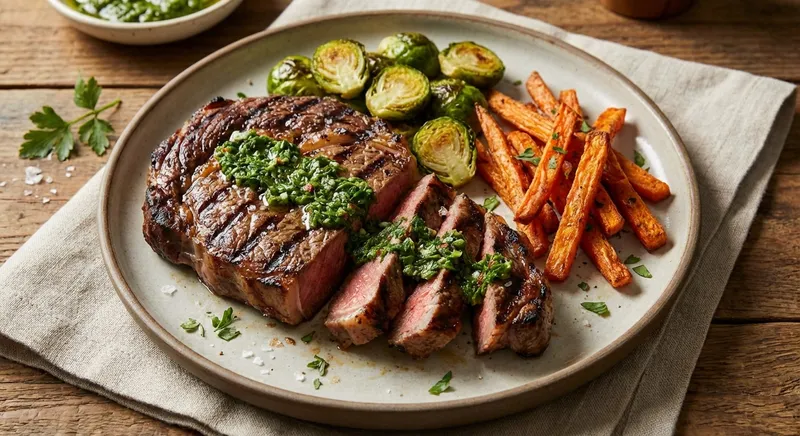
A boldly flavored, restaurant-style ribeye finished with fresh, herbaceous chimichurri and paired with caramelized roasted Brussels sprouts and crisp carrot fries. The steak is grilled to a perfect crust to lock in juices, while the bright chimichurri (parsley, oregano, garlic, olive oil and red wine vinegar) cuts through the richness for a balanced, celebratory plate.
Make the chimichurri first: in a bowl combine the chopped parsley, chopped oregano, minced garlic, 4 tablespoons olive oil, 1 tablespoon red wine vinegar, 1/2 teaspoon sea salt and 1/4 teaspoon freshly ground black pepper, and red pepper flakes if using. Stir until homogeneous. Why: Making chimichurri early lets the flavors marry so the herbs and garlic release aromatic oils into the olive oil, making the sauce brighter and more balanced when served.
Taste and adjust: taste a small smear of chimichurri on toast or a spoon; add a pinch more salt or a few drops more vinegar if it needs brightness. Why: Fresh herbs can vary in intensity; balancing salt and acid ensures the chimichurri will cut through the richness of the ribeye.
Prep the vegetables: preheat the oven to 425°F (220°C). Trim Brussels sprouts, halve lengthwise; peel carrots and cut into 3–4 inch matchstick fries (about 1/4–1/2 inch thick). Toss Brussels and carrots in a large bowl with 2 tablespoons olive oil, 1 teaspoon sea salt and 1/2 teaspoon freshly ground black pepper. Why: High oven temperature encourages Maillard browning for deep caramelization on both Brussels and carrot fries, yielding a sweet, nutty exterior and a tender interior.
Arrange and roast: spread the vegetables in a single layer on a rimmed baking sheet lined with parchment, cut-sides of Brussels down. Roast for 20–25 minutes, tossing once at the halfway point so all pieces brown evenly. Finish under the broiler 1–2 minutes if you want extra char. Why: Single layer and direct contact with the hot pan promote even browning; broiling at the end adds focused color and texture.
Bring the steak to room temperature: while the vegetables roast, remove the ribeye from the fridge 20–30 minutes before cooking and pat it very dry with paper towels. Lightly oil and season both sides with sea salt (about 1 tsp total) and freshly ground black pepper. Why: Room-temperature steak cooks more evenly; drying the surface encourages a better sear, and a simple salt and pepper seasoning enhances the beef flavor without overpowering the chimichurri.
Preheat a grill or heavy cast-iron skillet over high heat until smoking-hot (a grill grate or skillet should be 500°F+). Brush the steak very lightly with 1 tablespoon olive oil to help it develop a crust. Why: A very hot cooking surface creates a rapid Maillard reaction that forms a deeply flavored crust while preserving a juicy interior.
Sear the steak: place the ribeye on the hot grill or skillet. For a 1"–1¼" thick steak (typical for a 12 oz ribeye), cook 3½–4 minutes per side for medium-rare (internal temp ~125–130°F / 51–54°C). If you prefer medium, cook 4½–5 minutes per side (135°F / 57°C). Use tongs—avoid pressing—so juices stay inside. Why: Timing and temperature yield repeatable doneness; not pressing the steak prevents flavorless juice loss and ensures tenderness.
Optional butter baste: in the last 60–90 seconds, add 1 tablespoon butter to the skillet and spoon the melted butter over the steak (basting) to add sheen and a touch of nutty richness. Why: Basting adds flavor and a beautiful finish without masking the beef or chimichurri.
Rest the steak: transfer to a cutting board and loosely tent with foil for 5–7 minutes. This allows internal juices to redistribute, preventing them from running out when you slice. Why: Resting ensures a moist steak and cleaner slices.
Finish the vegetables: remove roasted vegetables from the oven and, while still hot, season with an extra pinch of salt, a grind of pepper and a squeeze of lemon if using. Why: Finishing with acid brightens the caramelized flavors and balances the plate.
Slice and plate: slice the ribeye against the grain into 1/4"–1/2" slices. Spoon 2–3 tablespoons of chimichurri over each serving and pass the remaining chimichurri on the side. Arrange roasted Brussels and carrot fries alongside. Why: Slicing against the grain shortens muscle fibers for a more tender bite; serving sauce on the side lets diners control brightness.
Garnish and serve: sprinkle a few extra chopped parsley leaves over the steak for color, and serve immediately. Why: A final herb sprinkle reinforces the fresh notes and makes the plate visually appealing.
1043
Calories
41g
Protein
29g
Carbs
90g
Fat
10g
Fiber
How did this recipe turn out? Let others know!
to rate this recipe
By abbey f
A boldly flavored, restaurant-style ribeye finished with fresh, herbaceous chimichurri and paired with caramelized roasted Brussels sprouts and crisp carrot fries. The steak is grilled to a perfect crust to lock in juices, while the bright chimichurri (parsley, oregano, garlic, olive oil and red wine vinegar) cuts through the richness for a balanced, celebratory plate.
Make the chimichurri first: in a bowl combine the chopped parsley, chopped oregano, minced garlic, 4 tablespoons olive oil, 1 tablespoon red wine vinegar, 1/2 teaspoon sea salt and 1/4 teaspoon freshly ground black pepper, and red pepper flakes if using. Stir until homogeneous. Why: Making chimichurri early lets the flavors marry so the herbs and garlic release aromatic oils into the olive oil, making the sauce brighter and more balanced when served.
Taste and adjust: taste a small smear of chimichurri on toast or a spoon; add a pinch more salt or a few drops more vinegar if it needs brightness. Why: Fresh herbs can vary in intensity; balancing salt and acid ensures the chimichurri will cut through the richness of the ribeye.
Prep the vegetables: preheat the oven to 425°F (220°C). Trim Brussels sprouts, halve lengthwise; peel carrots and cut into 3–4 inch matchstick fries (about 1/4–1/2 inch thick). Toss Brussels and carrots in a large bowl with 2 tablespoons olive oil, 1 teaspoon sea salt and 1/2 teaspoon freshly ground black pepper. Why: High oven temperature encourages Maillard browning for deep caramelization on both Brussels and carrot fries, yielding a sweet, nutty exterior and a tender interior.
Arrange and roast: spread the vegetables in a single layer on a rimmed baking sheet lined with parchment, cut-sides of Brussels down. Roast for 20–25 minutes, tossing once at the halfway point so all pieces brown evenly. Finish under the broiler 1–2 minutes if you want extra char. Why: Single layer and direct contact with the hot pan promote even browning; broiling at the end adds focused color and texture.
Bring the steak to room temperature: while the vegetables roast, remove the ribeye from the fridge 20–30 minutes before cooking and pat it very dry with paper towels. Lightly oil and season both sides with sea salt (about 1 tsp total) and freshly ground black pepper. Why: Room-temperature steak cooks more evenly; drying the surface encourages a better sear, and a simple salt and pepper seasoning enhances the beef flavor without overpowering the chimichurri.
Preheat a grill or heavy cast-iron skillet over high heat until smoking-hot (a grill grate or skillet should be 500°F+). Brush the steak very lightly with 1 tablespoon olive oil to help it develop a crust. Why: A very hot cooking surface creates a rapid Maillard reaction that forms a deeply flavored crust while preserving a juicy interior.
Sear the steak: place the ribeye on the hot grill or skillet. For a 1"–1¼" thick steak (typical for a 12 oz ribeye), cook 3½–4 minutes per side for medium-rare (internal temp ~125–130°F / 51–54°C). If you prefer medium, cook 4½–5 minutes per side (135°F / 57°C). Use tongs—avoid pressing—so juices stay inside. Why: Timing and temperature yield repeatable doneness; not pressing the steak prevents flavorless juice loss and ensures tenderness.
Optional butter baste: in the last 60–90 seconds, add 1 tablespoon butter to the skillet and spoon the melted butter over the steak (basting) to add sheen and a touch of nutty richness. Why: Basting adds flavor and a beautiful finish without masking the beef or chimichurri.
Rest the steak: transfer to a cutting board and loosely tent with foil for 5–7 minutes. This allows internal juices to redistribute, preventing them from running out when you slice. Why: Resting ensures a moist steak and cleaner slices.
Finish the vegetables: remove roasted vegetables from the oven and, while still hot, season with an extra pinch of salt, a grind of pepper and a squeeze of lemon if using. Why: Finishing with acid brightens the caramelized flavors and balances the plate.
Slice and plate: slice the ribeye against the grain into 1/4"–1/2" slices. Spoon 2–3 tablespoons of chimichurri over each serving and pass the remaining chimichurri on the side. Arrange roasted Brussels and carrot fries alongside. Why: Slicing against the grain shortens muscle fibers for a more tender bite; serving sauce on the side lets diners control brightness.
Garnish and serve: sprinkle a few extra chopped parsley leaves over the steak for color, and serve immediately. Why: A final herb sprinkle reinforces the fresh notes and makes the plate visually appealing.
1043
Calories
41g
Protein
29g
Carbs
90g
Fat
10g
Fiber
Your Rating:
