By Chef
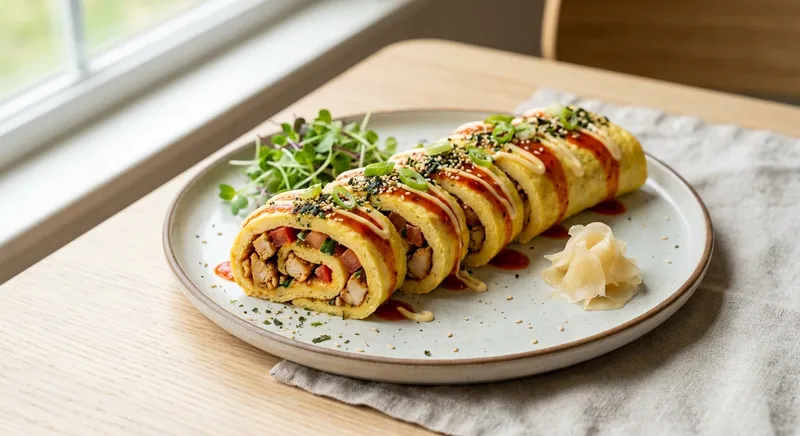
Silky rolled omelettes wrapped around a bright, spicy chicken–tomato filling — a harmonious balance of umami, acidity and heat with a pillowy egg texture inspired by Japanese tamagoyaki and yoshoku (Western-influenced Japanese) flavors. The filling is gently simmered to concentrate tomato sweetness and meld with soy–mirin umami, while the eggs are cooked thin and rolled to create elegant slices that are impressive on the plate yet easy enough for a home cook.
Prep the ingredients: Trim fat from the chicken and cut into small 1–1.5 cm dice (or very small strips). Finely dice the onion, mince the garlic, core and dice the tomatoes into 1–1.5 cm pieces, and thinly slice the green onions. Why: Small, uniform dice lets the filling cook quickly and evenly and makes the roll pleasant to bite into without large chunks.
Season the chicken lightly with 1/2 tsp kosher salt and a few grinds of black pepper. Why: A light pre-season ensures the meat is flavored through the cooking process; the filling will be further seasoned later, so keep initial salt modest.
Make the tomato–chicken filling: Heat a heavy skillet over medium heat and add 1 tbsp vegetable oil. When the oil shimmers, add the onion and cook 3–4 minutes until softened and translucent — this builds a sweet base. Add the garlic and cook 30 seconds until fragrant (don’t brown it or it will turn bitter).
Add the diced chicken and increase heat to medium-high. Sear the chicken pieces without overcrowding, stirring occasionally until just cooked through and starting to take color (about 4–5 minutes). Why: Browning adds Maillard flavor — those toasted notes will deepen the umami of the filling.
Stir in the diced tomatoes, 1 tsp sugar, 1 tbsp mirin, 1 tbsp sake, 1.5 tbsp soy sauce and 1 tbsp sriracha. Reduce heat to medium-low and simmer 6–8 minutes, stirring occasionally, until the tomatoes have softened and the mixture has thickened slightly but still has body. Taste and adjust salt/soy and sriracha to your preference. Why: Simmering concentrates the tomato flavor and lets the soy/mirin meld into the meat — you want a saucy, slightly sticky filling that holds together when rolled but is not runny.
Finish the filling with 1 tsp toasted sesame oil and half the sliced green onions (reserve rest for garnish). Stir and remove from heat and set aside to cool slightly. Why: The sesame oil adds a toasty aroma and finishing at the end preserves its volatile flavors.
Prepare the eggs: Crack the 8 eggs into a large bowl, season with 1/4 tsp kosher salt and a pinch of black pepper, and beat lightly until just combined — you want some streaks of white still visible, not foamy. Why: Overbeating aerates eggs and makes them puffy; for thin omelette sheets you want a silky texture that folds and rolls easily.
Heat a 10–12 inch nonstick skillet (or a rectangular tamagoyaki pan if you have one) over medium-low. Add 1/2 tbsp vegetable oil and 1/2 tbsp butter and swirl to coat. Pour a thin layer of egg (about 1/4 of the beaten eggs, ~2 eggs' worth) and tilt the pan to make an even, thin round (2–3 mm thick). Why: Cooking on medium-low yields a tender, tender set without browning — we want pliable sheets that roll without cracking.
Cook the egg sheet 45–60 seconds until the surface is mostly set but still slightly glossy on top. Using a thin spatula, loosen the edges and flip briefly if needed to set the underside, then slide the omelette onto a clean work surface or a lightly oiled sheet of parchment. Keep the pan warm and repeat to make 4 equal thin omelette sheets. Why: Slight gloss on the surface ensures the eggs remain flexible for rolling and prevents dryness.
Assemble the rolls: Divide the cooled filling into 4 even portions and place one portion across the lower third of an egg sheet (leave a 1 cm border at edges). Gently roll the egg over the filling to form a tight cylinder. If the edge doesn't stick, dab a little beaten egg along the seam and press to seal. Why: Rolling while the eggs are still warm helps them adhere; a tight roll keeps slices neat and prevents the filling from falling out.
Rest and finish: Place each roll seam-side down for 2–3 minutes to let the eggs set. Brush lightly with a little melted butter if desired for gloss. Cut each roll into 3–4 slices on the diagonal to make attractive rounds. Why: Resting helps the roll keep its shape and makes slicing cleaner.
Plate: Arrange 3 slices per person on warm plates, scatter remaining green onions and a pinch of shichimi togarashi for color and extra heat. Serve immediately while warm. Why: Serving warm preserves the silky texture of the egg and the juicy warmth of the filling — the contrast between soft egg and savory, slightly tangy filling is the point of the dish.
496
Calories
53g
Protein
11g
Carbs
26g
Fat
1g
Fiber
How did this recipe turn out? Let others know!
to rate this recipe
By Chef
Silky rolled omelettes wrapped around a bright, spicy chicken–tomato filling — a harmonious balance of umami, acidity and heat with a pillowy egg texture inspired by Japanese tamagoyaki and yoshoku (Western-influenced Japanese) flavors. The filling is gently simmered to concentrate tomato sweetness and meld with soy–mirin umami, while the eggs are cooked thin and rolled to create elegant slices that are impressive on the plate yet easy enough for a home cook.
Prep the ingredients: Trim fat from the chicken and cut into small 1–1.5 cm dice (or very small strips). Finely dice the onion, mince the garlic, core and dice the tomatoes into 1–1.5 cm pieces, and thinly slice the green onions. Why: Small, uniform dice lets the filling cook quickly and evenly and makes the roll pleasant to bite into without large chunks.
Season the chicken lightly with 1/2 tsp kosher salt and a few grinds of black pepper. Why: A light pre-season ensures the meat is flavored through the cooking process; the filling will be further seasoned later, so keep initial salt modest.
Make the tomato–chicken filling: Heat a heavy skillet over medium heat and add 1 tbsp vegetable oil. When the oil shimmers, add the onion and cook 3–4 minutes until softened and translucent — this builds a sweet base. Add the garlic and cook 30 seconds until fragrant (don’t brown it or it will turn bitter).
Add the diced chicken and increase heat to medium-high. Sear the chicken pieces without overcrowding, stirring occasionally until just cooked through and starting to take color (about 4–5 minutes). Why: Browning adds Maillard flavor — those toasted notes will deepen the umami of the filling.
Stir in the diced tomatoes, 1 tsp sugar, 1 tbsp mirin, 1 tbsp sake, 1.5 tbsp soy sauce and 1 tbsp sriracha. Reduce heat to medium-low and simmer 6–8 minutes, stirring occasionally, until the tomatoes have softened and the mixture has thickened slightly but still has body. Taste and adjust salt/soy and sriracha to your preference. Why: Simmering concentrates the tomato flavor and lets the soy/mirin meld into the meat — you want a saucy, slightly sticky filling that holds together when rolled but is not runny.
Finish the filling with 1 tsp toasted sesame oil and half the sliced green onions (reserve rest for garnish). Stir and remove from heat and set aside to cool slightly. Why: The sesame oil adds a toasty aroma and finishing at the end preserves its volatile flavors.
Prepare the eggs: Crack the 8 eggs into a large bowl, season with 1/4 tsp kosher salt and a pinch of black pepper, and beat lightly until just combined — you want some streaks of white still visible, not foamy. Why: Overbeating aerates eggs and makes them puffy; for thin omelette sheets you want a silky texture that folds and rolls easily.
Heat a 10–12 inch nonstick skillet (or a rectangular tamagoyaki pan if you have one) over medium-low. Add 1/2 tbsp vegetable oil and 1/2 tbsp butter and swirl to coat. Pour a thin layer of egg (about 1/4 of the beaten eggs, ~2 eggs' worth) and tilt the pan to make an even, thin round (2–3 mm thick). Why: Cooking on medium-low yields a tender, tender set without browning — we want pliable sheets that roll without cracking.
Cook the egg sheet 45–60 seconds until the surface is mostly set but still slightly glossy on top. Using a thin spatula, loosen the edges and flip briefly if needed to set the underside, then slide the omelette onto a clean work surface or a lightly oiled sheet of parchment. Keep the pan warm and repeat to make 4 equal thin omelette sheets. Why: Slight gloss on the surface ensures the eggs remain flexible for rolling and prevents dryness.
Assemble the rolls: Divide the cooled filling into 4 even portions and place one portion across the lower third of an egg sheet (leave a 1 cm border at edges). Gently roll the egg over the filling to form a tight cylinder. If the edge doesn't stick, dab a little beaten egg along the seam and press to seal. Why: Rolling while the eggs are still warm helps them adhere; a tight roll keeps slices neat and prevents the filling from falling out.
Rest and finish: Place each roll seam-side down for 2–3 minutes to let the eggs set. Brush lightly with a little melted butter if desired for gloss. Cut each roll into 3–4 slices on the diagonal to make attractive rounds. Why: Resting helps the roll keep its shape and makes slicing cleaner.
Plate: Arrange 3 slices per person on warm plates, scatter remaining green onions and a pinch of shichimi togarashi for color and extra heat. Serve immediately while warm. Why: Serving warm preserves the silky texture of the egg and the juicy warmth of the filling — the contrast between soft egg and savory, slightly tangy filling is the point of the dish.
496
Calories
53g
Protein
11g
Carbs
26g
Fat
1g
Fiber
Your Rating:
