By abbey f
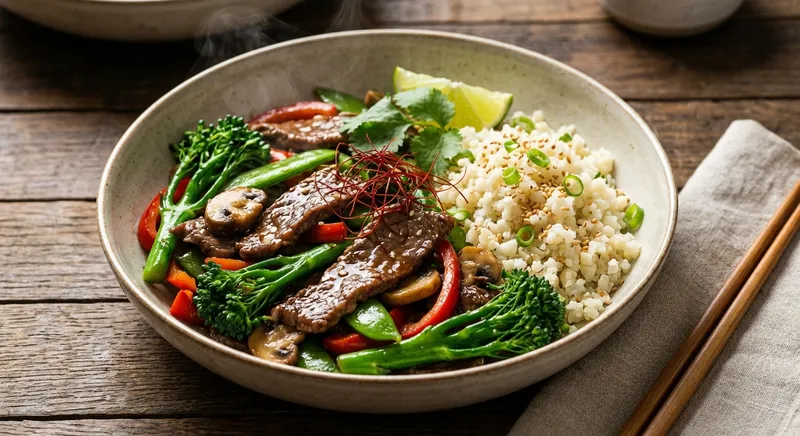
A bright, restaurant‑style stir‑fry: tender, thinly sliced flank steak seared at high heat into caramelized edges, tossed with crisp broccoli, meaty mushrooms and sweet bell pepper in an umami coconut‑amin glaze. Served over fragrant garlic‑sesame cauliflower rice, this dish is low‑carb but big on flavor — savory, slightly sweet, with a toasted sesame finish and the satisfying textural contrast of crisp vegetables and silky beef.
Prep the beef by patting the slices very dry with paper towels. Then toss the steak with 2 tbsp coconut aminos, 1 tsp cornstarch, 1/2 teaspoon sesame oil, a pinch of black pepper, and the white part of the sliced green onions. Let this sit 10–15 minutes. WHY: Dry meat sears; the cornstarch and a short marinade create a thin coating that shields the beef during high heat, helps with browning, and produces a glossy bite when sauced.
Make the sauce slurry: mix the remaining 1 tbsp coconut aminos with 3 tbsp warm water and the optional red pepper flakes in a small bowl. Set aside. WHY: Pre-mixing the sauce keeps your wok work fast; the warm water helps dissolve flavors evenly. Coconut aminos is less salty than soy — finishing salt is added to taste later.
Heat a large wok or heavy skillet over high heat until very hot (a drop of water should sizzle away). Add 1 tbsp neutral oil and swirl. Working in a single layer, sear the beef in 2 quick batches — about 45–60 seconds per side for thin slices — until edges are caramelized but interior is still medium-rare to medium. Transfer beef to a plate and loosely cover. WHY: High heat and small batches create Maillard browning instead of steaming; quick cooking keeps flank steak tender.
Wipe the wok out briefly with a paper towel (leave any brown bits). Add the neutral oil if needed and stir‑fry the broccoli for 1½–2 minutes, then add the mushrooms and bell pepper and continue to toss 2–3 minutes until vegetables are bright and just tender-crisp. Add half the minced garlic and half the grated ginger in the last 30 seconds. WHY: Starting with the densest vegetable (broccoli) ensures even doneness. Adding aromatics at the end prevents burning and releases fresh flavor.
Push the vegetables to the side of the wok, return the beef and any accumulated juices to the center, then pour the sauce slurry around the edge so it hits the hot metal (not directly on the meat). Stir everything together and let the sauce thicken 30–60 seconds — it will cling to the beef and vegetables. Taste and adjust with a light pinch of salt if needed. WHY: Hitting the hot pan activates the slurry quickly; combining beef late prevents it from overcooking and lets the sauce glaze everything.
Finish the stir‑fry with 1 tsp sesame oil, the remaining garlic and ginger, and two-thirds of the sliced green onion. Toss once more and remove from heat. WHY: A small amount of sesame oil at the end gives toasted sesame aroma that is volatile and would be lost with high heat earlier.
Quickly cook the cauliflower rice: in a separate large skillet over medium-high heat, warm 1 tsp sesame oil plus the remaining 1 tsp neutral oil, add the cauliflower rice and spread into an even layer. Let it sit undisturbed 1 minute to dry off, then toss and cook 3–4 minutes until tender but not mushy. Stir in the remaining green onion, a pinch of salt, and a splash (about 1 tsp) coconut aminos if you like more umami. WHY: Cooking cauliflower rice separately preserves its texture and prevents it from steaming under the vegetables; letting it sit briefly encourages evaporation and a slightly toasted flavor.
To serve: mound cauliflower rice on plates, spoon the beef and vegetables over the rice, and scatter the remaining green onion. Optional: drizzle a few drops of sesame oil or sprinkle toasted sesame seeds. WHY: Serving the sauce over the warm cauliflower rice lets it soak into the rice and marry the flavors.
330
Calories
31g
Protein
16g
Carbs
15g
Fat
5g
Fiber
How did this recipe turn out? Let others know!
to rate this recipe
By abbey f
A bright, restaurant‑style stir‑fry: tender, thinly sliced flank steak seared at high heat into caramelized edges, tossed with crisp broccoli, meaty mushrooms and sweet bell pepper in an umami coconut‑amin glaze. Served over fragrant garlic‑sesame cauliflower rice, this dish is low‑carb but big on flavor — savory, slightly sweet, with a toasted sesame finish and the satisfying textural contrast of crisp vegetables and silky beef.
Prep the beef by patting the slices very dry with paper towels. Then toss the steak with 2 tbsp coconut aminos, 1 tsp cornstarch, 1/2 teaspoon sesame oil, a pinch of black pepper, and the white part of the sliced green onions. Let this sit 10–15 minutes. WHY: Dry meat sears; the cornstarch and a short marinade create a thin coating that shields the beef during high heat, helps with browning, and produces a glossy bite when sauced.
Make the sauce slurry: mix the remaining 1 tbsp coconut aminos with 3 tbsp warm water and the optional red pepper flakes in a small bowl. Set aside. WHY: Pre-mixing the sauce keeps your wok work fast; the warm water helps dissolve flavors evenly. Coconut aminos is less salty than soy — finishing salt is added to taste later.
Heat a large wok or heavy skillet over high heat until very hot (a drop of water should sizzle away). Add 1 tbsp neutral oil and swirl. Working in a single layer, sear the beef in 2 quick batches — about 45–60 seconds per side for thin slices — until edges are caramelized but interior is still medium-rare to medium. Transfer beef to a plate and loosely cover. WHY: High heat and small batches create Maillard browning instead of steaming; quick cooking keeps flank steak tender.
Wipe the wok out briefly with a paper towel (leave any brown bits). Add the neutral oil if needed and stir‑fry the broccoli for 1½–2 minutes, then add the mushrooms and bell pepper and continue to toss 2–3 minutes until vegetables are bright and just tender-crisp. Add half the minced garlic and half the grated ginger in the last 30 seconds. WHY: Starting with the densest vegetable (broccoli) ensures even doneness. Adding aromatics at the end prevents burning and releases fresh flavor.
Push the vegetables to the side of the wok, return the beef and any accumulated juices to the center, then pour the sauce slurry around the edge so it hits the hot metal (not directly on the meat). Stir everything together and let the sauce thicken 30–60 seconds — it will cling to the beef and vegetables. Taste and adjust with a light pinch of salt if needed. WHY: Hitting the hot pan activates the slurry quickly; combining beef late prevents it from overcooking and lets the sauce glaze everything.
Finish the stir‑fry with 1 tsp sesame oil, the remaining garlic and ginger, and two-thirds of the sliced green onion. Toss once more and remove from heat. WHY: A small amount of sesame oil at the end gives toasted sesame aroma that is volatile and would be lost with high heat earlier.
Quickly cook the cauliflower rice: in a separate large skillet over medium-high heat, warm 1 tsp sesame oil plus the remaining 1 tsp neutral oil, add the cauliflower rice and spread into an even layer. Let it sit undisturbed 1 minute to dry off, then toss and cook 3–4 minutes until tender but not mushy. Stir in the remaining green onion, a pinch of salt, and a splash (about 1 tsp) coconut aminos if you like more umami. WHY: Cooking cauliflower rice separately preserves its texture and prevents it from steaming under the vegetables; letting it sit briefly encourages evaporation and a slightly toasted flavor.
To serve: mound cauliflower rice on plates, spoon the beef and vegetables over the rice, and scatter the remaining green onion. Optional: drizzle a few drops of sesame oil or sprinkle toasted sesame seeds. WHY: Serving the sauce over the warm cauliflower rice lets it soak into the rice and marry the flavors.
330
Calories
31g
Protein
16g
Carbs
15g
Fat
5g
Fiber
Your Rating:
