By emensah m
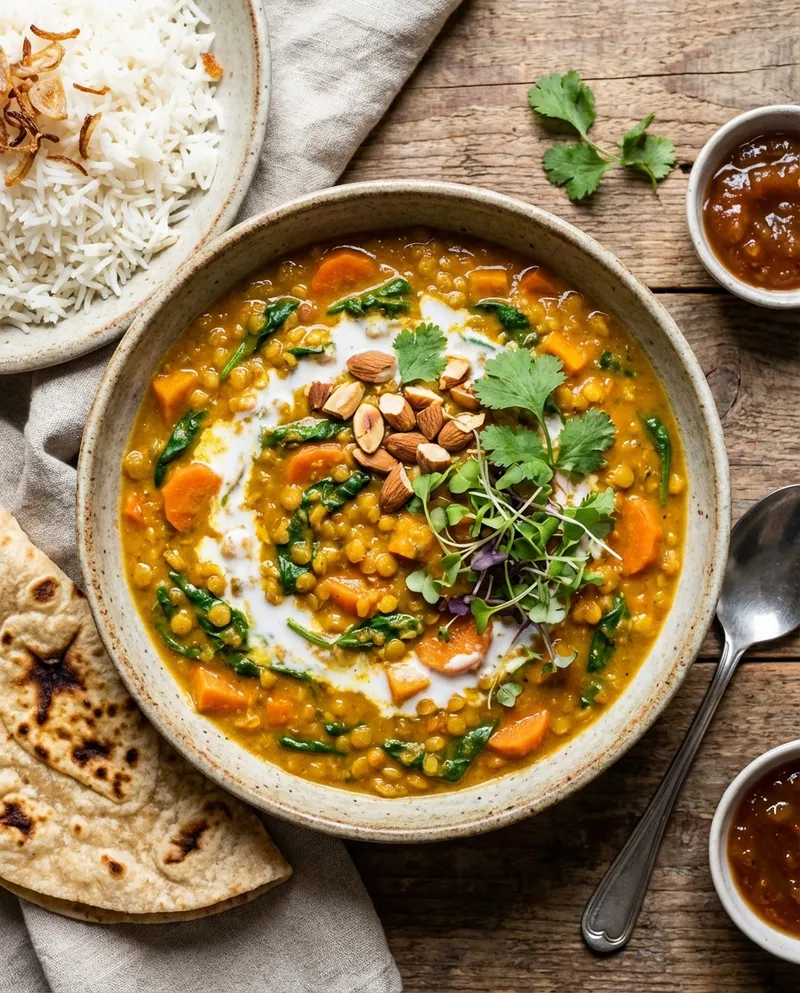
A silky, fragrant lentil curry simmered in light coconut milk and layered with warm spices, tender cauliflower, spinach and sweet carrot — served over fluffy basmati rice with egg-free whole wheat chapati. Creamy, lightly spicy and deeply satisfying, this dish balances the earthy protein of lentils with bright cilantro and a hint of tomato for a restaurant-quality, vegan curry that's simple enough for weeknights.
Rinse and sort the lentils. Put the 1 cup (200 g) dry lentils in a mesh sieve and rinse under cold water until water runs clear. Sorting and rinsing removes small stones and excess dust and helps prevent foaming during cooking.
Start the lentils cooking. In a medium saucepan combine the rinsed lentils with 3 cups (720 ml) water or low-sodium vegetable stock and 1/2 tsp salt. Bring to a gentle boil, then reduce to a simmer and cook uncovered for 18–22 minutes until the lentils are almost tender but not falling apart. Why: Cooking the lentils first ensures they finish tender inside the curry rather than overcooking into mash; using stock adds depth of flavor.
Rinse the basmati rice. Place the 1 cup (185 g) basmati rice in a bowl, rinse under cold water until the water runs clear, then soak 15–20 minutes while you prep the curry. Soaking shortens cooking time and yields longer, fluffier grains.
Cook the rice. Drain the soaked rice. In a small saucepan bring 1 1/4 cups (300 ml) water to a boil with a pinch of salt. Add the rice, return to a simmer, cover tightly and cook on low for 12–15 minutes. Turn off heat and let rest, covered, for 10 minutes. Fluff with a fork before serving. Why: a slightly reduced water ratio and resting time prevents gummy rice and produces distinct, separate grains.
Build the curry base. While the rice cooks, heat 2 tbsp (30 ml) vegetable oil in a wide sauté pan over medium heat. Add the diced onion and 1/2 tsp salt and cook, stirring occasionally, for 6–8 minutes until translucent and beginning to brown at the edges. Browning the onion adds sweet, caramelized flavor that deepens the final curry.
Bloom the aromatics and spices. Add the minced garlic and grated ginger and sauté 30–45 seconds until fragrant (don't let them burn). Stir in 2 tbsp curry powder (or curry paste), and cook for 30 seconds more to bloom the spice — heating spices in oil releases their essential oils and dramatically improves flavor.
Add tomato paste and vegetables. Stir in 1 tbsp tomato paste and cook 1–2 minutes to caramelize slightly (this reduces raw tomato bitterness). Add the mixed vegetables (about 2 cups — cauliflower, carrots and spinach). Toss to coat and cook 2–3 minutes. Why: pre-coating the vegetables in spiced oil helps them absorb flavor and gives the curry a layered taste.
Combine lentils and coconut milk. When the lentils are just tender (from step 2), drain any excess cooking liquid if there's a lot — you want some liquid to carry the curry but not a flooded pot. Add the lentils to the sauté pan, pour in the 1 can (400 ml) light coconut milk and 1/2 to 1 cup of the reserved lentil cooking liquid if needed to loosen (adjust for desired thickness). Bring to a gentle simmer and cook 8–10 minutes until the vegetables are tender and the sauce has thickened slightly. Why: Adding lentils at this point lets them absorb the coconut-tomato-spice flavors without disintegrating.
Season and finish. Taste and adjust salt (start with total 1.5 tsp salt for the whole pot) and add 1/2 tsp freshly ground black pepper. If you like brightness, stir in 1 tsp lemon juice and a pinch (1/2 tsp) garam masala off the heat to round flavors. Why: Acid and a finishing spice balance the richness and lift the overall flavor profile.
Warm the chapati / naan. Heat egg-free naan or whole wheat chapati per package instructions (usually 30–60 seconds per side in a hot dry skillet or 15–20 seconds in a microwave covered with a damp paper towel). Brush lightly with oil if you like. Serve 1 chapati per person alongside the rice and spoon the creamy lentil curry on top or to the side. Why: Serving freshly warmed flatbread makes the meal feel restaurant-quality and is perfect for scooping up the curry.
Plate and garnish. Divide the rice between two plates (about 1/2 cup cooked rice per person if you prefer lighter carbs — but this recipe yields fluffy cooked rice, so feel free to serve 3/4 cup), spoon the creamy lentil-vegetable curry alongside, and finish with chopped fresh cilantro. Serve immediately. Why: Garnish adds a fresh herbal note and color contrast that elevates presentation and flavor.
1206
Calories
42g
Protein
177g
Carbs
37g
Fat
41g
Fiber
How did this recipe turn out? Let others know!
to rate this recipe
By emensah m
A silky, fragrant lentil curry simmered in light coconut milk and layered with warm spices, tender cauliflower, spinach and sweet carrot — served over fluffy basmati rice with egg-free whole wheat chapati. Creamy, lightly spicy and deeply satisfying, this dish balances the earthy protein of lentils with bright cilantro and a hint of tomato for a restaurant-quality, vegan curry that's simple enough for weeknights.
Rinse and sort the lentils. Put the 1 cup (200 g) dry lentils in a mesh sieve and rinse under cold water until water runs clear. Sorting and rinsing removes small stones and excess dust and helps prevent foaming during cooking.
Start the lentils cooking. In a medium saucepan combine the rinsed lentils with 3 cups (720 ml) water or low-sodium vegetable stock and 1/2 tsp salt. Bring to a gentle boil, then reduce to a simmer and cook uncovered for 18–22 minutes until the lentils are almost tender but not falling apart. Why: Cooking the lentils first ensures they finish tender inside the curry rather than overcooking into mash; using stock adds depth of flavor.
Rinse the basmati rice. Place the 1 cup (185 g) basmati rice in a bowl, rinse under cold water until the water runs clear, then soak 15–20 minutes while you prep the curry. Soaking shortens cooking time and yields longer, fluffier grains.
Cook the rice. Drain the soaked rice. In a small saucepan bring 1 1/4 cups (300 ml) water to a boil with a pinch of salt. Add the rice, return to a simmer, cover tightly and cook on low for 12–15 minutes. Turn off heat and let rest, covered, for 10 minutes. Fluff with a fork before serving. Why: a slightly reduced water ratio and resting time prevents gummy rice and produces distinct, separate grains.
Build the curry base. While the rice cooks, heat 2 tbsp (30 ml) vegetable oil in a wide sauté pan over medium heat. Add the diced onion and 1/2 tsp salt and cook, stirring occasionally, for 6–8 minutes until translucent and beginning to brown at the edges. Browning the onion adds sweet, caramelized flavor that deepens the final curry.
Bloom the aromatics and spices. Add the minced garlic and grated ginger and sauté 30–45 seconds until fragrant (don't let them burn). Stir in 2 tbsp curry powder (or curry paste), and cook for 30 seconds more to bloom the spice — heating spices in oil releases their essential oils and dramatically improves flavor.
Add tomato paste and vegetables. Stir in 1 tbsp tomato paste and cook 1–2 minutes to caramelize slightly (this reduces raw tomato bitterness). Add the mixed vegetables (about 2 cups — cauliflower, carrots and spinach). Toss to coat and cook 2–3 minutes. Why: pre-coating the vegetables in spiced oil helps them absorb flavor and gives the curry a layered taste.
Combine lentils and coconut milk. When the lentils are just tender (from step 2), drain any excess cooking liquid if there's a lot — you want some liquid to carry the curry but not a flooded pot. Add the lentils to the sauté pan, pour in the 1 can (400 ml) light coconut milk and 1/2 to 1 cup of the reserved lentil cooking liquid if needed to loosen (adjust for desired thickness). Bring to a gentle simmer and cook 8–10 minutes until the vegetables are tender and the sauce has thickened slightly. Why: Adding lentils at this point lets them absorb the coconut-tomato-spice flavors without disintegrating.
Season and finish. Taste and adjust salt (start with total 1.5 tsp salt for the whole pot) and add 1/2 tsp freshly ground black pepper. If you like brightness, stir in 1 tsp lemon juice and a pinch (1/2 tsp) garam masala off the heat to round flavors. Why: Acid and a finishing spice balance the richness and lift the overall flavor profile.
Warm the chapati / naan. Heat egg-free naan or whole wheat chapati per package instructions (usually 30–60 seconds per side in a hot dry skillet or 15–20 seconds in a microwave covered with a damp paper towel). Brush lightly with oil if you like. Serve 1 chapati per person alongside the rice and spoon the creamy lentil curry on top or to the side. Why: Serving freshly warmed flatbread makes the meal feel restaurant-quality and is perfect for scooping up the curry.
Plate and garnish. Divide the rice between two plates (about 1/2 cup cooked rice per person if you prefer lighter carbs — but this recipe yields fluffy cooked rice, so feel free to serve 3/4 cup), spoon the creamy lentil-vegetable curry alongside, and finish with chopped fresh cilantro. Serve immediately. Why: Garnish adds a fresh herbal note and color contrast that elevates presentation and flavor.
1206
Calories
42g
Protein
177g
Carbs
37g
Fat
41g
Fiber
Your Rating:
