By Sammi Montag
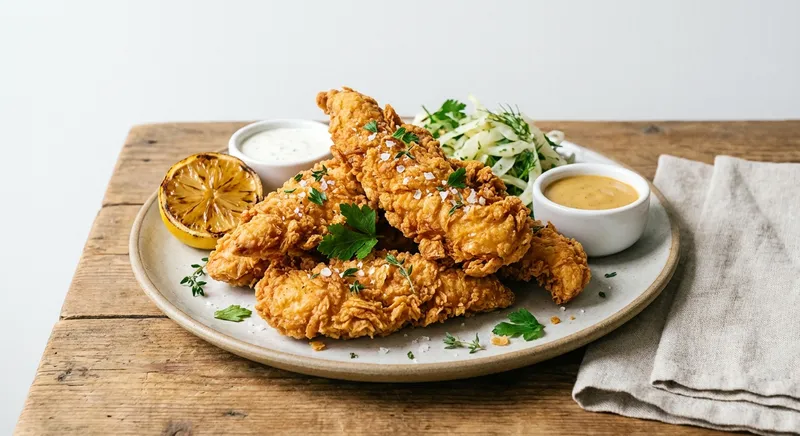
Tender strips of chicken marinated in tangy buttermilk, coated in a seasoned flour-cornstarch mix and finished with a crispy panko double-coat. The result is juicy, golden-brown strips with a shatteringly crisp crust and bright savory notes—perfect for a restaurant-style appetizer, sandwich filling, or weeknight family dinner.
Trim and cut the chicken: Pat the chicken breasts dry with paper towels, trim any visible fat, then slice evenly into 3/4"–1" wide strips. Drying the surface removes excess moisture so the marinade and coating adhere; cutting uniform strips ensures even cooking and consistent crust-to-meat ratio.
Make the buttermilk marinade: In a bowl whisk together 1 1/4 cups buttermilk, the egg, 3/4 tsp kosher salt and 1/2 tsp cracked black pepper. Add the chicken strips, press them down so they’re submerged, cover and refrigerate 30 minutes to 4 hours. The acid and enzymes in buttermilk gently break down proteins (tenderizing) and add tang — even a 30-minute soak noticeably improves juiciness and flavor.
Prepare the dry-coating stations: In a wide shallow dish whisk together 1 cup all-purpose flour, 1/2 cup cornstarch, 3/4 tsp kosher salt, 1/2 tsp black pepper, 1 tsp paprika, 1 tsp garlic powder, 1/2 tsp onion powder and 1/4 tsp cayenne (if using). In a second shallow bowl place the panko breadcrumbs. The cornstarch in the flour mix reduces gluten formation and gives the crust a lighter, glassy crunch; seasoning here layers flavor into the crust.
Double-coat the chicken: Remove a few strips from the marinade, letting excess drip back into the bowl (don’t shake off all the buttermilk). Dredge first in the seasoned flour-cornstarch mixture, pressing lightly to help the coating stick, then dip back briefly into the leftover buttermilk (this is the secret middle layer that helps the final panko adhere), and finally press into the panko so the crumbs cling well. Place finished strips on a tray and rest 8–10 minutes — this resting step hydrates the coatings so they won’t fall off during frying.
Heat the pan for shallow frying: Add 2 tablespoons vegetable oil to a large skillet over medium-high heat and heat until shimmering but not smoking (about 350°F / 175°C if you have a thermometer). The right oil temperature cooks the crust quickly without overcooking the chicken: too cool = greasy, too hot = burnt crust and raw interior.
Cook in batches: Fry strips in a single layer, not overcrowding the pan — 3–4 strips at a time depending on skillet size. Cook 2–3 minutes per side until deep golden and an instant-read thermometer into the thickest part reads 165°F (74°C). Spoon hot oil over the top once during cooking to ensure even browning. Transfer to a wire rack set over a sheet tray (not paper towels) to keep the crust crisp. Resting on a rack avoids steam trapping and softening the crust.
Finish and serve: When all strips are cooked, give them a final sprinkle of flaky salt and an optional squeeze of lemon for brightness. Serve hot with your favorite dipping sauce (see variations). The squeeze of acid wakes up the flavors and cuts through the richness of the crust.
Storage and reheating: Cool completely, then refrigerate in a single layer for up to 3 days or freeze on a tray then transfer to a bag for up to 1 month. Re-crisp in a 400°F oven on a wire rack for 8–10 minutes (from chilled) or 12–15 (from frozen) — using a rack prevents steaming and brings back the crisp exterior.
607
Calories
46g
Protein
55g
Carbs
21g
Fat
1g
Fiber
How did this recipe turn out? Let others know!
to rate this recipe
By Sammi Montag
Tender strips of chicken marinated in tangy buttermilk, coated in a seasoned flour-cornstarch mix and finished with a crispy panko double-coat. The result is juicy, golden-brown strips with a shatteringly crisp crust and bright savory notes—perfect for a restaurant-style appetizer, sandwich filling, or weeknight family dinner.
Trim and cut the chicken: Pat the chicken breasts dry with paper towels, trim any visible fat, then slice evenly into 3/4"–1" wide strips. Drying the surface removes excess moisture so the marinade and coating adhere; cutting uniform strips ensures even cooking and consistent crust-to-meat ratio.
Make the buttermilk marinade: In a bowl whisk together 1 1/4 cups buttermilk, the egg, 3/4 tsp kosher salt and 1/2 tsp cracked black pepper. Add the chicken strips, press them down so they’re submerged, cover and refrigerate 30 minutes to 4 hours. The acid and enzymes in buttermilk gently break down proteins (tenderizing) and add tang — even a 30-minute soak noticeably improves juiciness and flavor.
Prepare the dry-coating stations: In a wide shallow dish whisk together 1 cup all-purpose flour, 1/2 cup cornstarch, 3/4 tsp kosher salt, 1/2 tsp black pepper, 1 tsp paprika, 1 tsp garlic powder, 1/2 tsp onion powder and 1/4 tsp cayenne (if using). In a second shallow bowl place the panko breadcrumbs. The cornstarch in the flour mix reduces gluten formation and gives the crust a lighter, glassy crunch; seasoning here layers flavor into the crust.
Double-coat the chicken: Remove a few strips from the marinade, letting excess drip back into the bowl (don’t shake off all the buttermilk). Dredge first in the seasoned flour-cornstarch mixture, pressing lightly to help the coating stick, then dip back briefly into the leftover buttermilk (this is the secret middle layer that helps the final panko adhere), and finally press into the panko so the crumbs cling well. Place finished strips on a tray and rest 8–10 minutes — this resting step hydrates the coatings so they won’t fall off during frying.
Heat the pan for shallow frying: Add 2 tablespoons vegetable oil to a large skillet over medium-high heat and heat until shimmering but not smoking (about 350°F / 175°C if you have a thermometer). The right oil temperature cooks the crust quickly without overcooking the chicken: too cool = greasy, too hot = burnt crust and raw interior.
Cook in batches: Fry strips in a single layer, not overcrowding the pan — 3–4 strips at a time depending on skillet size. Cook 2–3 minutes per side until deep golden and an instant-read thermometer into the thickest part reads 165°F (74°C). Spoon hot oil over the top once during cooking to ensure even browning. Transfer to a wire rack set over a sheet tray (not paper towels) to keep the crust crisp. Resting on a rack avoids steam trapping and softening the crust.
Finish and serve: When all strips are cooked, give them a final sprinkle of flaky salt and an optional squeeze of lemon for brightness. Serve hot with your favorite dipping sauce (see variations). The squeeze of acid wakes up the flavors and cuts through the richness of the crust.
Storage and reheating: Cool completely, then refrigerate in a single layer for up to 3 days or freeze on a tray then transfer to a bag for up to 1 month. Re-crisp in a 400°F oven on a wire rack for 8–10 minutes (from chilled) or 12–15 (from frozen) — using a rack prevents steaming and brings back the crisp exterior.
607
Calories
46g
Protein
55g
Carbs
21g
Fat
1g
Fiber
Your Rating:
