By abbey f
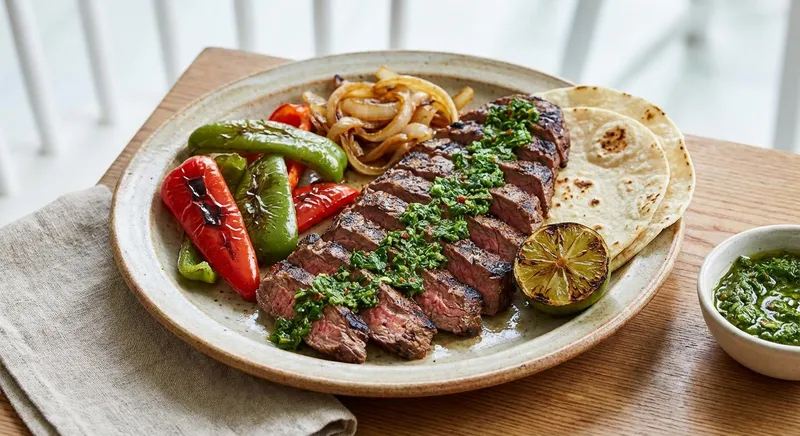
Charred flank or skirt steak sliced thin and finished with a bright, herb-forward chimichurri, served alongside smoky grilled red and green peppers, sweet-roasted potato wedges and caramelized onion. The contrast of a deeply seared, juicy steak with fresh acidic chimichurri and sweet, caramelized vegetables makes this a balanced, restaurant-quality carne asada that’s vibrant and addictive.
Make the chimichurri first (this gives the flavors time to marry). In a food processor or finely chop by hand: combine 1 cup packed parsley, 1/4 cup cilantro, 3 cloves minced garlic, 3 tablespoons extra-virgin olive oil, 1 tablespoon red wine vinegar, 1/2 teaspoon kosher salt, 1/4 teaspoon freshly ground black pepper and 1/4 teaspoon red pepper flakes (optional). Pulse until chopped but still a bit textured — you want small herb pieces so the sauce clings to the meat. Why: blending early lets the acid marry with the oil and mellow the raw garlic; pulsing rather than puréeing keeps fresh herb texture and bright color.
Reserve about 2 tablespoons of chimichurri for finishing the plated dish and set aside. Use 1 tablespoon of the chimichurri to lightly coat the steak as a short marinade (toss the steak with that tablespoon, 1/4 teaspoon extra salt and a pinch of pepper). Marinate at room temperature 12–20 minutes. Why: a short, flavorful coating with chimichurri adds garlic-herb flavor and a little oil to aid browning; long wet marinades can change the meat’s texture, especially with delicate herbs.
Preheat: set your oven to 425°F (220°C) for the sweet potato wedges. If using a grill, preheat one side to high heat (450–500°F) for searing and leave the other side medium for the vegetables. Why: high heat gives the steak a quick Maillard crust while a cooler zone prevents delicate vegetables from burning before they soften.
Prepare the sweet potato wedges: scrub and dry 1 medium sweet potato, cut into 8 evenly sized wedges. Toss in a mixing bowl with 1 tablespoon olive oil, 1/2 teaspoon kosher salt and a few grinds of black pepper. Arrange in a single layer on a rimmed baking sheet. Roast on the top rack 25–30 minutes, turning once halfway, until tender and caramelized at the edges. Why: roasting at 425°F concentrates sweetness and creates crisp edges while keeping the interior soft.
While the potatoes roast, prep the vegetables: core and cut each bell pepper into 6–8 strips (aim for even thickness). Peel the onion, slice into 1/2-inch (1.2 cm) rings or half-moons. Toss the peppers and onions with a light brush of remaining olive oil (about 1 teaspoon), a pinch of salt and pepper. Why: oil helps the vegetables conduct heat and develop even char without sticking; a light coating prevents flare-ups and keeps the peppers from drying out.
Sear the steak: pat the steak very dry with paper towels (moisture inhibits browning). Season all over with the remaining 1 teaspoon kosher salt and 1/4 teaspoon black pepper. Place on the hottest part of the grill or in a cast-iron skillet on high heat. Sear 2–3 minutes per side for medium-rare (internal temperature 125–130°F / 52–54°C), 3–4 minutes per side for medium. Why: high heat creates Maillard browning — a deeply flavored crust — while quick cooking preserves juiciness in a thin cut like flank or skirt.
While the steak sears, grill the peppers and onions on the cooler side of the grill or directly over medium heat in your pan. Cook the peppers and onions until they have good char and are tender-crisp, about 8–10 minutes, turning occasionally so they caramelize evenly. Why: cooking peppers and onions at medium heat gives them a smoky char without blackening and turning bitter; aim for tenderness with color.
When steak is done, transfer to a cutting board and rest 6–8 minutes, tented loosely with foil. Resting lets the juices redistribute and the carryover heat finishes cooking. Why: slicing immediately forces juices out and dries the meat; resting produces a juicier, evenly cooked steak.
Slice the steak across the grain into thin strips (1/4-inch), at a slight bias. Why: flank and skirt steak have long muscle fibers; slicing across the grain shortens those fibers, giving a tender bite.
Plate: arrange a bed of roasted sweet potato wedges and a mound of grilled peppers and onions. Lay sliced steak over the vegetables. Spoon the reserved 2 tablespoons of chimichurri over the steak and vegetables, and serve extra on the side for dipping. Why: finishing with fresh chimichurri brightens the rich, fatty notes of the steak and grilled veg and adds acidity and herbaceous contrast.
Optional finishing touches: sprinkle flaky sea salt over the steak, a light squeeze of lemon if desired, or a few extra red pepper flakes for heat. Serve immediately. Why: a final hit of salt and acid wakes up flavors and adds balance.
610
Calories
34g
Protein
34g
Carbs
39g
Fat
7g
Fiber
How did this recipe turn out? Let others know!
to rate this recipe
By abbey f
Charred flank or skirt steak sliced thin and finished with a bright, herb-forward chimichurri, served alongside smoky grilled red and green peppers, sweet-roasted potato wedges and caramelized onion. The contrast of a deeply seared, juicy steak with fresh acidic chimichurri and sweet, caramelized vegetables makes this a balanced, restaurant-quality carne asada that’s vibrant and addictive.
Make the chimichurri first (this gives the flavors time to marry). In a food processor or finely chop by hand: combine 1 cup packed parsley, 1/4 cup cilantro, 3 cloves minced garlic, 3 tablespoons extra-virgin olive oil, 1 tablespoon red wine vinegar, 1/2 teaspoon kosher salt, 1/4 teaspoon freshly ground black pepper and 1/4 teaspoon red pepper flakes (optional). Pulse until chopped but still a bit textured — you want small herb pieces so the sauce clings to the meat. Why: blending early lets the acid marry with the oil and mellow the raw garlic; pulsing rather than puréeing keeps fresh herb texture and bright color.
Reserve about 2 tablespoons of chimichurri for finishing the plated dish and set aside. Use 1 tablespoon of the chimichurri to lightly coat the steak as a short marinade (toss the steak with that tablespoon, 1/4 teaspoon extra salt and a pinch of pepper). Marinate at room temperature 12–20 minutes. Why: a short, flavorful coating with chimichurri adds garlic-herb flavor and a little oil to aid browning; long wet marinades can change the meat’s texture, especially with delicate herbs.
Preheat: set your oven to 425°F (220°C) for the sweet potato wedges. If using a grill, preheat one side to high heat (450–500°F) for searing and leave the other side medium for the vegetables. Why: high heat gives the steak a quick Maillard crust while a cooler zone prevents delicate vegetables from burning before they soften.
Prepare the sweet potato wedges: scrub and dry 1 medium sweet potato, cut into 8 evenly sized wedges. Toss in a mixing bowl with 1 tablespoon olive oil, 1/2 teaspoon kosher salt and a few grinds of black pepper. Arrange in a single layer on a rimmed baking sheet. Roast on the top rack 25–30 minutes, turning once halfway, until tender and caramelized at the edges. Why: roasting at 425°F concentrates sweetness and creates crisp edges while keeping the interior soft.
While the potatoes roast, prep the vegetables: core and cut each bell pepper into 6–8 strips (aim for even thickness). Peel the onion, slice into 1/2-inch (1.2 cm) rings or half-moons. Toss the peppers and onions with a light brush of remaining olive oil (about 1 teaspoon), a pinch of salt and pepper. Why: oil helps the vegetables conduct heat and develop even char without sticking; a light coating prevents flare-ups and keeps the peppers from drying out.
Sear the steak: pat the steak very dry with paper towels (moisture inhibits browning). Season all over with the remaining 1 teaspoon kosher salt and 1/4 teaspoon black pepper. Place on the hottest part of the grill or in a cast-iron skillet on high heat. Sear 2–3 minutes per side for medium-rare (internal temperature 125–130°F / 52–54°C), 3–4 minutes per side for medium. Why: high heat creates Maillard browning — a deeply flavored crust — while quick cooking preserves juiciness in a thin cut like flank or skirt.
While the steak sears, grill the peppers and onions on the cooler side of the grill or directly over medium heat in your pan. Cook the peppers and onions until they have good char and are tender-crisp, about 8–10 minutes, turning occasionally so they caramelize evenly. Why: cooking peppers and onions at medium heat gives them a smoky char without blackening and turning bitter; aim for tenderness with color.
When steak is done, transfer to a cutting board and rest 6–8 minutes, tented loosely with foil. Resting lets the juices redistribute and the carryover heat finishes cooking. Why: slicing immediately forces juices out and dries the meat; resting produces a juicier, evenly cooked steak.
Slice the steak across the grain into thin strips (1/4-inch), at a slight bias. Why: flank and skirt steak have long muscle fibers; slicing across the grain shortens those fibers, giving a tender bite.
Plate: arrange a bed of roasted sweet potato wedges and a mound of grilled peppers and onions. Lay sliced steak over the vegetables. Spoon the reserved 2 tablespoons of chimichurri over the steak and vegetables, and serve extra on the side for dipping. Why: finishing with fresh chimichurri brightens the rich, fatty notes of the steak and grilled veg and adds acidity and herbaceous contrast.
Optional finishing touches: sprinkle flaky sea salt over the steak, a light squeeze of lemon if desired, or a few extra red pepper flakes for heat. Serve immediately. Why: a final hit of salt and acid wakes up flavors and adds balance.
610
Calories
34g
Protein
34g
Carbs
39g
Fat
7g
Fiber
Your Rating:
