By Brian Moutoux
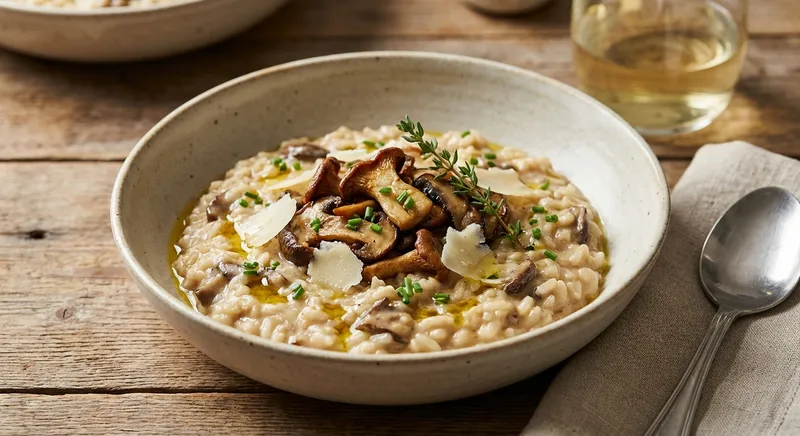
Silky, deeply savory risotto studded with caramelized wild mushrooms and finished with a buttery Parmesan 'mantecatura' for a luxurious, velvety mouthfeel. Earthy mushroom flavor, a hint of bright white wine, and the glossy finish from butter and cheese make this a restaurant-quality Italian classic that’s surprisingly approachable at home.
Prepare and warm the stock: Put 5 cups (1200 ml) of low-sodium stock in a medium saucepan and keep it over the lowest burner on the stove so it stays hot but not simmering. Keeping the stock warm prevents lowering the risotto’s temperature each time you add liquid, which allows the rice to cook evenly and release starch smoothly for a creamy texture.
Clean and slice the mushrooms: Wipe mushrooms with a damp paper towel or brush to remove grit (don’t soak them, or they’ll become waterlogged). Trim tough stems and slice into 1/4-inch pieces. Dry mushrooms brown more readily, which concentrates flavor—browning (Maillard reaction) is key to a deeply savory risotto.
Sear the mushrooms: Heat 1 tablespoon of butter and 1 tablespoon of olive oil in a large skillet over medium-high heat until shimmering. Add mushrooms in a single layer (work in batches if necessary) and let them sit undisturbed for 2–3 minutes to get color, then stir and cook another 2 minutes until golden and most moisture has evaporated. Season lightly with salt and pepper. Remove mushrooms to a bowl and set aside. Searing separately concentrates the mushroom flavor and prevents the risotto pot from becoming soggy.
Sweat the aromatics: In a wide, heavy-bottomed sauté pan or shallow saucepan (about 10–12 inches), heat the remaining 1 tablespoon olive oil and 2 tablespoons butter over medium heat. Add the diced onion and a pinch of salt and cook, stirring occasionally, until translucent and soft (about 5–6 minutes). Add minced garlic and cook 30–45 seconds until fragrant. Sweating the onion rather than browning it provides a sweet, gentle base flavor without bitter notes.
Toast the rice: Add the 1 1/2 cups (300 g) Arborio rice to the aromatics and stir for 1–2 minutes until each grain is glossy and slightly translucent at the edges. Toasting coats the rice in fat and starts to warm each grain, which helps the rice retain a slight bite and encourages gradual, even release of starch—essential for the classic risotto creaminess.
Deglaze with wine: Pour in 1/2 cup (120 ml) dry white wine and stir, scraping up any browned bits from the pan. Let the wine bubble until mostly evaporated (about 1–2 minutes). The acid in the wine balances the richness and lifts the mushroom flavor; cooking it off leaves the concentrated flavor without harsh alcohol.
Begin adding warm stock: Add the first ladle (about 1/2 cup/120 ml) of warm stock and stir gently but consistently until it is almost fully absorbed. Continue adding stock, one ladleful at a time, stirring so the rice is constantly in motion but not aggressively agitated — aim for a steady gentle stir. Each addition should be absorbed before adding the next. This gradual addition and stirring coax starch from the rice, creating the risotto’s signature creamy emulsion without using cream.
Cook until al dente: After ~18–22 minutes of adding stock and stirring (total cooking time for the rice), taste the rice. It should be al dente—tender with a slight, pleasant chew at the center. If needed, add a final splash of hot stock and cook another 1–2 minutes. Avoid overcooking, which leads to mushy grains and a gluey texture.
Reintroduce the mushrooms and finish (mantecatura): Turn off the heat. Stir the reserved seared mushrooms back into the risotto. Add the remaining 2 tablespoons butter and 3/4 cup (75 g) freshly grated Parmesan. Stir vigorously for 1 minute to emulsify fats with the starchy cooking liquid—this 'mantecatura' creates a glossy, silky finish and binds the flavors. Taste and adjust salt and pepper; add lemon zest if using to brighten the dish.
Rest and plate: Let the risotto rest off the heat for 1–2 minutes to allow flavors to marry and the texture to settle. Spoon portions onto warm plates or shallow bowls, sprinkle with chopped parsley and an extra grind of black pepper, and serve immediately. Risotto is best served right away—its texture will tighten as it cools.
592
Calories
19g
Protein
69g
Carbs
25g
Fat
3g
Fiber
How did this recipe turn out? Let others know!
to rate this recipe
By Brian Moutoux
Silky, deeply savory risotto studded with caramelized wild mushrooms and finished with a buttery Parmesan 'mantecatura' for a luxurious, velvety mouthfeel. Earthy mushroom flavor, a hint of bright white wine, and the glossy finish from butter and cheese make this a restaurant-quality Italian classic that’s surprisingly approachable at home.
Prepare and warm the stock: Put 5 cups (1200 ml) of low-sodium stock in a medium saucepan and keep it over the lowest burner on the stove so it stays hot but not simmering. Keeping the stock warm prevents lowering the risotto’s temperature each time you add liquid, which allows the rice to cook evenly and release starch smoothly for a creamy texture.
Clean and slice the mushrooms: Wipe mushrooms with a damp paper towel or brush to remove grit (don’t soak them, or they’ll become waterlogged). Trim tough stems and slice into 1/4-inch pieces. Dry mushrooms brown more readily, which concentrates flavor—browning (Maillard reaction) is key to a deeply savory risotto.
Sear the mushrooms: Heat 1 tablespoon of butter and 1 tablespoon of olive oil in a large skillet over medium-high heat until shimmering. Add mushrooms in a single layer (work in batches if necessary) and let them sit undisturbed for 2–3 minutes to get color, then stir and cook another 2 minutes until golden and most moisture has evaporated. Season lightly with salt and pepper. Remove mushrooms to a bowl and set aside. Searing separately concentrates the mushroom flavor and prevents the risotto pot from becoming soggy.
Sweat the aromatics: In a wide, heavy-bottomed sauté pan or shallow saucepan (about 10–12 inches), heat the remaining 1 tablespoon olive oil and 2 tablespoons butter over medium heat. Add the diced onion and a pinch of salt and cook, stirring occasionally, until translucent and soft (about 5–6 minutes). Add minced garlic and cook 30–45 seconds until fragrant. Sweating the onion rather than browning it provides a sweet, gentle base flavor without bitter notes.
Toast the rice: Add the 1 1/2 cups (300 g) Arborio rice to the aromatics and stir for 1–2 minutes until each grain is glossy and slightly translucent at the edges. Toasting coats the rice in fat and starts to warm each grain, which helps the rice retain a slight bite and encourages gradual, even release of starch—essential for the classic risotto creaminess.
Deglaze with wine: Pour in 1/2 cup (120 ml) dry white wine and stir, scraping up any browned bits from the pan. Let the wine bubble until mostly evaporated (about 1–2 minutes). The acid in the wine balances the richness and lifts the mushroom flavor; cooking it off leaves the concentrated flavor without harsh alcohol.
Begin adding warm stock: Add the first ladle (about 1/2 cup/120 ml) of warm stock and stir gently but consistently until it is almost fully absorbed. Continue adding stock, one ladleful at a time, stirring so the rice is constantly in motion but not aggressively agitated — aim for a steady gentle stir. Each addition should be absorbed before adding the next. This gradual addition and stirring coax starch from the rice, creating the risotto’s signature creamy emulsion without using cream.
Cook until al dente: After ~18–22 minutes of adding stock and stirring (total cooking time for the rice), taste the rice. It should be al dente—tender with a slight, pleasant chew at the center. If needed, add a final splash of hot stock and cook another 1–2 minutes. Avoid overcooking, which leads to mushy grains and a gluey texture.
Reintroduce the mushrooms and finish (mantecatura): Turn off the heat. Stir the reserved seared mushrooms back into the risotto. Add the remaining 2 tablespoons butter and 3/4 cup (75 g) freshly grated Parmesan. Stir vigorously for 1 minute to emulsify fats with the starchy cooking liquid—this 'mantecatura' creates a glossy, silky finish and binds the flavors. Taste and adjust salt and pepper; add lemon zest if using to brighten the dish.
Rest and plate: Let the risotto rest off the heat for 1–2 minutes to allow flavors to marry and the texture to settle. Spoon portions onto warm plates or shallow bowls, sprinkle with chopped parsley and an extra grind of black pepper, and serve immediately. Risotto is best served right away—its texture will tighten as it cools.
592
Calories
19g
Protein
69g
Carbs
25g
Fat
3g
Fiber
Your Rating:
