By emensah m
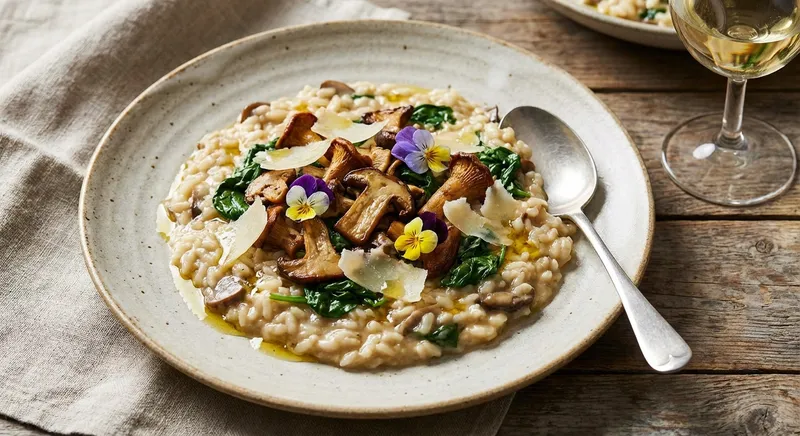
A luxuriously creamy mushroom and spinach risotto—earthy sautéed cremini, bright baby spinach, and nutty Parmesan folded into al dente arborio rice. Silky, comforting, and layered with umami from browned mushrooms and a finish of butter and Parmesan, this dish tastes restaurant-quality but is entirely achievable at home.
Bring the vegetable broth to a gentle simmer in a saucepan and keep it at a low simmer. Why: Warm broth lets the rice absorb liquid more quickly and evenly; adding cold broth would slow cooking and lower final temperature, affecting texture.
Clean and slice the mushrooms evenly (about 1/4-inch thick). Pat them dry—moisture steams instead of browns. Why: Even slices cook uniformly; removing surface moisture lets the mushrooms brown, which develops umami and a deeper flavor.
Heat 1 tablespoon olive oil in a large sauté pan or wide heavy-bottomed skillet over medium-high heat. Add the mushrooms in a single layer (work in batches if necessary) and cook without stirring for 2 minutes to get color, then stir and cook until golden brown, about 4–6 minutes total. Season lightly with salt toward the end. Why: Browning (Maillard reaction) concentrates mushroom flavor and adds savory depth—crowding the pan causes steaming and prevents browning.
Transfer the browned mushrooms to a bowl and set aside. Keep pan now hot but not smoking—there will be browned bits to use for the risotto base. Why: Separating them prevents overcooking and keeps their texture; the fond left behind will add flavor to the rice.
Reduce heat to medium, add the remaining 1 tablespoon olive oil and the shallot. Cook, stirring, until softened and translucent, about 2–3 minutes; then add the garlic and cook 30–45 seconds until fragrant. Why: Sweating the shallot releases sweetness without browning; garlic should be added later to avoid burning and bitterness.
Add the arborio rice to the pan and stir to coat with oil and shallot. Toast the rice for 1–2 minutes until edges of the grains look translucent. Why: Toasting briefly 'opens' the grain and lightly coats it to help it release starch during cooking, which builds the classic creamy risotto texture.
If using, deglaze with the optional 1/2 cup dry white wine, stirring until mostly evaporated (about 1–2 minutes). Why: Wine adds brightness and acidity that balance the richness; it also helps lift any flavorful fond from the pan.
Begin adding warm broth, one ladleful (about 1/2 cup) at a time. Add a ladle, stir gently until most of the liquid is absorbed, then add the next. Maintain a gentle simmer. Continue this process for about 18–22 minutes until the rice is al dente (tender with a slight bite) and the texture is creamy but not soupy. Why: Slow addition and stirring coax starch from the rice gradually to create a silky emulsion; patience is the key to proper risotto texture.
When the rice is nearly done (after around 16 minutes), stir in the mushrooms and any accumulated juices. Add the baby spinach in handfuls, letting it wilt into the rice before adding more. Why: Adding mushrooms toward the end preserves their texture and flavor; folding spinach in late keeps it bright and prevents overcooking.
Once the rice is cooked al dente and the risotto is creamy, remove the pan from heat. Stir in the butter and grated Parmesan until melted and glossy. Taste and adjust seasoning with salt and pepper. If it seems too thick, stir in a splash of warm broth to loosen. Why: Finishing with cold butter and cheese (mantecatura) enriches and emulsifies the risotto, producing the characteristic silkiness and shine.
Plate immediately into warmed bowls, finish with a grind of black pepper, a sprinkle of additional Parmesan, and a little lemon zest if using. Serve right away. Why: Risotto is best enjoyed immediately—standing time will thicken it as the starch firms up.
498
Calories
17g
Protein
70g
Carbs
16g
Fat
3g
Fiber
How did this recipe turn out? Let others know!
to rate this recipe
A luxuriously creamy mushroom and spinach risotto—earthy sautéed cremini, bright baby spinach, and nutty Parmesan folded into al dente arborio rice. Silky, comforting, and layered with umami from browned mushrooms and a finish of butter and Parmesan, this dish tastes restaurant-quality but is entirely achievable at home.
Bring the vegetable broth to a gentle simmer in a saucepan and keep it at a low simmer. Why: Warm broth lets the rice absorb liquid more quickly and evenly; adding cold broth would slow cooking and lower final temperature, affecting texture.
Clean and slice the mushrooms evenly (about 1/4-inch thick). Pat them dry—moisture steams instead of browns. Why: Even slices cook uniformly; removing surface moisture lets the mushrooms brown, which develops umami and a deeper flavor.
Heat 1 tablespoon olive oil in a large sauté pan or wide heavy-bottomed skillet over medium-high heat. Add the mushrooms in a single layer (work in batches if necessary) and cook without stirring for 2 minutes to get color, then stir and cook until golden brown, about 4–6 minutes total. Season lightly with salt toward the end. Why: Browning (Maillard reaction) concentrates mushroom flavor and adds savory depth—crowding the pan causes steaming and prevents browning.
Transfer the browned mushrooms to a bowl and set aside. Keep pan now hot but not smoking—there will be browned bits to use for the risotto base. Why: Separating them prevents overcooking and keeps their texture; the fond left behind will add flavor to the rice.
Reduce heat to medium, add the remaining 1 tablespoon olive oil and the shallot. Cook, stirring, until softened and translucent, about 2–3 minutes; then add the garlic and cook 30–45 seconds until fragrant. Why: Sweating the shallot releases sweetness without browning; garlic should be added later to avoid burning and bitterness.
Add the arborio rice to the pan and stir to coat with oil and shallot. Toast the rice for 1–2 minutes until edges of the grains look translucent. Why: Toasting briefly 'opens' the grain and lightly coats it to help it release starch during cooking, which builds the classic creamy risotto texture.
If using, deglaze with the optional 1/2 cup dry white wine, stirring until mostly evaporated (about 1–2 minutes). Why: Wine adds brightness and acidity that balance the richness; it also helps lift any flavorful fond from the pan.
Begin adding warm broth, one ladleful (about 1/2 cup) at a time. Add a ladle, stir gently until most of the liquid is absorbed, then add the next. Maintain a gentle simmer. Continue this process for about 18–22 minutes until the rice is al dente (tender with a slight bite) and the texture is creamy but not soupy. Why: Slow addition and stirring coax starch from the rice gradually to create a silky emulsion; patience is the key to proper risotto texture.
When the rice is nearly done (after around 16 minutes), stir in the mushrooms and any accumulated juices. Add the baby spinach in handfuls, letting it wilt into the rice before adding more. Why: Adding mushrooms toward the end preserves their texture and flavor; folding spinach in late keeps it bright and prevents overcooking.
Once the rice is cooked al dente and the risotto is creamy, remove the pan from heat. Stir in the butter and grated Parmesan until melted and glossy. Taste and adjust seasoning with salt and pepper. If it seems too thick, stir in a splash of warm broth to loosen. Why: Finishing with cold butter and cheese (mantecatura) enriches and emulsifies the risotto, producing the characteristic silkiness and shine.
Plate immediately into warmed bowls, finish with a grind of black pepper, a sprinkle of additional Parmesan, and a little lemon zest if using. Serve right away. Why: Risotto is best enjoyed immediately—standing time will thicken it as the starch firms up.
498
Calories
17g
Protein
70g
Carbs
16g
Fat
3g
Fiber
Your Rating:
