By abbey f
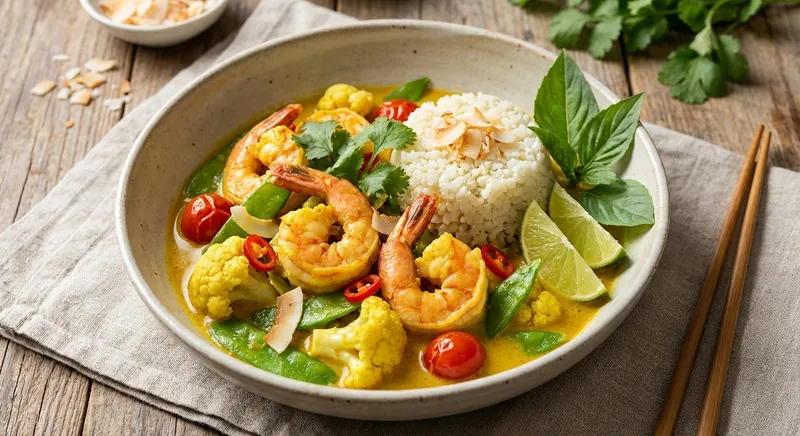
A bright, silky coconut curry that pairs gently fragrant lemongrass and fresh ginger with tender shrimp and crisp-tender vegetables, served on fragrant cauliflower 'rice' for a light, restaurant-quality weeknight main. The sauce is rich from full-fat coconut milk but kept fresh and balanced with lime and fish sauce — expect creamy mouthfeel, citrus lift, and a tender snap from bell pepper and zucchini.
Prepare aromatics: peel and finely grate 1 inch of ginger and mince 2 garlic cloves. Peel off the tough outer layers of the lemongrass stalk and lightly bruise the lower bulb by smashing it with the flat side of a knife (this helps release the aromatic oils). Trim the top and root ends and slice the stalk into 2–3 pieces for easier infusion. Why: grating ginger and mincing garlic maximize surface area so their flavor infuses quickly; bruising lemongrass releases fragrant citrus oils into the coconut milk without needing to finely mince fibrous stalks.
Dry the shrimp with paper towels and season lightly with 1/8 tsp black pepper and a pinch (about 1/8 tsp) of salt. Why: drying the shrimp removes surface moisture so they sear quickly and evenly; light seasoning early helps build flavor without over-salting later when fish sauce is added.
Heat a large skillet or sauté pan over medium-high heat. Add 1 tbsp neutral oil. When the pan is hot but not smoking (about 30–45 seconds), add the shrimp in a single layer and sear 1–1½ minutes per side until just opaque with a light golden edge. Remove shrimp to a plate and tent loosely with foil. Why: shrimp cook very fast — searing briefly locks in juices and develops a little color. Removing them prevents overcooking while you build the sauce.
Lower heat to medium. In the same pan, add the grated ginger, minced garlic, and the bruised lemongrass pieces. Sauté 30–45 seconds until aromatic — do not let the garlic brown. Why: gentle sautéing blooms the aromatics, releasing essential oils that flavor the entire curry. Too-high heat will burn garlic and create bitterness.
Pour in 3/4 cup full-fat coconut milk and stir, scraping any browned bits off the pan (fond) into the sauce. Add 1 tsp brown sugar and 1 tbsp fish sauce; bring to a gentle simmer. Add the lemongrass pieces back in to infuse. Simmer 4–6 minutes, partially covered, so the coconut milk thickens slightly and the lemongrass aroma infuses the sauce. Why: simmering concentrates flavor and allows the coconut fat to emulsify with the aromatics; the fish sauce and sugar balance savory and sweet for depth.
While the sauce simmers, slice the red bell pepper and zucchini into similar-sized strips for even cooking. Once the sauce has reduced slightly, add the vegetables and simmer 2–3 minutes until they are bright and just tender-crisp. Why: adding vegetables later preserves their texture and color so the dish has contrast — you want snap and freshness, not mush.
Return the seared shrimp to the pan and cook 1–2 minutes more, just to reheat and finish cooking through. Check seasoning and add salt if needed (remember fish sauce is salty). Stir in 1 tbsp fresh lime juice to brighten the sauce and remove the lemongrass pieces before serving. Why: finishing shrimp in the sauce ensures they absorb the flavored liquid without overcooking; lime juice balances the richness with acidity.
While the curry finishes, heat a separate nonstick skillet over medium-high heat. Add cauliflower rice (1.5 cups); if frozen, make sure it is thawed and well-drained. Sauté 3–4 minutes with a pinch of salt and 1/2 tsp oil until any excess moisture has evaporated and the rice is just tender. Why: cooking cauliflower rice separately keeps it dry and fluffy — if added directly to the curry it will become soggy and dilute the sauce.
Plate: divide cauliflower rice between two shallow bowls, spoon the shrimp curry over the rice, and finish with a sprinkle of chopped cilantro and an optional pinch of red chile flakes for heat. Why: finishing herbs and chiles add fresh aroma and a visual pop; serving over cauliflower rice keeps the dish lower in carbs while offering texture contrast.
Enjoy immediately. Store any leftover curry (without cauliflower rice) in an airtight container in the refrigerator up to 2 days — shrimp is best eaten promptly, so consider keeping protein and sauce separate for longer storage. Why: shrimp’s texture and safety profile make quick consumption best; keeping components separate preserves quality.
428
Calories
26g
Protein
20g
Carbs
29g
Fat
4g
Fiber
How did this recipe turn out? Let others know!
to rate this recipe
By abbey f
A bright, silky coconut curry that pairs gently fragrant lemongrass and fresh ginger with tender shrimp and crisp-tender vegetables, served on fragrant cauliflower 'rice' for a light, restaurant-quality weeknight main. The sauce is rich from full-fat coconut milk but kept fresh and balanced with lime and fish sauce — expect creamy mouthfeel, citrus lift, and a tender snap from bell pepper and zucchini.
Prepare aromatics: peel and finely grate 1 inch of ginger and mince 2 garlic cloves. Peel off the tough outer layers of the lemongrass stalk and lightly bruise the lower bulb by smashing it with the flat side of a knife (this helps release the aromatic oils). Trim the top and root ends and slice the stalk into 2–3 pieces for easier infusion. Why: grating ginger and mincing garlic maximize surface area so their flavor infuses quickly; bruising lemongrass releases fragrant citrus oils into the coconut milk without needing to finely mince fibrous stalks.
Dry the shrimp with paper towels and season lightly with 1/8 tsp black pepper and a pinch (about 1/8 tsp) of salt. Why: drying the shrimp removes surface moisture so they sear quickly and evenly; light seasoning early helps build flavor without over-salting later when fish sauce is added.
Heat a large skillet or sauté pan over medium-high heat. Add 1 tbsp neutral oil. When the pan is hot but not smoking (about 30–45 seconds), add the shrimp in a single layer and sear 1–1½ minutes per side until just opaque with a light golden edge. Remove shrimp to a plate and tent loosely with foil. Why: shrimp cook very fast — searing briefly locks in juices and develops a little color. Removing them prevents overcooking while you build the sauce.
Lower heat to medium. In the same pan, add the grated ginger, minced garlic, and the bruised lemongrass pieces. Sauté 30–45 seconds until aromatic — do not let the garlic brown. Why: gentle sautéing blooms the aromatics, releasing essential oils that flavor the entire curry. Too-high heat will burn garlic and create bitterness.
Pour in 3/4 cup full-fat coconut milk and stir, scraping any browned bits off the pan (fond) into the sauce. Add 1 tsp brown sugar and 1 tbsp fish sauce; bring to a gentle simmer. Add the lemongrass pieces back in to infuse. Simmer 4–6 minutes, partially covered, so the coconut milk thickens slightly and the lemongrass aroma infuses the sauce. Why: simmering concentrates flavor and allows the coconut fat to emulsify with the aromatics; the fish sauce and sugar balance savory and sweet for depth.
While the sauce simmers, slice the red bell pepper and zucchini into similar-sized strips for even cooking. Once the sauce has reduced slightly, add the vegetables and simmer 2–3 minutes until they are bright and just tender-crisp. Why: adding vegetables later preserves their texture and color so the dish has contrast — you want snap and freshness, not mush.
Return the seared shrimp to the pan and cook 1–2 minutes more, just to reheat and finish cooking through. Check seasoning and add salt if needed (remember fish sauce is salty). Stir in 1 tbsp fresh lime juice to brighten the sauce and remove the lemongrass pieces before serving. Why: finishing shrimp in the sauce ensures they absorb the flavored liquid without overcooking; lime juice balances the richness with acidity.
While the curry finishes, heat a separate nonstick skillet over medium-high heat. Add cauliflower rice (1.5 cups); if frozen, make sure it is thawed and well-drained. Sauté 3–4 minutes with a pinch of salt and 1/2 tsp oil until any excess moisture has evaporated and the rice is just tender. Why: cooking cauliflower rice separately keeps it dry and fluffy — if added directly to the curry it will become soggy and dilute the sauce.
Plate: divide cauliflower rice between two shallow bowls, spoon the shrimp curry over the rice, and finish with a sprinkle of chopped cilantro and an optional pinch of red chile flakes for heat. Why: finishing herbs and chiles add fresh aroma and a visual pop; serving over cauliflower rice keeps the dish lower in carbs while offering texture contrast.
Enjoy immediately. Store any leftover curry (without cauliflower rice) in an airtight container in the refrigerator up to 2 days — shrimp is best eaten promptly, so consider keeping protein and sauce separate for longer storage. Why: shrimp’s texture and safety profile make quick consumption best; keeping components separate preserves quality.
428
Calories
26g
Protein
20g
Carbs
29g
Fat
4g
Fiber
Your Rating:
