By Jaycie Day
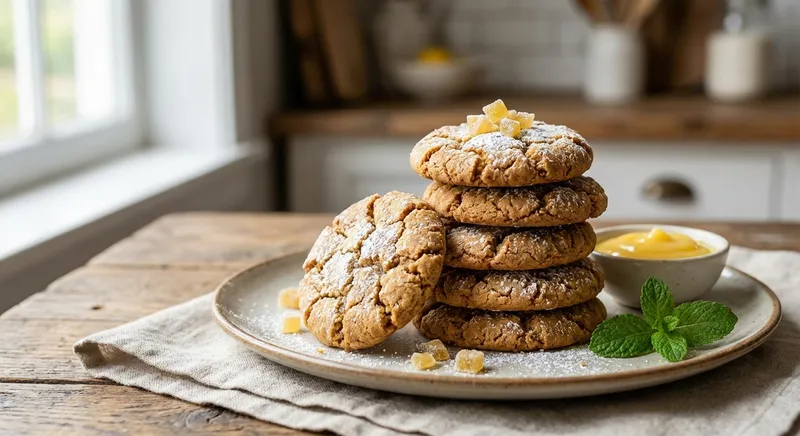
Bright, chewy oat cookies kissed with warm ginger, a hit of molasses and honey for depth, and lively lemon zest to lift each bite. They have a satisfying chew from toasted oats, a crisp edge from a brief chill-and-bake technique, and a subtle caramel note that makes them feel special—like a bakery cookie with a sunny twist.
Toast the oats: Preheat oven to 350°F (175°C). Spread the rolled oats on a baking sheet and toast for 6–8 minutes, stirring once halfway, until they smell nutty and are just golden. Why: Toasting intensifies the oat flavor and reduces excess surface moisture so the cookies hold their shape and have a clean oat taste.
Prepare the cornstarch binder (egg-free 'slurry'): Whisk 1 tablespoon cornstarch with 3 tablespoons warm water until smooth and glossy. Let sit 2 minutes to thicken. Why: Cornstarch heated/rehydrated provides viscous, egg-white-like binding power; it helps the cookie set and gives chewiness without eggs.
Cream butter and sugars: In a large bowl, beat the softened butter, brown sugar and honey until pale, smooth and slightly fluffy (about 2–3 minutes). Add the vegetable oil and molasses and beat to combine. Why: Creaming incorporates air for lightness and dissolves the sugar into the fat for an even texture; adding oil and molasses adds chewiness and depth.
Add wet flavorings: Mix in the cornstarch slurry, powdered milk, lemon juice and lemon zest until evenly distributed. Why: Powdered milk adds structure and a rounded dairy note that mimics the richness of eggs; lemon components brighten the overall flavor and interact with the baking soda to create subtle lift.
Combine dry ingredients: In a separate bowl whisk together the toasted oats, flour, baking soda, baking powder, ground ginger and salt so the leaveners and spice are evenly dispersed. Why: Sifting or whisking dry ingredients prevents pockets of baking soda/powder and ensures uniform rise and flavor throughout the batch.
Fold wet into dry: Add the dry mixture to the wet mixture and fold gently with a flexible spatula until just combined — stopping when no streaks of flour remain. Overmixing develops gluten in the flour and will make the cookies tough; gentle folding preserves tenderness and chew.
Chill the dough: Transfer the dough to the refrigerator for 30 minutes (or up to 2 hours). Why: Chilling firms the butter and solidifies the oil-coated matrix so the cookies spread less and develop a chewier interior with crisp edges when baked.
Portion the cookies: Line baking sheets with parchment. Scoop dough into 2-tablespoon mounds (about 24 mounds) and arrange 2 inches apart. Lightly press each mound to flatten slightly (these cookies don’t spread hugely because they contain oats). If you like, sprinkle a pinch of granulated sugar on top for sparkle. Why: Uniform scoops ensure even baking; a slight flatten prevents tops from staying domed while the centers bake.
Bake: Bake at 350°F (175°C) for 12–14 minutes, rotating the pan once at the halfway mark. The edges should be golden and the centers set but slightly soft. Why: Moderate oven temperature allows the sugars to caramelize for flavor while baking the oats through without drying the cookie out.
Cool properly: Remove from oven and let cookies rest on the baking sheet for 5 minutes; they will finish setting as they cool. Transfer to a wire rack to cool completely. Why: Cooling on the sheet lets residual heat finish cooking the centers without overbrowning; a wire rack prevents sogginess from trapped steam.
Storage: Store cooled cookies in an airtight container at room temperature for up to 4 days, or freeze for up to 3 months. For best texture after refrigeration or freezing, warm gently in a 300°F (150°C) oven for 5 minutes to revive chewiness. Why: Proper storage preserves the crisp edge/chewy center contrast.
128
Calories
2g
Protein
20g
Carbs
5g
Fat
1g
Fiber
How did this recipe turn out? Let others know!
to rate this recipe
By Jaycie Day
Bright, chewy oat cookies kissed with warm ginger, a hit of molasses and honey for depth, and lively lemon zest to lift each bite. They have a satisfying chew from toasted oats, a crisp edge from a brief chill-and-bake technique, and a subtle caramel note that makes them feel special—like a bakery cookie with a sunny twist.
Toast the oats: Preheat oven to 350°F (175°C). Spread the rolled oats on a baking sheet and toast for 6–8 minutes, stirring once halfway, until they smell nutty and are just golden. Why: Toasting intensifies the oat flavor and reduces excess surface moisture so the cookies hold their shape and have a clean oat taste.
Prepare the cornstarch binder (egg-free 'slurry'): Whisk 1 tablespoon cornstarch with 3 tablespoons warm water until smooth and glossy. Let sit 2 minutes to thicken. Why: Cornstarch heated/rehydrated provides viscous, egg-white-like binding power; it helps the cookie set and gives chewiness without eggs.
Cream butter and sugars: In a large bowl, beat the softened butter, brown sugar and honey until pale, smooth and slightly fluffy (about 2–3 minutes). Add the vegetable oil and molasses and beat to combine. Why: Creaming incorporates air for lightness and dissolves the sugar into the fat for an even texture; adding oil and molasses adds chewiness and depth.
Add wet flavorings: Mix in the cornstarch slurry, powdered milk, lemon juice and lemon zest until evenly distributed. Why: Powdered milk adds structure and a rounded dairy note that mimics the richness of eggs; lemon components brighten the overall flavor and interact with the baking soda to create subtle lift.
Combine dry ingredients: In a separate bowl whisk together the toasted oats, flour, baking soda, baking powder, ground ginger and salt so the leaveners and spice are evenly dispersed. Why: Sifting or whisking dry ingredients prevents pockets of baking soda/powder and ensures uniform rise and flavor throughout the batch.
Fold wet into dry: Add the dry mixture to the wet mixture and fold gently with a flexible spatula until just combined — stopping when no streaks of flour remain. Overmixing develops gluten in the flour and will make the cookies tough; gentle folding preserves tenderness and chew.
Chill the dough: Transfer the dough to the refrigerator for 30 minutes (or up to 2 hours). Why: Chilling firms the butter and solidifies the oil-coated matrix so the cookies spread less and develop a chewier interior with crisp edges when baked.
Portion the cookies: Line baking sheets with parchment. Scoop dough into 2-tablespoon mounds (about 24 mounds) and arrange 2 inches apart. Lightly press each mound to flatten slightly (these cookies don’t spread hugely because they contain oats). If you like, sprinkle a pinch of granulated sugar on top for sparkle. Why: Uniform scoops ensure even baking; a slight flatten prevents tops from staying domed while the centers bake.
Bake: Bake at 350°F (175°C) for 12–14 minutes, rotating the pan once at the halfway mark. The edges should be golden and the centers set but slightly soft. Why: Moderate oven temperature allows the sugars to caramelize for flavor while baking the oats through without drying the cookie out.
Cool properly: Remove from oven and let cookies rest on the baking sheet for 5 minutes; they will finish setting as they cool. Transfer to a wire rack to cool completely. Why: Cooling on the sheet lets residual heat finish cooking the centers without overbrowning; a wire rack prevents sogginess from trapped steam.
Storage: Store cooled cookies in an airtight container at room temperature for up to 4 days, or freeze for up to 3 months. For best texture after refrigeration or freezing, warm gently in a 300°F (150°C) oven for 5 minutes to revive chewiness. Why: Proper storage preserves the crisp edge/chewy center contrast.
128
Calories
2g
Protein
20g
Carbs
5g
Fat
1g
Fiber
Your Rating:
