By Recipe AI
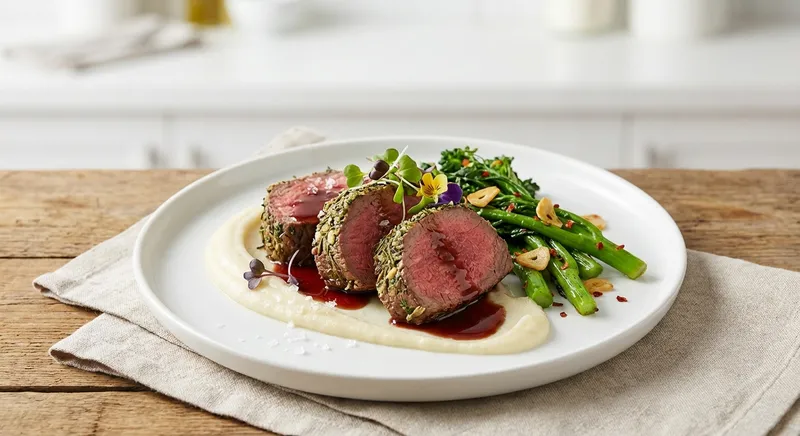
Tender beef tenderloin medallions get a fragrant rosemary–thyme crust, seared for a caramelized exterior and roasted to perfect medium-rare. They’re paired with a silky parsnip purée (rich with cream and butter) and bright, garlicky rapini for contrast — a restaurant-quality plate that balances lush, savory meat with sweet-root creaminess and slightly bitter greens.
Bring a large pot of salted water to a boil while you measure and prep. Salting the cooking water seasons the parsnips from within and raises the boiling temperature slightly so they cook evenly.
Prep the parsnips: peel and cut them into uniform 1–1.5 cm (1/2 inch) pieces so they cook in the same time. Put them in the boiling salted water and cook until very tender — about 12–15 minutes depending on size. Cook them until a knife slides through: this ensures a silky purée rather than a grainy mash.
While parsnips cook, pat the beef medallions dry with paper towels — moisture is the enemy of a good crust, so dryness helps a deep brown sear. Season liberally with kosher salt and pepper on all sides. Let them sit at room temperature for 10–15 minutes while you finish prep (this promotes even cooking).
Mix the herb crust: in a small bowl combine the chopped rosemary and thyme with a pinch of salt and 1 tsp olive oil to make a loose paste. The little bit of oil helps the herbs cling to the meat and releases their aromatics when seared.
Season and press the herbs onto the medallions: brush each medallion lightly with 1/2 tsp olive oil (this helps the herb paste adhere). Press the herb mixture onto the top and sides of each medallion, forming an even crust layer. The herb contact creates an aromatic crust and an attractive finish once seared and roasted.
Blanch the rapini (quick step to tame bitterness): in the pot used for parsnips (or another pot), bring a second pot of water to a boil. Add the rapini for 30–45 seconds until bright green and slightly tender, then immediately plunge into an ice bath (or very cold water) to stop cooking and preserve color. Blanching smooths bitterness and shortens sauté time.
Make the parsnip purée: once parsnips are tender, drain them well and return to the hot pot off the heat for a minute to drive off surface moisture (this concentrates flavor). Transfer to a food mill or blender with 8 tbsp heavy cream and 1 tbsp unsalted butter (or additional cream if desired). Purée until silky; taste and season with salt and white pepper if you have it. If too thick, add a tablespoon of warm water or more cream. Passing through a fine sieve yields restaurant-silky texture; if you don’t have one, blend very carefully and use a whisk to aerate before plating.
Preheat the oven to 200°C / 400°F. A hot oven finishes the medallions gently after searing to the desired doneness without overcooking the exterior.
Sear the medallions: heat a heavy oven-safe skillet (cast-iron is ideal) over medium-high heat until smoking point. Add 1 tbsp olive oil and swirl. Sear the medallions herb-side down first for 1.5–2 minutes until the herb crust is fragrant and browned — searing the herbs unlocks their oils. Flip and sear the second side 1–1.5 minutes to develop color. High-heat searing creates the Maillard crust that gives deep flavor.
Finish in the oven: transfer the skillet to the preheated oven and roast 4–8 minutes depending on thickness and desired doneness: 4–5 minutes for rare, 6–7 for medium-rare, 8+ for medium. Use an instant-read thermometer to be precise: 50–52°C (122–125°F) rare, 55–57°C (130–135°F) medium-rare. Carryover cooking will raise the temperature 2–4°C while resting.
Rest the beef: transfer medallions to a warm plate and tent loosely with foil for 6–8 minutes. Resting lets the muscle fibers relax and the juices redistribute so you don’t lose them when slicing — the result is juicier steak.
Sauté the rapini: while the beef rests, heat a large sauté pan over medium heat and add remaining 2 tbsp olive oil. Add the sliced garlic and cook 30–45 seconds until fragrant but not brown (browned garlic turns bitter). Add the blanched rapini, season with salt and pepper, and toss 2–3 minutes to combine and warm through. Finish with a squeeze of lemon if using. Quick high-heat sautéing preserves bright color and texture while the garlic flavors the oil.
Optional pan finish: if you want a jus, return the skillet used for searing to medium heat, add 1/4 cup beef broth or water and deglaze scraping browned bits, then swirl in 1 tbsp cold butter off the heat to enrich and slightly thicken. Spoon a little jus over each medallion when plating. (This step is optional but adds restaurant polish.)
Plate: spoon a generous dollop of parsnip purée at the center, position the medallion(s) on top or beside it, and arrange a portion of garlicky rapini alongside. Drizzle with any pan jus and finish with a small sprinkle of flaky salt and a crack of black pepper.
702
Calories
40g
Protein
39g
Carbs
46g
Fat
11g
Fiber
How did this recipe turn out? Let others know!
to rate this recipe
By Recipe AI
Tender beef tenderloin medallions get a fragrant rosemary–thyme crust, seared for a caramelized exterior and roasted to perfect medium-rare. They’re paired with a silky parsnip purée (rich with cream and butter) and bright, garlicky rapini for contrast — a restaurant-quality plate that balances lush, savory meat with sweet-root creaminess and slightly bitter greens.
Bring a large pot of salted water to a boil while you measure and prep. Salting the cooking water seasons the parsnips from within and raises the boiling temperature slightly so they cook evenly.
Prep the parsnips: peel and cut them into uniform 1–1.5 cm (1/2 inch) pieces so they cook in the same time. Put them in the boiling salted water and cook until very tender — about 12–15 minutes depending on size. Cook them until a knife slides through: this ensures a silky purée rather than a grainy mash.
While parsnips cook, pat the beef medallions dry with paper towels — moisture is the enemy of a good crust, so dryness helps a deep brown sear. Season liberally with kosher salt and pepper on all sides. Let them sit at room temperature for 10–15 minutes while you finish prep (this promotes even cooking).
Mix the herb crust: in a small bowl combine the chopped rosemary and thyme with a pinch of salt and 1 tsp olive oil to make a loose paste. The little bit of oil helps the herbs cling to the meat and releases their aromatics when seared.
Season and press the herbs onto the medallions: brush each medallion lightly with 1/2 tsp olive oil (this helps the herb paste adhere). Press the herb mixture onto the top and sides of each medallion, forming an even crust layer. The herb contact creates an aromatic crust and an attractive finish once seared and roasted.
Blanch the rapini (quick step to tame bitterness): in the pot used for parsnips (or another pot), bring a second pot of water to a boil. Add the rapini for 30–45 seconds until bright green and slightly tender, then immediately plunge into an ice bath (or very cold water) to stop cooking and preserve color. Blanching smooths bitterness and shortens sauté time.
Make the parsnip purée: once parsnips are tender, drain them well and return to the hot pot off the heat for a minute to drive off surface moisture (this concentrates flavor). Transfer to a food mill or blender with 8 tbsp heavy cream and 1 tbsp unsalted butter (or additional cream if desired). Purée until silky; taste and season with salt and white pepper if you have it. If too thick, add a tablespoon of warm water or more cream. Passing through a fine sieve yields restaurant-silky texture; if you don’t have one, blend very carefully and use a whisk to aerate before plating.
Preheat the oven to 200°C / 400°F. A hot oven finishes the medallions gently after searing to the desired doneness without overcooking the exterior.
Sear the medallions: heat a heavy oven-safe skillet (cast-iron is ideal) over medium-high heat until smoking point. Add 1 tbsp olive oil and swirl. Sear the medallions herb-side down first for 1.5–2 minutes until the herb crust is fragrant and browned — searing the herbs unlocks their oils. Flip and sear the second side 1–1.5 minutes to develop color. High-heat searing creates the Maillard crust that gives deep flavor.
Finish in the oven: transfer the skillet to the preheated oven and roast 4–8 minutes depending on thickness and desired doneness: 4–5 minutes for rare, 6–7 for medium-rare, 8+ for medium. Use an instant-read thermometer to be precise: 50–52°C (122–125°F) rare, 55–57°C (130–135°F) medium-rare. Carryover cooking will raise the temperature 2–4°C while resting.
Rest the beef: transfer medallions to a warm plate and tent loosely with foil for 6–8 minutes. Resting lets the muscle fibers relax and the juices redistribute so you don’t lose them when slicing — the result is juicier steak.
Sauté the rapini: while the beef rests, heat a large sauté pan over medium heat and add remaining 2 tbsp olive oil. Add the sliced garlic and cook 30–45 seconds until fragrant but not brown (browned garlic turns bitter). Add the blanched rapini, season with salt and pepper, and toss 2–3 minutes to combine and warm through. Finish with a squeeze of lemon if using. Quick high-heat sautéing preserves bright color and texture while the garlic flavors the oil.
Optional pan finish: if you want a jus, return the skillet used for searing to medium heat, add 1/4 cup beef broth or water and deglaze scraping browned bits, then swirl in 1 tbsp cold butter off the heat to enrich and slightly thicken. Spoon a little jus over each medallion when plating. (This step is optional but adds restaurant polish.)
Plate: spoon a generous dollop of parsnip purée at the center, position the medallion(s) on top or beside it, and arrange a portion of garlicky rapini alongside. Drizzle with any pan jus and finish with a small sprinkle of flaky salt and a crack of black pepper.
702
Calories
40g
Protein
39g
Carbs
46g
Fat
11g
Fiber
Your Rating:
