By Chef
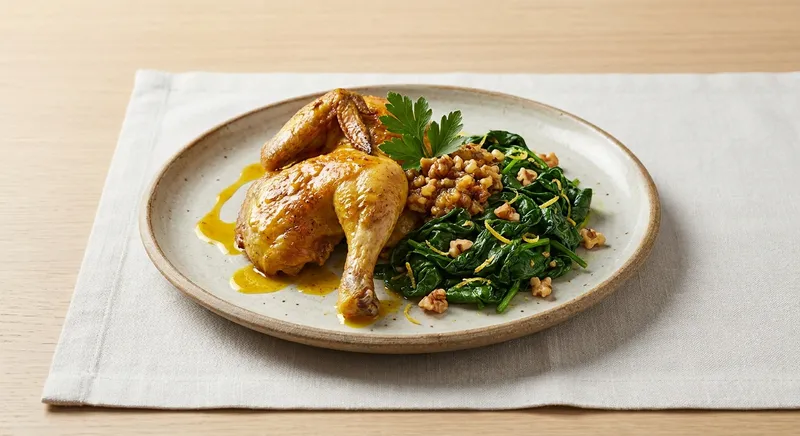
Bright, aromatic and deeply comforting: juicy turmeric- and garlic-marinated chicken breasts roasted to a golden finish, served over quick lemon-ginger wilted spinach and finished with a crunchy, herb-forward walnut salsa. Key anti-inflammatory players—turmeric, ginger, garlic, olive oil and walnuts—combine for bold flavor, pleasing textures and a dish that's both nourishing and restaurant-quality.
Prep and pound (if needed): Pat the chicken breasts dry with paper towels. If any breasts are uneven in thickness, place them between two sheets of plastic wrap and gently pound with the flat side of a meat mallet or heavy pan to an even thickness (about 3/4" / 2 cm). Why: Drying helps the marinade cling and encourages browning; even thickness ensures uniform cooking so you don't overcook thin parts while waiting for thick parts to reach temperature.
Make the marinade: In a medium bowl whisk together 3 tbsp extra-virgin olive oil, minced garlic, ground turmeric, grated ginger, honey, lemon zest and lemon juice, 1/2 tsp black pepper and 1 tsp sea salt. Why: Olive oil dissolves and carries fat-soluble anti-inflammatory compounds (like curcumin in turmeric); lemon, ginger and garlic add brightness and complementary anti-inflammatory phytochemicals. The black pepper is important — piperine increases curcumin absorption.
Marinate the chicken: Place the chicken breasts in a shallow dish or zip-top bag and pour the marinade over them, turning to coat. Refrigerate at least 30 minutes and up to 2 hours. Why: Marinating lets the flavors and actives from turmeric, garlic and ginger penetrate the surface. Don’t marinate more than 2 hours with lemon on chicken breasts (acid can start to ‘cook’ and change texture).
Preheat oven and pan: About 10 minutes before cooking, preheat your oven to 425°F (220°C). Heat a heavy, oven-safe skillet (cast iron preferred) over medium-high heat for 2–3 minutes until very hot. Why: Starting on a hot pan creates an immediate Maillard reaction (browning) that builds flavor and color; finishing in a hot oven cooks the interior gently without drying the exterior.
Sear the chicken: Remove chicken from marinade (but keep the leftover marinade). Add the chicken to the hot skillet — lay pieces away from you so oil doesn’t splatter — and sear 2–3 minutes without moving until a golden crust forms. Flip and sear the other side 1–2 minutes. Why: A quick, hot sear seals in flavor and creates texture. Don’t crowd the pan; overcrowding steams the meat instead of browning it.
Finish in the oven: Pour the reserved marinade into the skillet around (not over) the chicken, then transfer the skillet to the preheated oven. Roast 10–14 minutes, or until internal temperature reaches 165°F (74°C) at the thickest part. Let rest 5 minutes. Why: The oven provides even heat to finish cooking through without burning the exterior. Resting allows juices to redistribute, keeping the chicken moist.
Toast the walnuts & finish salsa: While the chicken roasts, place the chopped walnuts in a small dry skillet over medium heat and toast, shaking often, until fragrant and lightly browned, 2–3 minutes. Transfer to a bowl and stir in chopped parsley, a pinch of salt, 1 tsp lemon zest and a squeeze of lemon juice. Why: Toasting intensifies the walnuts’ oil and aroma, adding crunch and a toasty contrast to the tender chicken. Acid brightens the fats and balances the dish.
Wilt the spinach: After you remove the chicken and while it rests, wipe the skillet if it’s very browned (leave fond for flavor if not burned), add 1 tbsp olive oil and return to medium heat. Add the minced 2 remaining cloves of garlic (if you used 6 earlier, actually you used all 6 in the marinade—if you prefer more garlic, reserve 2 for the spinach) and sauté 20–30 seconds until aromatic (don't brown). Add the baby spinach and a pinch of salt, tossing until just wilted, about 1–2 minutes. Stir in 1 tbsp lemon juice and the grated ginger if you like extra zing. Why: Quick cooking preserves spinach’s nutrients and bright color; finishing with lemon lifts the greens and ties flavors to the chicken.
Assemble and serve: Divide the wilted spinach among four plates, top each with a rested chicken breast, and spoon walnut salsa over the chicken. Scatter parsley, a drizzle of olive oil or reserved pan juices if you like, and serve with lemon wedges and optional crushed red pepper. Why: Layering hot chicken on the spinach warms the greens just enough; the walnut-parsley salsa provides texture and fresh herbal contrast.
Storage & reheating: Store leftover chicken and spinach separately in airtight containers in the fridge for up to 3 days. Reheat gently in a low oven (300°F / 150°C) for 10–12 minutes or in a skillet with a splash of broth to avoid drying. Why: Gentle reheating preserves juiciness and texture; microwaving aggressively can dry the chicken.
496
Calories
56g
Protein
10g
Carbs
25g
Fat
2g
Fiber
How did this recipe turn out? Let others know!
to rate this recipe
By Chef
Bright, aromatic and deeply comforting: juicy turmeric- and garlic-marinated chicken breasts roasted to a golden finish, served over quick lemon-ginger wilted spinach and finished with a crunchy, herb-forward walnut salsa. Key anti-inflammatory players—turmeric, ginger, garlic, olive oil and walnuts—combine for bold flavor, pleasing textures and a dish that's both nourishing and restaurant-quality.
Prep and pound (if needed): Pat the chicken breasts dry with paper towels. If any breasts are uneven in thickness, place them between two sheets of plastic wrap and gently pound with the flat side of a meat mallet or heavy pan to an even thickness (about 3/4" / 2 cm). Why: Drying helps the marinade cling and encourages browning; even thickness ensures uniform cooking so you don't overcook thin parts while waiting for thick parts to reach temperature.
Make the marinade: In a medium bowl whisk together 3 tbsp extra-virgin olive oil, minced garlic, ground turmeric, grated ginger, honey, lemon zest and lemon juice, 1/2 tsp black pepper and 1 tsp sea salt. Why: Olive oil dissolves and carries fat-soluble anti-inflammatory compounds (like curcumin in turmeric); lemon, ginger and garlic add brightness and complementary anti-inflammatory phytochemicals. The black pepper is important — piperine increases curcumin absorption.
Marinate the chicken: Place the chicken breasts in a shallow dish or zip-top bag and pour the marinade over them, turning to coat. Refrigerate at least 30 minutes and up to 2 hours. Why: Marinating lets the flavors and actives from turmeric, garlic and ginger penetrate the surface. Don’t marinate more than 2 hours with lemon on chicken breasts (acid can start to ‘cook’ and change texture).
Preheat oven and pan: About 10 minutes before cooking, preheat your oven to 425°F (220°C). Heat a heavy, oven-safe skillet (cast iron preferred) over medium-high heat for 2–3 minutes until very hot. Why: Starting on a hot pan creates an immediate Maillard reaction (browning) that builds flavor and color; finishing in a hot oven cooks the interior gently without drying the exterior.
Sear the chicken: Remove chicken from marinade (but keep the leftover marinade). Add the chicken to the hot skillet — lay pieces away from you so oil doesn’t splatter — and sear 2–3 minutes without moving until a golden crust forms. Flip and sear the other side 1–2 minutes. Why: A quick, hot sear seals in flavor and creates texture. Don’t crowd the pan; overcrowding steams the meat instead of browning it.
Finish in the oven: Pour the reserved marinade into the skillet around (not over) the chicken, then transfer the skillet to the preheated oven. Roast 10–14 minutes, or until internal temperature reaches 165°F (74°C) at the thickest part. Let rest 5 minutes. Why: The oven provides even heat to finish cooking through without burning the exterior. Resting allows juices to redistribute, keeping the chicken moist.
Toast the walnuts & finish salsa: While the chicken roasts, place the chopped walnuts in a small dry skillet over medium heat and toast, shaking often, until fragrant and lightly browned, 2–3 minutes. Transfer to a bowl and stir in chopped parsley, a pinch of salt, 1 tsp lemon zest and a squeeze of lemon juice. Why: Toasting intensifies the walnuts’ oil and aroma, adding crunch and a toasty contrast to the tender chicken. Acid brightens the fats and balances the dish.
Wilt the spinach: After you remove the chicken and while it rests, wipe the skillet if it’s very browned (leave fond for flavor if not burned), add 1 tbsp olive oil and return to medium heat. Add the minced 2 remaining cloves of garlic (if you used 6 earlier, actually you used all 6 in the marinade—if you prefer more garlic, reserve 2 for the spinach) and sauté 20–30 seconds until aromatic (don't brown). Add the baby spinach and a pinch of salt, tossing until just wilted, about 1–2 minutes. Stir in 1 tbsp lemon juice and the grated ginger if you like extra zing. Why: Quick cooking preserves spinach’s nutrients and bright color; finishing with lemon lifts the greens and ties flavors to the chicken.
Assemble and serve: Divide the wilted spinach among four plates, top each with a rested chicken breast, and spoon walnut salsa over the chicken. Scatter parsley, a drizzle of olive oil or reserved pan juices if you like, and serve with lemon wedges and optional crushed red pepper. Why: Layering hot chicken on the spinach warms the greens just enough; the walnut-parsley salsa provides texture and fresh herbal contrast.
Storage & reheating: Store leftover chicken and spinach separately in airtight containers in the fridge for up to 3 days. Reheat gently in a low oven (300°F / 150°C) for 10–12 minutes or in a skillet with a splash of broth to avoid drying. Why: Gentle reheating preserves juiciness and texture; microwaving aggressively can dry the chicken.
496
Calories
56g
Protein
10g
Carbs
25g
Fat
2g
Fiber
Your Rating:
