By Kayla Alaniz
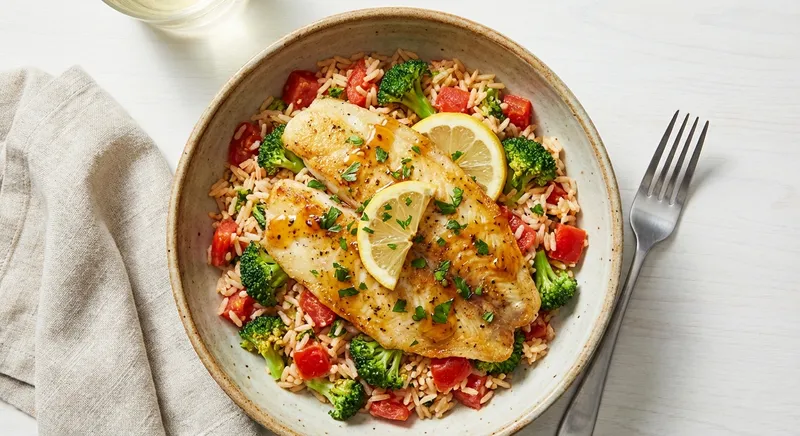
Delicate, flaky tilapia is pan-seared to a golden edge and finished in a bright lemon-garlic butter that shines against a fragrant tomato-broccoli rice pilaf. The pilaf is aromatic and slightly creamy from Parmesan, while the tilapia stays crisp on the outside and tender inside — a light, restaurant-quality weeknight main with Mediterranean brightness.
Prep everything first: pat the tilapia fillets dry with paper towels and season both sides with 3/4 tsp kosher salt and 1/4 tsp black pepper. Drying the fish removes surface moisture so it sears instead of steams, giving a golden crust.
Rinse the rice briefly under cold water until the water runs mostly clear, then drain. Rinsing removes excess surface starch so the cooked grains stay separate and pilaf-like instead of sticky.
Heat a medium saucepan over medium heat and add 1 tbsp olive oil and 1 tbsp butter. When the butter foams, add the diced onion and a pinch of salt. Sweat for 4–5 minutes until translucent — not browned — to develop sweetness without bitter caramelization, which keeps the pilaf bright.
Add 1 minced garlic clove and the rinsed rice to the pan. Toast the rice, stirring, for 60–90 seconds to coat the grains with fat and lightly toast them; this step deepens flavor and helps the rice stay separate when cooked.
Stir in the diced tomato and chopped broccoli, then pour in 3 cups hot chicken stock. Season with 1/2 tsp kosher salt and the optional 1/4 tsp red pepper flakes. Bring to a simmer, lower the heat to maintain a gentle simmer, cover, and cook undisturbed for 15 minutes. Cooking without lifting the lid lets the rice steam evenly.
After 15 minutes, remove the pan from heat and let it rest, covered, for 5–8 minutes. Resting allows residual steam to finish cooking the rice and keeps the grains fluffy.
While the rice cooks, dredge each seasoned tilapia fillet lightly in 1/3 cup flour seasoned with the remaining 1/4 tsp salt and 1/4 tsp pepper; shake off excess. The thin flour coating promotes browning and gives the sauce something to cling to.
Heat a large nonstick or stainless-steel skillet over medium-high heat and add 2 tbsp olive oil. When oil shimmers and just begins to smoke, add the fillets presentation-side down (skin-side if fish has skin). Sear without moving for 2½–3 minutes until a golden crust forms; do not press the fillets, which squeezes out moisture and prevents a good crust.
Flip the fillets and cook another 1½–2 minutes until just cooked through (internal temperature ~ 135–140°F / 57–60°C). Tilapia is thin and cooks quickly; brief cooking keeps it moist. Transfer fillets to a warm plate and tent loosely with foil to rest.
In the now-empty skillet, reduce heat to medium-low and add 1 tbsp butter. Add the remaining 2 minced garlic cloves and cook 20–30 seconds to bloom the garlic (briefly cooking releases aroma without burning). Add lemon zest and 2 tbsp lemon juice, scrape up any browned bits from the pan — those fond bits carry concentrated flavor — then swirl to emulsify into a glossy sauce. Taste and adjust seasoning.
Fluff the rested rice pilaf with a fork, then stir in the grated Parmesan and chopped parsley. The cheese adds savory umami and a silky texture; stirring at the end prevents the cheese from proving and clumping.
Plate: spoon a heaping 1 to 1 1/4 cups pilaf per plate, top with a tilapia fillet, and spoon lemon-garlic butter over the fish. Garnish with extra parsley and lemon wedge. Serving immediately preserves the fish’s crisp exterior and the pilaf’s warmth.
Simple cleanup note: wipe the skillet while still warm with a paper towel first to pick up most residue before washing; the pan will be easier to clean because the fats are still softened.
670
Calories
48g
Protein
69g
Carbs
22g
Fat
4g
Fiber
How did this recipe turn out? Let others know!
to rate this recipe
By Kayla Alaniz
Delicate, flaky tilapia is pan-seared to a golden edge and finished in a bright lemon-garlic butter that shines against a fragrant tomato-broccoli rice pilaf. The pilaf is aromatic and slightly creamy from Parmesan, while the tilapia stays crisp on the outside and tender inside — a light, restaurant-quality weeknight main with Mediterranean brightness.
Prep everything first: pat the tilapia fillets dry with paper towels and season both sides with 3/4 tsp kosher salt and 1/4 tsp black pepper. Drying the fish removes surface moisture so it sears instead of steams, giving a golden crust.
Rinse the rice briefly under cold water until the water runs mostly clear, then drain. Rinsing removes excess surface starch so the cooked grains stay separate and pilaf-like instead of sticky.
Heat a medium saucepan over medium heat and add 1 tbsp olive oil and 1 tbsp butter. When the butter foams, add the diced onion and a pinch of salt. Sweat for 4–5 minutes until translucent — not browned — to develop sweetness without bitter caramelization, which keeps the pilaf bright.
Add 1 minced garlic clove and the rinsed rice to the pan. Toast the rice, stirring, for 60–90 seconds to coat the grains with fat and lightly toast them; this step deepens flavor and helps the rice stay separate when cooked.
Stir in the diced tomato and chopped broccoli, then pour in 3 cups hot chicken stock. Season with 1/2 tsp kosher salt and the optional 1/4 tsp red pepper flakes. Bring to a simmer, lower the heat to maintain a gentle simmer, cover, and cook undisturbed for 15 minutes. Cooking without lifting the lid lets the rice steam evenly.
After 15 minutes, remove the pan from heat and let it rest, covered, for 5–8 minutes. Resting allows residual steam to finish cooking the rice and keeps the grains fluffy.
While the rice cooks, dredge each seasoned tilapia fillet lightly in 1/3 cup flour seasoned with the remaining 1/4 tsp salt and 1/4 tsp pepper; shake off excess. The thin flour coating promotes browning and gives the sauce something to cling to.
Heat a large nonstick or stainless-steel skillet over medium-high heat and add 2 tbsp olive oil. When oil shimmers and just begins to smoke, add the fillets presentation-side down (skin-side if fish has skin). Sear without moving for 2½–3 minutes until a golden crust forms; do not press the fillets, which squeezes out moisture and prevents a good crust.
Flip the fillets and cook another 1½–2 minutes until just cooked through (internal temperature ~ 135–140°F / 57–60°C). Tilapia is thin and cooks quickly; brief cooking keeps it moist. Transfer fillets to a warm plate and tent loosely with foil to rest.
In the now-empty skillet, reduce heat to medium-low and add 1 tbsp butter. Add the remaining 2 minced garlic cloves and cook 20–30 seconds to bloom the garlic (briefly cooking releases aroma without burning). Add lemon zest and 2 tbsp lemon juice, scrape up any browned bits from the pan — those fond bits carry concentrated flavor — then swirl to emulsify into a glossy sauce. Taste and adjust seasoning.
Fluff the rested rice pilaf with a fork, then stir in the grated Parmesan and chopped parsley. The cheese adds savory umami and a silky texture; stirring at the end prevents the cheese from proving and clumping.
Plate: spoon a heaping 1 to 1 1/4 cups pilaf per plate, top with a tilapia fillet, and spoon lemon-garlic butter over the fish. Garnish with extra parsley and lemon wedge. Serving immediately preserves the fish’s crisp exterior and the pilaf’s warmth.
Simple cleanup note: wipe the skillet while still warm with a paper towel first to pick up most residue before washing; the pan will be easier to clean because the fats are still softened.
670
Calories
48g
Protein
69g
Carbs
22g
Fat
4g
Fiber
Your Rating:
