By Sokuntheary Kim
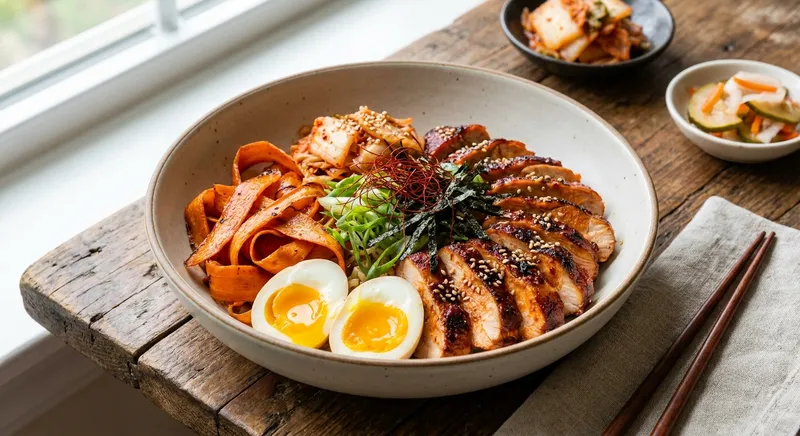
A bright, lean Korean-inspired bowl that pairs golden, soy-gochujang seared chicken with crunchy, tangy shredded carrots and silky soft eggs. The dish balances savory umami, gentle chile heat and fresh acidity while keeping calories low and protein high — restaurant-level flavor with streamlined, home-friendly technique.
Prep the chicken: Pat the 500 g chicken breasts very dry with paper towels and trim any fat. Slice the breasts thinly (about 1/4" / 6 mm) against the grain into bite-sized strips. WHY: Drying the surface helps a golden sear; slicing against the grain yields more tender bites and faster cooking so the meat stays juicy.
Make a quick marinade: In a medium bowl whisk together 2 tbsp low-sodium soy sauce, 1 tbsp gochujang (if using), 1 tsp sesame oil, 1 minced garlic clove, 1/4 tsp salt and 1/4 tsp black pepper. Add the sliced chicken and toss to coat. Let rest at room temperature for 10 minutes. WHY: A brief marinade seasons the surface and the gochujang adds umami and gentle heat; 10 minutes is enough to flavor thin slices without requiring long marination.
Shred the carrots: Using a box grater, mandoline on the julienne setting, or a peeler, shred or julienne 300 g carrots into thin ribbons. Toss them in a bowl with 1 tbsp rice vinegar, the remaining minced garlic clove, 1/2 tsp salt, and 1/2 tsp soy sauce (optional). WHY: Acid brightens the carrots and slightly cooks them (a quick pickling effect) which balances the savory chicken and gives a crisp, refreshing contrast in texture.
Heat the pan for searing: Place a large nonstick or stainless steel skillet over medium-high heat for 2–3 minutes until hot. Add 1 tbsp neutral oil and swirl to coat. WHY: A properly preheated pan ensures immediate searing contact and caramelization (Maillard reaction), which creates deep flavor without overcooking the interior.
Sear the chicken in batches: Remove chicken from the marinade, letting excess drip back into the bowl (discard marinade). Add half the chicken to the hot pan in a single layer and cook undisturbed for 1.5–2 minutes until the edges brown. Flip and cook another 1–1.5 minutes until cooked through. Transfer to a plate and repeat with remaining chicken. WHY: Cooking in batches prevents overcrowding, which would steam the meat instead of searing it. Short, high-heat cooking keeps the breast moist.
Finish the sauce in the pan (optional): If you want a glossy coating, wipe the pan briefly, reduce heat to medium, add the reserved chicken pieces back to the pan with a splash (1–2 tsp) of water, a drizzle of the sesame oil, and toss 30–45 seconds to glaze. WHY: A quick deglaze picks up the fond (brown bits) and concentrates flavor into an attractive sheen without adding many calories.
Poach or fry the eggs: Bring a medium saucepan of water to a gentle simmer with a tablespoon of vinegar (optional, helps whites set). Crack each egg into a small cup and slip into simmering water; cook 5–6 minutes for jammy yolks (longer for firmer yolks). Alternatively, pan-fry in 1 tsp oil over medium for sunny-side up eggs, covering the pan for about 2–3 minutes. WHY: A softly set yolk adds silkiness and richness to the bowl; poaching uses very little fat and keeps the dish lower calorie.
Warm the carrots & plate: If you prefer warm carrots, briefly toss the shredded carrots in the empty warm skillet for 30–45 seconds—this softens them slightly while keeping crunch. Arrange the chicken in four shallow bowls, add a portion of the shredded carrots, and top each bowl with a soft-poached egg. WHY: Contrasting temperatures and textures (warm tender chicken, crisp-marinated carrot, silky egg) make the bowl satisfying and restaurant-worthy.
Garnish and finish: Sprinkle each bowl with thinly sliced scallions and 1/4 tsp toasted sesame seeds (if using). Taste and season with additional salt or a few drops of soy sauce if needed. WHY: Fresh scallions add a bright oniony pop; sesame seeds contribute aroma and a roasted note without many calories.
Serve immediately: Encourage diners to break the egg yolk so it melds into the chicken and carrots for a rich sauce. WHY: Serving right away preserves textural contrasts and ensures the egg is at the perfect doneness.
365
Calories
46g
Protein
10g
Carbs
14g
Fat
2g
Fiber
How did this recipe turn out? Let others know!
to rate this recipe
By Sokuntheary Kim
A bright, lean Korean-inspired bowl that pairs golden, soy-gochujang seared chicken with crunchy, tangy shredded carrots and silky soft eggs. The dish balances savory umami, gentle chile heat and fresh acidity while keeping calories low and protein high — restaurant-level flavor with streamlined, home-friendly technique.
Prep the chicken: Pat the 500 g chicken breasts very dry with paper towels and trim any fat. Slice the breasts thinly (about 1/4" / 6 mm) against the grain into bite-sized strips. WHY: Drying the surface helps a golden sear; slicing against the grain yields more tender bites and faster cooking so the meat stays juicy.
Make a quick marinade: In a medium bowl whisk together 2 tbsp low-sodium soy sauce, 1 tbsp gochujang (if using), 1 tsp sesame oil, 1 minced garlic clove, 1/4 tsp salt and 1/4 tsp black pepper. Add the sliced chicken and toss to coat. Let rest at room temperature for 10 minutes. WHY: A brief marinade seasons the surface and the gochujang adds umami and gentle heat; 10 minutes is enough to flavor thin slices without requiring long marination.
Shred the carrots: Using a box grater, mandoline on the julienne setting, or a peeler, shred or julienne 300 g carrots into thin ribbons. Toss them in a bowl with 1 tbsp rice vinegar, the remaining minced garlic clove, 1/2 tsp salt, and 1/2 tsp soy sauce (optional). WHY: Acid brightens the carrots and slightly cooks them (a quick pickling effect) which balances the savory chicken and gives a crisp, refreshing contrast in texture.
Heat the pan for searing: Place a large nonstick or stainless steel skillet over medium-high heat for 2–3 minutes until hot. Add 1 tbsp neutral oil and swirl to coat. WHY: A properly preheated pan ensures immediate searing contact and caramelization (Maillard reaction), which creates deep flavor without overcooking the interior.
Sear the chicken in batches: Remove chicken from the marinade, letting excess drip back into the bowl (discard marinade). Add half the chicken to the hot pan in a single layer and cook undisturbed for 1.5–2 minutes until the edges brown. Flip and cook another 1–1.5 minutes until cooked through. Transfer to a plate and repeat with remaining chicken. WHY: Cooking in batches prevents overcrowding, which would steam the meat instead of searing it. Short, high-heat cooking keeps the breast moist.
Finish the sauce in the pan (optional): If you want a glossy coating, wipe the pan briefly, reduce heat to medium, add the reserved chicken pieces back to the pan with a splash (1–2 tsp) of water, a drizzle of the sesame oil, and toss 30–45 seconds to glaze. WHY: A quick deglaze picks up the fond (brown bits) and concentrates flavor into an attractive sheen without adding many calories.
Poach or fry the eggs: Bring a medium saucepan of water to a gentle simmer with a tablespoon of vinegar (optional, helps whites set). Crack each egg into a small cup and slip into simmering water; cook 5–6 minutes for jammy yolks (longer for firmer yolks). Alternatively, pan-fry in 1 tsp oil over medium for sunny-side up eggs, covering the pan for about 2–3 minutes. WHY: A softly set yolk adds silkiness and richness to the bowl; poaching uses very little fat and keeps the dish lower calorie.
Warm the carrots & plate: If you prefer warm carrots, briefly toss the shredded carrots in the empty warm skillet for 30–45 seconds—this softens them slightly while keeping crunch. Arrange the chicken in four shallow bowls, add a portion of the shredded carrots, and top each bowl with a soft-poached egg. WHY: Contrasting temperatures and textures (warm tender chicken, crisp-marinated carrot, silky egg) make the bowl satisfying and restaurant-worthy.
Garnish and finish: Sprinkle each bowl with thinly sliced scallions and 1/4 tsp toasted sesame seeds (if using). Taste and season with additional salt or a few drops of soy sauce if needed. WHY: Fresh scallions add a bright oniony pop; sesame seeds contribute aroma and a roasted note without many calories.
Serve immediately: Encourage diners to break the egg yolk so it melds into the chicken and carrots for a rich sauce. WHY: Serving right away preserves textural contrasts and ensures the egg is at the perfect doneness.
365
Calories
46g
Protein
10g
Carbs
14g
Fat
2g
Fiber
Your Rating:
