By Harry McCosker
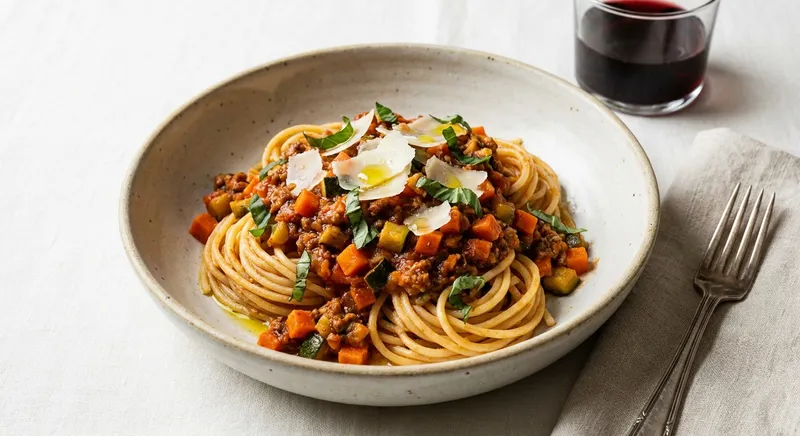
A deeply savory, restaurant-style Spaghetti Bolognese where lean beef simmers with carrot and zucchini in a rich, tomato-forward sauce. Bright tomato acidity, a touch of sweetness from carrot and sugar, and an herby finish make this classic Italian comfort dish feel elevated yet totally achievable at home.
Prep the vegetables and aromatics: peel and finely dice the onion, mince the garlic, grate the carrot and dice the zucchini. Fine and even pieces mean they’ll melt into the sauce, adding natural sweetness and body without large vegetable chunks. Have the tomato paste measured and the canned tomatoes opened.
Start the sauce base: Heat a large heavy-based sauté pan or Dutch oven over medium heat and add the olive oil. Once shimmering (not smoking), add the diced onion with a pinch of salt. Sweat the onion for 6–8 minutes until softened and translucent — this builds the sweet, savory foundation for the ragù by gently coaxing out the onion’s natural sugars without browning.
Add the garlic briefly: Add the minced garlic and cook for 30–45 seconds until fragrant. Garlic burns quickly; a short cook time releases its aroma without bitterness. If you want extra depth, also sprinkle in the garlic powder and onion powder now — they’ll bloom in the oil and give a rounded, savory backbone to the sauce.
Brown the beef for flavor: Increase heat to medium-high and add the 10% lean beef. Break it into small pieces with a wooden spoon and let it brown undisturbed for 2–3 minutes before stirring. Browning creates Maillard flavors (toasty, meaty notes) that are essential for a rich Bolognese. Cook until the meat loses its raw color and has small browned bits — about 5–7 minutes total.
Add concentrated tomato flavor: Stir in the tomato paste and cook for 1–2 minutes, pressing it into the pan and mixing with the beef. Toasting the paste darkens and intensifies its flavor, removing the raw, metallic edge and imparting a caramelized tomato note to the sauce.
Incorporate the grated carrot and diced zucchini: Add the carrot and zucchini to the pan and sauté for 3–4 minutes so they start to soften. The carrot brings sweetness that balances the tomatoes; the zucchini adds moisture and body without dominating the flavor.
Add tomatoes, herbs, and simmer: Pour in the canned crushed tomatoes, the water or broth, dried oregano, dried basil, sugar, salt and pepper. Stir to combine and bring to a gentle simmer. The small amount of added liquid prevents sticking and gives the sauce room to reduce slowly — simmering concentrates flavors and gives a velvety texture.
Reduce and develop flavor: Lower the heat to maintain a gentle simmer and cook uncovered for 25–30 minutes, stirring every 5–7 minutes. The slow simmer allows the beef to tenderize, flavors to meld, and excess water to evaporate so the sauce becomes thick and clingy. Taste midway and adjust seasoning — you may want a pinch more salt or a splash more sugar if the tomatoes are very acidic.
While the sauce simmers, cook the pasta: Bring a large pot of water to a rolling boil, add a generous pinch of salt (it should taste like the sea), and cook the spaghetti to 1–2 minutes before the package’s al dente time so it finishes cooking in the sauce. Reserve 1 cup (240 ml) of the pasta cooking water before draining — starchy water helps the sauce adhere to the noodles.
Finish the sauce and marry with pasta: If the sauce is very thick, stir in 2–4 tbsp of reserved pasta water to loosen it slightly. Toss the drained spaghetti directly into the sauce (or add the sauce to the pot of pasta) and toss over low heat for 1–2 minutes so the pasta absorbs the sauce — this step makes the dish cohesive, as the starch-coated pasta and meat sauce bind together.
Plate and garnish: Serve immediately, garnished with a grind of black pepper and chopped fresh parsley or basil. Offer grated Parmesan at the table. The fresh herb lift and cheese add contrast and a finishing savory note.
Storage and reheating: Cool any leftover sauce to room temperature then refrigerate in an airtight container up to 3 days (or freeze up to 3 months). Reheat gently on the stovetop with a splash of water or broth to restore silkiness.
749
Calories
43g
Protein
88g
Carbs
21g
Fat
6g
Fiber
How did this recipe turn out? Let others know!
to rate this recipe
By Harry McCosker
A deeply savory, restaurant-style Spaghetti Bolognese where lean beef simmers with carrot and zucchini in a rich, tomato-forward sauce. Bright tomato acidity, a touch of sweetness from carrot and sugar, and an herby finish make this classic Italian comfort dish feel elevated yet totally achievable at home.
Prep the vegetables and aromatics: peel and finely dice the onion, mince the garlic, grate the carrot and dice the zucchini. Fine and even pieces mean they’ll melt into the sauce, adding natural sweetness and body without large vegetable chunks. Have the tomato paste measured and the canned tomatoes opened.
Start the sauce base: Heat a large heavy-based sauté pan or Dutch oven over medium heat and add the olive oil. Once shimmering (not smoking), add the diced onion with a pinch of salt. Sweat the onion for 6–8 minutes until softened and translucent — this builds the sweet, savory foundation for the ragù by gently coaxing out the onion’s natural sugars without browning.
Add the garlic briefly: Add the minced garlic and cook for 30–45 seconds until fragrant. Garlic burns quickly; a short cook time releases its aroma without bitterness. If you want extra depth, also sprinkle in the garlic powder and onion powder now — they’ll bloom in the oil and give a rounded, savory backbone to the sauce.
Brown the beef for flavor: Increase heat to medium-high and add the 10% lean beef. Break it into small pieces with a wooden spoon and let it brown undisturbed for 2–3 minutes before stirring. Browning creates Maillard flavors (toasty, meaty notes) that are essential for a rich Bolognese. Cook until the meat loses its raw color and has small browned bits — about 5–7 minutes total.
Add concentrated tomato flavor: Stir in the tomato paste and cook for 1–2 minutes, pressing it into the pan and mixing with the beef. Toasting the paste darkens and intensifies its flavor, removing the raw, metallic edge and imparting a caramelized tomato note to the sauce.
Incorporate the grated carrot and diced zucchini: Add the carrot and zucchini to the pan and sauté for 3–4 minutes so they start to soften. The carrot brings sweetness that balances the tomatoes; the zucchini adds moisture and body without dominating the flavor.
Add tomatoes, herbs, and simmer: Pour in the canned crushed tomatoes, the water or broth, dried oregano, dried basil, sugar, salt and pepper. Stir to combine and bring to a gentle simmer. The small amount of added liquid prevents sticking and gives the sauce room to reduce slowly — simmering concentrates flavors and gives a velvety texture.
Reduce and develop flavor: Lower the heat to maintain a gentle simmer and cook uncovered for 25–30 minutes, stirring every 5–7 minutes. The slow simmer allows the beef to tenderize, flavors to meld, and excess water to evaporate so the sauce becomes thick and clingy. Taste midway and adjust seasoning — you may want a pinch more salt or a splash more sugar if the tomatoes are very acidic.
While the sauce simmers, cook the pasta: Bring a large pot of water to a rolling boil, add a generous pinch of salt (it should taste like the sea), and cook the spaghetti to 1–2 minutes before the package’s al dente time so it finishes cooking in the sauce. Reserve 1 cup (240 ml) of the pasta cooking water before draining — starchy water helps the sauce adhere to the noodles.
Finish the sauce and marry with pasta: If the sauce is very thick, stir in 2–4 tbsp of reserved pasta water to loosen it slightly. Toss the drained spaghetti directly into the sauce (or add the sauce to the pot of pasta) and toss over low heat for 1–2 minutes so the pasta absorbs the sauce — this step makes the dish cohesive, as the starch-coated pasta and meat sauce bind together.
Plate and garnish: Serve immediately, garnished with a grind of black pepper and chopped fresh parsley or basil. Offer grated Parmesan at the table. The fresh herb lift and cheese add contrast and a finishing savory note.
Storage and reheating: Cool any leftover sauce to room temperature then refrigerate in an airtight container up to 3 days (or freeze up to 3 months). Reheat gently on the stovetop with a splash of water or broth to restore silkiness.
749
Calories
43g
Protein
88g
Carbs
21g
Fat
6g
Fiber
Your Rating:
