By Sabrina Garza
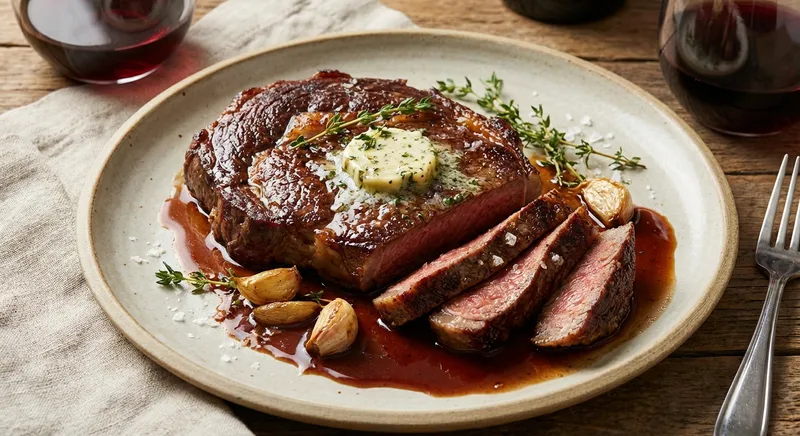
A luxurious, restaurant-style ribeye steak: a caramelized, crusty sear gives way to a tender, juicy interior, finished with spooned garlic-thyme butter and a glossy red wine pan sauce. Big beef flavor is balanced by bright acidity in the sauce and the herbaceous richness of butter-basted garlic — a simple technique that yields an indulgent, steakhouse-quality meal at home.
Bring steaks to room temperature (20–30 minutes) and pat dry with paper towels. Why: Bringing the steak closer to room temperature helps it cook more evenly; patting dry removes surface moisture so you get a better, Maillard-rich crust instead of steam.
Season both sides generously with kosher salt and freshly ground black pepper. If you want to deepen seasoning, salt up to 40 minutes before cooking (the salt will draw out moisture and then reabsorb, concentrating flavor); otherwise season right before searing to avoid drawing too much moisture.
Heat a heavy skillet (cast-iron preferred) over medium-high heat until smoking hot. Add 1 tbsp oil to the pan, swirl to coat. Why: A very hot pan is essential for immediate surface browning (Maillard reaction) which creates flavor and texture; cast iron holds heat well and gives the best crust.
Place one steak in the pan away from you to avoid splatter. Press gently to ensure contact. Sear undisturbed for 3–4 minutes until a deep brown crust forms. Why: Leaving the steak still allows a stable crust to develop; moving it too early tears the crust and prevents proper caramelization.
Flip the steak and add 1/2 tbsp oil (if needed). After 1 minute, reduce heat to medium and add 1½ tbsp butter, 2 smashed garlic cloves, and 2 sprigs thyme to the pan. Tilt the pan and spoon the foaming butter over the top of the steak repeatedly for 1–2 minutes (baste). Why: Basting with butter and aromatics finishes the steak with fat and flavor while the slightly lower heat prevents burning butter; the butter also carries aromatic compounds into the meat.
Use an instant-read thermometer to check doneness: 120–124°F (49–51°C) for rare, 125–129°F (52–54°C) for medium-rare, 130–134°F (54–57°C) for medium. Remove the steak 5°F (3°C) below your target as it will continue to rise while resting. Why: Temperature is the most reliable way to achieve the exact doneness you want; removing early accounts for carryover cooking.
Transfer steaks to a cutting board, tent loosely with foil, and rest 6–8 minutes. Why: Resting allows juices that were driven to the center during cooking to re-distribute, keeping the steak juicy when sliced.
While steaks rest, wipe the pan if there's a lot of burnt residue (leave browned bits – the fond). Return the pan to medium heat, add the minced shallot and the remaining 2 smashed garlic cloves, and sauté for 30–45 seconds to soften. Why: Cooking the shallot briefly softens its sharpness and releases sweet aromatics into the sauce.
Deglaze the pan with the red wine, scraping up the browned bits with a wooden spoon. Let the wine reduce by about half (2–3 minutes). Why: Deglazing dissolves the fond into the liquid, concentrating flavor into the base of the sauce; reducing intensifies flavor and cooks off most alcohol.
Add the beef stock and Dijon, simmer gently until the sauce coats the back of a spoon (about 3–4 minutes). Swirl in the remaining 1½ tbsp butter and 1 tsp lemon juice off the heat to give the sauce shine and a bit of brightness. Taste and adjust seasoning. Why: Finishing with butter (monter au beurre) enriches and emulsifies the sauce, creating a glossy, velvety texture; a touch of acid lifts the flavors.
Slice the rested steak against the grain into 1/4–1/2" slices. Spoon pan sauce over the slices, sprinkle with chopped parsley and a pinch of finishing salt if desired. Why: Slicing against the grain shortens muscle fibers and makes each bite more tender; the sauce and salt highlight the beef’s flavor.
Serve immediately with your choice of sides (roasted potatoes, buttered greens, or a crisp salad). Why: Steak is best enjoyed hot with a warm sauce and contrasting textures on the plate.
1163
Calories
60g
Protein
3g
Carbs
98g
Fat
0g
Fiber
How did this recipe turn out? Let others know!
to rate this recipe
By Sabrina Garza
A luxurious, restaurant-style ribeye steak: a caramelized, crusty sear gives way to a tender, juicy interior, finished with spooned garlic-thyme butter and a glossy red wine pan sauce. Big beef flavor is balanced by bright acidity in the sauce and the herbaceous richness of butter-basted garlic — a simple technique that yields an indulgent, steakhouse-quality meal at home.
Bring steaks to room temperature (20–30 minutes) and pat dry with paper towels. Why: Bringing the steak closer to room temperature helps it cook more evenly; patting dry removes surface moisture so you get a better, Maillard-rich crust instead of steam.
Season both sides generously with kosher salt and freshly ground black pepper. If you want to deepen seasoning, salt up to 40 minutes before cooking (the salt will draw out moisture and then reabsorb, concentrating flavor); otherwise season right before searing to avoid drawing too much moisture.
Heat a heavy skillet (cast-iron preferred) over medium-high heat until smoking hot. Add 1 tbsp oil to the pan, swirl to coat. Why: A very hot pan is essential for immediate surface browning (Maillard reaction) which creates flavor and texture; cast iron holds heat well and gives the best crust.
Place one steak in the pan away from you to avoid splatter. Press gently to ensure contact. Sear undisturbed for 3–4 minutes until a deep brown crust forms. Why: Leaving the steak still allows a stable crust to develop; moving it too early tears the crust and prevents proper caramelization.
Flip the steak and add 1/2 tbsp oil (if needed). After 1 minute, reduce heat to medium and add 1½ tbsp butter, 2 smashed garlic cloves, and 2 sprigs thyme to the pan. Tilt the pan and spoon the foaming butter over the top of the steak repeatedly for 1–2 minutes (baste). Why: Basting with butter and aromatics finishes the steak with fat and flavor while the slightly lower heat prevents burning butter; the butter also carries aromatic compounds into the meat.
Use an instant-read thermometer to check doneness: 120–124°F (49–51°C) for rare, 125–129°F (52–54°C) for medium-rare, 130–134°F (54–57°C) for medium. Remove the steak 5°F (3°C) below your target as it will continue to rise while resting. Why: Temperature is the most reliable way to achieve the exact doneness you want; removing early accounts for carryover cooking.
Transfer steaks to a cutting board, tent loosely with foil, and rest 6–8 minutes. Why: Resting allows juices that were driven to the center during cooking to re-distribute, keeping the steak juicy when sliced.
While steaks rest, wipe the pan if there's a lot of burnt residue (leave browned bits – the fond). Return the pan to medium heat, add the minced shallot and the remaining 2 smashed garlic cloves, and sauté for 30–45 seconds to soften. Why: Cooking the shallot briefly softens its sharpness and releases sweet aromatics into the sauce.
Deglaze the pan with the red wine, scraping up the browned bits with a wooden spoon. Let the wine reduce by about half (2–3 minutes). Why: Deglazing dissolves the fond into the liquid, concentrating flavor into the base of the sauce; reducing intensifies flavor and cooks off most alcohol.
Add the beef stock and Dijon, simmer gently until the sauce coats the back of a spoon (about 3–4 minutes). Swirl in the remaining 1½ tbsp butter and 1 tsp lemon juice off the heat to give the sauce shine and a bit of brightness. Taste and adjust seasoning. Why: Finishing with butter (monter au beurre) enriches and emulsifies the sauce, creating a glossy, velvety texture; a touch of acid lifts the flavors.
Slice the rested steak against the grain into 1/4–1/2" slices. Spoon pan sauce over the slices, sprinkle with chopped parsley and a pinch of finishing salt if desired. Why: Slicing against the grain shortens muscle fibers and makes each bite more tender; the sauce and salt highlight the beef’s flavor.
Serve immediately with your choice of sides (roasted potatoes, buttered greens, or a crisp salad). Why: Steak is best enjoyed hot with a warm sauce and contrasting textures on the plate.
1163
Calories
60g
Protein
3g
Carbs
98g
Fat
0g
Fiber
Your Rating:
