By emensah m
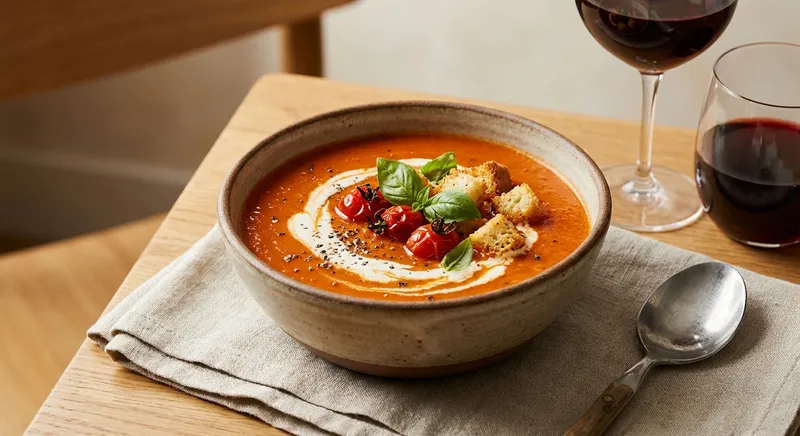
A warm, restaurant-quality tomato soup that balances sweet roasted tomato depth with bright basil and a lusciously creamy finish. Roasting concentrates the tomatoes' sugars and caramelizes edges for savory complexity; a short sauté of tomato paste, balsamic and aromatics adds richness and the final blitz through a fine sieve yields a velvety, elegant bowl of comfort.
Preheat and prep tomatoes: Preheat oven to 425°F (220°C). Halve or quarter the tomatoes depending on size so they sit cut-side up on a rimmed baking sheet. Drizzle 2 tablespoons olive oil, sprinkle 1 tsp kosher salt and a few grinds of black pepper. Roast for 35–40 minutes until the edges caramelize and juices concentrate. Why: Roasting concentrates tomato sugars and creates caramelized, savory edges, giving the soup deep, complex flavor that raw tomatoes can't provide.
Sauté aromatics: While tomatoes roast, heat remaining 1 tbsp olive oil and 2 tbsp butter in a wide, heavy-bottomed pot over medium heat. Add the chopped onion and a pinch of salt and sweat, stirring occasionally, for 8–10 minutes until translucent and very soft (not browned). Add the sliced garlic and sauté 30–45 seconds until fragrant. Why: Sweating the onion slowly extracts and builds sweet, savory flavor without browning; garlic is added late because it browns quickly and can turn bitter if overcooked.
Bloom the tomato paste and deglaze: Push the aromatics to the side, add the tomato paste and cook, stirring, for 60–90 seconds until it turns a deeper red and aromatic. This 'bloom' lifts raw-tasting notes and builds umami. Add balsamic vinegar to deglaze the pan—scraping up any browned bits—and let it reduce for 30–45 seconds. Why: Cooking the paste deepens its flavor; the acidic balsamic adds sweet-tart depth and helps dissolve browned fond for more complexity.
Add roasted tomatoes and stock: Once the roast is done, add the tomatoes (including all pan juices) to the pot along with the sugar (to balance acidity), fresh thyme sprigs, bay leaf and the stock. Bring to a gentle simmer and cook uncovered for 20 minutes to let the flavors marry. Why: A short simmer integrates the roasted tomato flavor into the broth and allows herbs to infuse without overcooking the brightness of the tomatoes.
Finish with basil and cream: Remove thyme sprigs and bay leaf. Stir in the basil leaves and heavy cream, and simmer 3–4 minutes. Why: Adding basil at the end preserves its aromatic freshness; the cream cuts acidity and gives a silky mouthfeel—add just enough to achieve richness without overpowering bright tomato flavor.
Purée and strain: Using an immersion blender (or carefully in batches in a countertop blender), purée the soup until smooth. For the silkiest restaurant texture, push the puréed soup through a fine-mesh sieve into a clean pot using the back of a ladle or spatula, discarding fibrous solids. Why: Blending breaks down solids; straining removes seeds and fibrous bits for a velvety finish that feels refined and luxurious.
Adjust seasoning and finish: Warm the strained soup over low heat. Taste and adjust salt, pepper, and a small squeeze of lemon or additional balsamic (optional) to brighten. Swirl in 1 tbsp butter for sheen and mouthfeel if using. Keep the soup warm but do not boil once cream is added. Why: Final seasoning ensures balance and a glossy finish; boiling after cream is added can separate the emulsion and dull the flavor.
Optional grilled-cheese croutons: Heat a skillet; butter one side of each bread slice, top with grated cheese, and grill until golden and melted. Cut into bite-size croutons and float or serve alongside. Why: Crisp, cheesy croutons add textural contrast and indulgent flavor; serve on the side to keep them crisp.
Serve: Ladle soup into warmed bowls, garnish with a swirl of cream, torn basil leaves, a grind of pepper and a sprinkle of grated Parmesan if desired. Serve immediately. Why: Warm bowls preserve temperature and the fresh basil and cheese provide aromatics and umami that elevate the soup into a restaurant-quality presentation.
294
Calories
4g
Protein
18g
Carbs
24g
Fat
4g
Fiber
How did this recipe turn out? Let others know!
to rate this recipe
By emensah m
A warm, restaurant-quality tomato soup that balances sweet roasted tomato depth with bright basil and a lusciously creamy finish. Roasting concentrates the tomatoes' sugars and caramelizes edges for savory complexity; a short sauté of tomato paste, balsamic and aromatics adds richness and the final blitz through a fine sieve yields a velvety, elegant bowl of comfort.
Preheat and prep tomatoes: Preheat oven to 425°F (220°C). Halve or quarter the tomatoes depending on size so they sit cut-side up on a rimmed baking sheet. Drizzle 2 tablespoons olive oil, sprinkle 1 tsp kosher salt and a few grinds of black pepper. Roast for 35–40 minutes until the edges caramelize and juices concentrate. Why: Roasting concentrates tomato sugars and creates caramelized, savory edges, giving the soup deep, complex flavor that raw tomatoes can't provide.
Sauté aromatics: While tomatoes roast, heat remaining 1 tbsp olive oil and 2 tbsp butter in a wide, heavy-bottomed pot over medium heat. Add the chopped onion and a pinch of salt and sweat, stirring occasionally, for 8–10 minutes until translucent and very soft (not browned). Add the sliced garlic and sauté 30–45 seconds until fragrant. Why: Sweating the onion slowly extracts and builds sweet, savory flavor without browning; garlic is added late because it browns quickly and can turn bitter if overcooked.
Bloom the tomato paste and deglaze: Push the aromatics to the side, add the tomato paste and cook, stirring, for 60–90 seconds until it turns a deeper red and aromatic. This 'bloom' lifts raw-tasting notes and builds umami. Add balsamic vinegar to deglaze the pan—scraping up any browned bits—and let it reduce for 30–45 seconds. Why: Cooking the paste deepens its flavor; the acidic balsamic adds sweet-tart depth and helps dissolve browned fond for more complexity.
Add roasted tomatoes and stock: Once the roast is done, add the tomatoes (including all pan juices) to the pot along with the sugar (to balance acidity), fresh thyme sprigs, bay leaf and the stock. Bring to a gentle simmer and cook uncovered for 20 minutes to let the flavors marry. Why: A short simmer integrates the roasted tomato flavor into the broth and allows herbs to infuse without overcooking the brightness of the tomatoes.
Finish with basil and cream: Remove thyme sprigs and bay leaf. Stir in the basil leaves and heavy cream, and simmer 3–4 minutes. Why: Adding basil at the end preserves its aromatic freshness; the cream cuts acidity and gives a silky mouthfeel—add just enough to achieve richness without overpowering bright tomato flavor.
Purée and strain: Using an immersion blender (or carefully in batches in a countertop blender), purée the soup until smooth. For the silkiest restaurant texture, push the puréed soup through a fine-mesh sieve into a clean pot using the back of a ladle or spatula, discarding fibrous solids. Why: Blending breaks down solids; straining removes seeds and fibrous bits for a velvety finish that feels refined and luxurious.
Adjust seasoning and finish: Warm the strained soup over low heat. Taste and adjust salt, pepper, and a small squeeze of lemon or additional balsamic (optional) to brighten. Swirl in 1 tbsp butter for sheen and mouthfeel if using. Keep the soup warm but do not boil once cream is added. Why: Final seasoning ensures balance and a glossy finish; boiling after cream is added can separate the emulsion and dull the flavor.
Optional grilled-cheese croutons: Heat a skillet; butter one side of each bread slice, top with grated cheese, and grill until golden and melted. Cut into bite-size croutons and float or serve alongside. Why: Crisp, cheesy croutons add textural contrast and indulgent flavor; serve on the side to keep them crisp.
Serve: Ladle soup into warmed bowls, garnish with a swirl of cream, torn basil leaves, a grind of pepper and a sprinkle of grated Parmesan if desired. Serve immediately. Why: Warm bowls preserve temperature and the fresh basil and cheese provide aromatics and umami that elevate the soup into a restaurant-quality presentation.
294
Calories
4g
Protein
18g
Carbs
24g
Fat
4g
Fiber
Your Rating:
