By Amanda Lawson
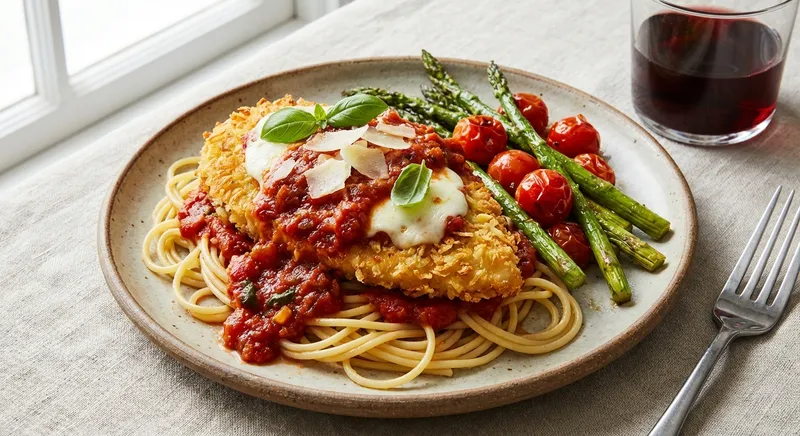
A crunchy, golden potato crust wraps tender, juicy chicken breasts and is finished with a bright, garlicky marinara — an Italian‑American twist on Chicken Milanese. The potato crust gives an irresistible crispy exterior and a comforting potato flavor that pairs perfectly with a silky simmered tomato sauce. Serve with pasta or rice for a restaurant‑quality weeknight centerpiece.
Prep and dry the potatoes: Peel (optional) and coarsely grate the russet potatoes on the large holes of a box grater. Transfer the shredded potato to a large bowl of cold water and swish to rinse off excess surface starch. Why: rinsing removes loose starch that otherwise causes the potatoes to steam and go soggy instead of crisping. Let sit for 2–3 minutes, then transfer to several layers of clean kitchen towels or a very fine mesh sieve and squeeze/pat as dry as possible. Drier potatoes = crisper crust.
Butterfly or pound the chicken: Slice each breast in half horizontally (butterfly) or place in a zip-top bag and pound to an even 1/2-inch (1.2 cm) thickness using a meat mallet or heavy pan. Season both sides with 1 tsp kosher salt and 1/4 tsp black pepper. Why: an even thickness gives predictable cook time and ensures the crust browns without overcooking the center.
Set up a dredging station: In three shallow dishes place: (A) the 60 g flour seasoned with 1/2 tsp salt and 1/4 tsp pepper, (B) whisked eggs with the 60 ml milk, and (C) the drained shredded potatoes tossed with the additional 2 tbsp flour, 1/4 tsp salt and a pinch of pepper. Why: the flour in the potato mix soaks up any remaining moisture and helps the shredded potato adhere to the wet egg layer.
Coat the chicken: Dredge each breast in the seasoned flour, shaking off excess, dip into the egg-milk, then press firmly into the shredded potato, making sure the potato sits tightly against the surface and covers the edges. Press more potato into the top side to build a good crust. Place finished cutlets on a baking sheet lined with parchment. Why: this three-step coating forms an adhesive layer (flour → egg → potato) so the potato bonds and creates an even crisp crust when fried.
Chill to set: Refrigerate the potato‑crusted cutlets for 10–15 minutes. Why: chilling firms the egg and helps the potato adhere during the initial hot sear — reducing flaking and improving overall crispness.
Preheat oven: While the cutlets chill, preheat the oven to 200°C / 400°F. Why: you'll finish the cutlets in the oven to cook through without burning the potato crust.
Make the marinara while cutlets rest: In a medium saucepan warm 1 tbsp olive oil and the 14 g butter over medium heat. Add the chopped onion and a pinch of salt and cook 4–5 minutes until soft and translucent (not browned) — this softening releases natural sweetness. Add the minced garlic and cook 30 seconds until fragrant (don’t burn). Pour in the 480 ml marinara, add 1 tsp dried oregano, 1/4 tsp red pepper flakes (if using), and 1/4 tsp salt. Simmer gently, uncovered, 10 minutes to let flavors meld and sauce thicken slightly. Taste and adjust seasoning. Optional: stir a tablespoon of milk into the sauce at the end to soften acidity and give a glossier finish. Why: sautéing aromatics builds savory depth; simmering concentrates the sauce and integrates the garlic and onion into a balanced topping for the crispy chicken.
Pan-sear the cutlets: Heat a large heavy skillet (cast iron preferred) over medium-high. Add 3 tbsp (45 ml) olive oil and allow it to shimmer but not smoke — this temperature gives a fast sear that crisps the potato without absorbing too much oil. Place cutlets potato-side down and press gently with a spatula for 10–15 seconds to help full surface contact. Cook 3–4 minutes until deep golden. Flip and cook 2–3 minutes on the second side. Why: the high, steady heat creates Maillard browning that makes the potato crisp and flavorful; you don’t cook all the way through on the stovetop to avoid burning the crust.
Finish in the oven: Transfer the skillet (or transfer cutlets to a rimmed baking sheet on a wire rack) and bake 8–10 minutes until the internal temperature of the chicken reaches 74°C / 165°F. Why: finishing in the oven ensures the chicken is safely cooked while protecting the golden potato crust from burning or becoming greasy.
Rest and plate: Let cutlets rest 3–4 minutes to allow juices to redistribute. Spoon warm marinara across plates or shallow bowls and set a potato‑crusted cutlet on top. Garnish with chopped parsley and an extra grind of black pepper. Why: resting keeps the chicken juicy; plating on sauce prevents the underside from steaming and keeps the crust crisp at the table.
Serving suggestions: Serve as-is for low-carb option, or accompany with spaghetti tossed with olive oil and garlic or a scoop of steamed rice. Why: the bright tomato sauce and crispy potato crust pair well with simple starches that soak up sauce without competing with the textures.
704
Calories
63g
Protein
52g
Carbs
27g
Fat
6g
Fiber
How did this recipe turn out? Let others know!
to rate this recipe
By Amanda Lawson
A crunchy, golden potato crust wraps tender, juicy chicken breasts and is finished with a bright, garlicky marinara — an Italian‑American twist on Chicken Milanese. The potato crust gives an irresistible crispy exterior and a comforting potato flavor that pairs perfectly with a silky simmered tomato sauce. Serve with pasta or rice for a restaurant‑quality weeknight centerpiece.
Prep and dry the potatoes: Peel (optional) and coarsely grate the russet potatoes on the large holes of a box grater. Transfer the shredded potato to a large bowl of cold water and swish to rinse off excess surface starch. Why: rinsing removes loose starch that otherwise causes the potatoes to steam and go soggy instead of crisping. Let sit for 2–3 minutes, then transfer to several layers of clean kitchen towels or a very fine mesh sieve and squeeze/pat as dry as possible. Drier potatoes = crisper crust.
Butterfly or pound the chicken: Slice each breast in half horizontally (butterfly) or place in a zip-top bag and pound to an even 1/2-inch (1.2 cm) thickness using a meat mallet or heavy pan. Season both sides with 1 tsp kosher salt and 1/4 tsp black pepper. Why: an even thickness gives predictable cook time and ensures the crust browns without overcooking the center.
Set up a dredging station: In three shallow dishes place: (A) the 60 g flour seasoned with 1/2 tsp salt and 1/4 tsp pepper, (B) whisked eggs with the 60 ml milk, and (C) the drained shredded potatoes tossed with the additional 2 tbsp flour, 1/4 tsp salt and a pinch of pepper. Why: the flour in the potato mix soaks up any remaining moisture and helps the shredded potato adhere to the wet egg layer.
Coat the chicken: Dredge each breast in the seasoned flour, shaking off excess, dip into the egg-milk, then press firmly into the shredded potato, making sure the potato sits tightly against the surface and covers the edges. Press more potato into the top side to build a good crust. Place finished cutlets on a baking sheet lined with parchment. Why: this three-step coating forms an adhesive layer (flour → egg → potato) so the potato bonds and creates an even crisp crust when fried.
Chill to set: Refrigerate the potato‑crusted cutlets for 10–15 minutes. Why: chilling firms the egg and helps the potato adhere during the initial hot sear — reducing flaking and improving overall crispness.
Preheat oven: While the cutlets chill, preheat the oven to 200°C / 400°F. Why: you'll finish the cutlets in the oven to cook through without burning the potato crust.
Make the marinara while cutlets rest: In a medium saucepan warm 1 tbsp olive oil and the 14 g butter over medium heat. Add the chopped onion and a pinch of salt and cook 4–5 minutes until soft and translucent (not browned) — this softening releases natural sweetness. Add the minced garlic and cook 30 seconds until fragrant (don’t burn). Pour in the 480 ml marinara, add 1 tsp dried oregano, 1/4 tsp red pepper flakes (if using), and 1/4 tsp salt. Simmer gently, uncovered, 10 minutes to let flavors meld and sauce thicken slightly. Taste and adjust seasoning. Optional: stir a tablespoon of milk into the sauce at the end to soften acidity and give a glossier finish. Why: sautéing aromatics builds savory depth; simmering concentrates the sauce and integrates the garlic and onion into a balanced topping for the crispy chicken.
Pan-sear the cutlets: Heat a large heavy skillet (cast iron preferred) over medium-high. Add 3 tbsp (45 ml) olive oil and allow it to shimmer but not smoke — this temperature gives a fast sear that crisps the potato without absorbing too much oil. Place cutlets potato-side down and press gently with a spatula for 10–15 seconds to help full surface contact. Cook 3–4 minutes until deep golden. Flip and cook 2–3 minutes on the second side. Why: the high, steady heat creates Maillard browning that makes the potato crisp and flavorful; you don’t cook all the way through on the stovetop to avoid burning the crust.
Finish in the oven: Transfer the skillet (or transfer cutlets to a rimmed baking sheet on a wire rack) and bake 8–10 minutes until the internal temperature of the chicken reaches 74°C / 165°F. Why: finishing in the oven ensures the chicken is safely cooked while protecting the golden potato crust from burning or becoming greasy.
Rest and plate: Let cutlets rest 3–4 minutes to allow juices to redistribute. Spoon warm marinara across plates or shallow bowls and set a potato‑crusted cutlet on top. Garnish with chopped parsley and an extra grind of black pepper. Why: resting keeps the chicken juicy; plating on sauce prevents the underside from steaming and keeps the crust crisp at the table.
Serving suggestions: Serve as-is for low-carb option, or accompany with spaghetti tossed with olive oil and garlic or a scoop of steamed rice. Why: the bright tomato sauce and crispy potato crust pair well with simple starches that soak up sauce without competing with the textures.
704
Calories
63g
Protein
52g
Carbs
27g
Fat
6g
Fiber
Your Rating:
