By j
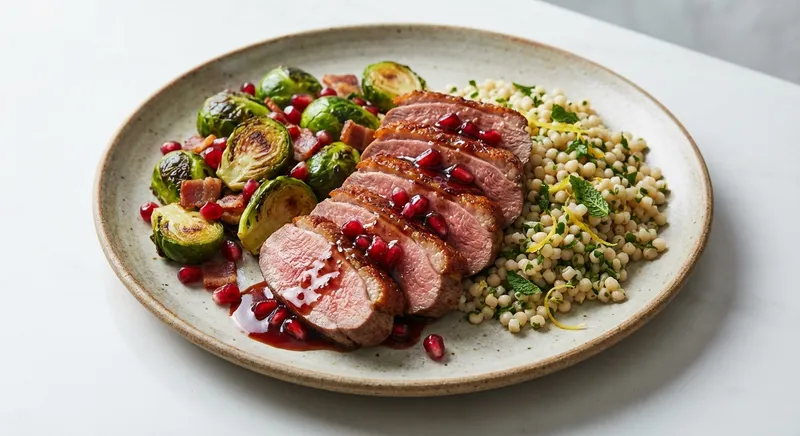
Crisp, caramelized duck skin gives way to succulent, rosy meat finished with a glossy pomegranate glaze — a vivid balance of rich, savory and bright tart notes. Paired with quick pan-seared Brussels sprouts and warm pearl (Israeli) couscous tossed with fresh mint and thyme, this dish is restaurant-polish at home: textural contrasts, punchy fruitiness and herb-freshness on every forkful.
Bring the duck to near-room temperature: Remove the duck breast from the fridge 10–15 minutes before cooking and pat it dry with paper towels. This evens the cooking, helping the meat cook more evenly and preventing the skin from steaming (which would stop it crisping).
Score the skin: Using a sharp knife, lightly score the skin in a crosshatch pattern (don't cut into the meat) about 5 mm apart. Season both sides with a generous pinch of salt and a few cracks of black pepper. Scoring increases surface area so more fat renders out and the skin crisps evenly.
Render the fat and crisp the skin: Place a cold, heavy skillet (cast iron preferred) over medium-low heat. Place the duck breast skin-side down—no oil needed. Cook gently for 8–10 minutes, pressing lightly once or twice so the skin makes full contact with the pan. Cook low and slow to render fat without burning the skin; you want translucent, golden, deeply rendered fat and a crisp surface. If the pan smokes heavily, lower the heat.
Flip and finish: Once the skin is deeply golden and much of the fat has rendered (tilt the pan and spoon off excess fat into a heatproof bowl for later use), flip the breast and increase the heat to medium. Sear the meat side for 1–2 minutes to color it, then reduce the heat and continue cooking to your preferred doneness: about 3–4 more minutes for medium-rare (internal 57°C / 135°F). Use an instant-read thermometer for accuracy. Rest the duck loosely tented for 5 minutes before slicing — this allows juices to redistribute.
Make the quick pomegranate glaze: While the duck rests, pour any reserved rendered duck fat (or 1 tsp olive oil if you reserved none) into the warm skillet over low heat. Add the 1 tsp pomegranate molasses and 1–2 teaspoons of the duck pan juices (or a splash of water) and warm gently, stirring — about 30–60 seconds — until glossy. Taste and, if it’s too concentrated, add a tiny splash of water to loosen. Warming the molasses briefly tames its sharpness and concentrates its syrupy sweetness so it will coat the meat.
Pan-sear the Brussels sprouts (if not already done): Heat 1 tsp olive oil in a second skillet over medium-high heat until shimmering. Place Brussels halves cut-side down and press gently; leave undisturbed for 3–4 minutes to get a deep caramelized crust. Toss, season with salt & pepper, and cook 1–2 more minutes until tender-crisp. Browning (Maillard reaction) builds savory, nutty flavor that balances the fruit glaze.
Warm and herb the couscous: In the same skillet used for Brussels (lower heat), add the cooked Israeli couscous (140 g) and toss briefly in the pan for 1–2 minutes to reheat and pick up any fond — this gives the couscous a toasty nuance. Remove from heat and stir in the chopped mint and thyme (1 tbsp total) plus a small pinch of salt and cracked pepper. Using fresh herbs at the end keeps them bright and fragrant.
Assemble and glaze: Slice the rested duck breast thinly on the bias to show the pink center. Spoon a small amount of pomegranate glaze over the slices (you can brush or drizzle; less is more—aim for a glossy coat that complements, not masks, the duck). Arrange the herbed couscous and caramelized Brussels on the plate, scatter the fresh pomegranate arils (1 tbsp) over the duck and sprouts for bursts of juicy acidity, and finish with a final pinch of flaky salt and cracked black pepper.
Serve immediately: Serve hot so the skin stays crisp and the glaze remains glossy. If plating ahead of time, wait to glaze the duck until the last moment to keep the skin from softening.
824
Calories
38g
Protein
49g
Carbs
51g
Fat
5g
Fiber
How did this recipe turn out? Let others know!
to rate this recipe
By j
Crisp, caramelized duck skin gives way to succulent, rosy meat finished with a glossy pomegranate glaze — a vivid balance of rich, savory and bright tart notes. Paired with quick pan-seared Brussels sprouts and warm pearl (Israeli) couscous tossed with fresh mint and thyme, this dish is restaurant-polish at home: textural contrasts, punchy fruitiness and herb-freshness on every forkful.
Bring the duck to near-room temperature: Remove the duck breast from the fridge 10–15 minutes before cooking and pat it dry with paper towels. This evens the cooking, helping the meat cook more evenly and preventing the skin from steaming (which would stop it crisping).
Score the skin: Using a sharp knife, lightly score the skin in a crosshatch pattern (don't cut into the meat) about 5 mm apart. Season both sides with a generous pinch of salt and a few cracks of black pepper. Scoring increases surface area so more fat renders out and the skin crisps evenly.
Render the fat and crisp the skin: Place a cold, heavy skillet (cast iron preferred) over medium-low heat. Place the duck breast skin-side down—no oil needed. Cook gently for 8–10 minutes, pressing lightly once or twice so the skin makes full contact with the pan. Cook low and slow to render fat without burning the skin; you want translucent, golden, deeply rendered fat and a crisp surface. If the pan smokes heavily, lower the heat.
Flip and finish: Once the skin is deeply golden and much of the fat has rendered (tilt the pan and spoon off excess fat into a heatproof bowl for later use), flip the breast and increase the heat to medium. Sear the meat side for 1–2 minutes to color it, then reduce the heat and continue cooking to your preferred doneness: about 3–4 more minutes for medium-rare (internal 57°C / 135°F). Use an instant-read thermometer for accuracy. Rest the duck loosely tented for 5 minutes before slicing — this allows juices to redistribute.
Make the quick pomegranate glaze: While the duck rests, pour any reserved rendered duck fat (or 1 tsp olive oil if you reserved none) into the warm skillet over low heat. Add the 1 tsp pomegranate molasses and 1–2 teaspoons of the duck pan juices (or a splash of water) and warm gently, stirring — about 30–60 seconds — until glossy. Taste and, if it’s too concentrated, add a tiny splash of water to loosen. Warming the molasses briefly tames its sharpness and concentrates its syrupy sweetness so it will coat the meat.
Pan-sear the Brussels sprouts (if not already done): Heat 1 tsp olive oil in a second skillet over medium-high heat until shimmering. Place Brussels halves cut-side down and press gently; leave undisturbed for 3–4 minutes to get a deep caramelized crust. Toss, season with salt & pepper, and cook 1–2 more minutes until tender-crisp. Browning (Maillard reaction) builds savory, nutty flavor that balances the fruit glaze.
Warm and herb the couscous: In the same skillet used for Brussels (lower heat), add the cooked Israeli couscous (140 g) and toss briefly in the pan for 1–2 minutes to reheat and pick up any fond — this gives the couscous a toasty nuance. Remove from heat and stir in the chopped mint and thyme (1 tbsp total) plus a small pinch of salt and cracked pepper. Using fresh herbs at the end keeps them bright and fragrant.
Assemble and glaze: Slice the rested duck breast thinly on the bias to show the pink center. Spoon a small amount of pomegranate glaze over the slices (you can brush or drizzle; less is more—aim for a glossy coat that complements, not masks, the duck). Arrange the herbed couscous and caramelized Brussels on the plate, scatter the fresh pomegranate arils (1 tbsp) over the duck and sprouts for bursts of juicy acidity, and finish with a final pinch of flaky salt and cracked black pepper.
Serve immediately: Serve hot so the skin stays crisp and the glaze remains glossy. If plating ahead of time, wait to glaze the duck until the last moment to keep the skin from softening.
824
Calories
38g
Protein
49g
Carbs
51g
Fat
5g
Fiber
Your Rating:
