
Pan-seared bone-in pork chops with caramelized onions and a tangy mustard-sherry pan sauce—cozy, American bistro dinner in 50 minutes. Weeknight friendly.
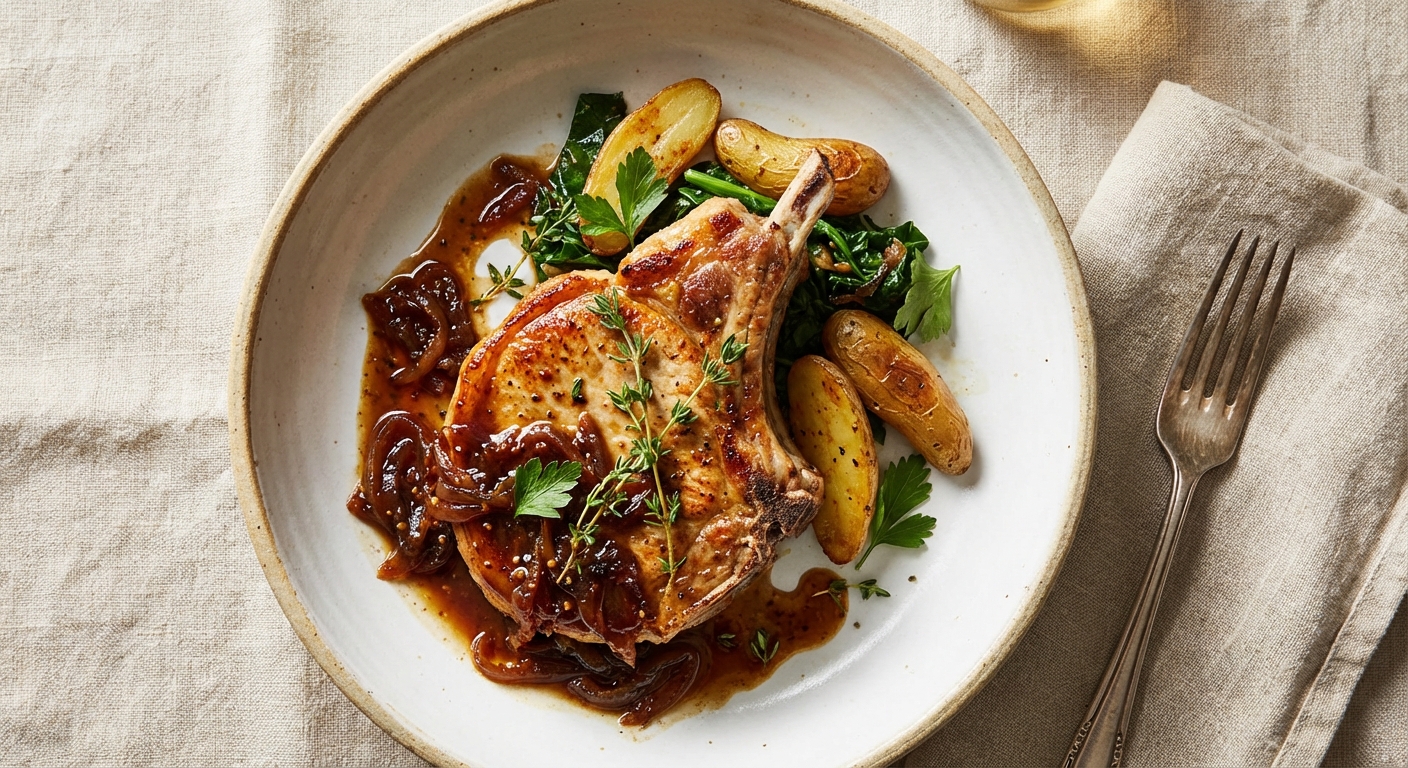
Pan-seared bone-in pork chops with caramelized onions and a tangy mustard-sherry pan sauce—cozy, American bistro dinner in 50 minutes. Weeknight friendly.
Ready to cook?
Get the complete ingredient list, step-by-step instructions, and nutritional info
View Recipe →There’s something deeply comforting about a quick, confident midweek dinner that tastes like it came from a stylish bistro rather than a rushed kitchen. This dish—Pan-Seared Bone-In Pork Chops with Caramelized Onion & Mustard-Sherry Pan Sauce—delivers just that: a golden, crusted chop with a glossy, onion-laden pan sauce that is brightened by Dijon and a kiss of acid. It’s a weeknight hero that still feels celebratory, the kind of plate you’ll crave again and again when the calendar says “dinner, please.”
Total time hovers around 50 minutes, which gives you just enough space to savor the process—seasoning, searing, resting, and then layering flavors in a single pan. If you’re new to pan sauces, this recipe is a gentle, delicious introduction. It mirrors the best of Dinner, embraces the heartiness of Pork, and sits nicely in the Pan-seared arena. It’s quintessentially American Bistro in its approach: simple pantry ingredients elevated by technique and balance. If you’re a sauce skeptic, the mustard and sherry combination is the kind of flavor marriage that converts skepticism to “how soon can I make this again?” And as always, I’m sharing a few tweaks to help you tailor it to your kitchen and appetite. For more cozy, comforting meals, explore more recipes in our Comfort Food collection and keep the flame of home cooking alive in your kitchen.
Here’s why each component matters, and how it plays into the final dish. I’ve linked a few ingredients to their page for quick reference—these are the stars that make this dinner sing.
These are the tiny decisions that elevate a good skillet dinner into something you’ll crave for months. A few pro tips can help you nail the technique and keep everything juicy, glossy, and balanced.
Top the chops with a generous scoop of the caramelized onion and pan sauce, then spoon extra onions over the top for drama and flavor. This dish loves company, so consider these sides for a complete plate:
Pairing something with a touch of sweetness or brightness works beautifully here. If you’re chasing a wine pairing, try a dry white with crisp acidity or a light, fruity red that won’t fight the dish’s flavors. And if you’re feeling creative, try adjusting the sauce with a splash of sherry for an extra layer of depth or a touch more acidity with a squeeze of citrus.
Feeling inspired to experiment with your own recipes? I love seeing how you tailor a pan sauce to your pantry. If you end up crafting your own version, I’d love for you to share it in your own kitchen—or, if you’re looking for more inspiration, explore the /category/American-Bistro category for more cozy, elevated dishes. And if you’re feeling adventurous, I challenge you to try your own variations and share your creations at our create hub.
Leftovers keep well in an airtight container in the refrigerator for 3–4 days. Reheat gently in a skillet over low heat, spooning sauce over the chops to help them stay moist. You can also rewarm the onions separately and top the pork with fresh parsley before serving again.
Yes. You can caramelize the onions a day ahead and refrigerate. The sauce—without finishing reductions—can also be prepared a day ahead and gently reheated, then finished with the mustard, vinegar, and stock just before serving. The pork itself benefits from a brine or a quick rest at room temperature before searing, so plan accordingly.
If you don’t have dry white wine, you can substitute with extra chicken stock plus a splash of vinegar to mimic brightness. If you’re avoiding alcohol entirely, increase the stock to 1 1/2 cups and add a touch more vinegar. For a different flavor profile, a splash of orange juice can replace the tang of vinegar in a pinch, though you’ll lose a bit of the sharp bite that pairs so nicely with the pork.
Boneless chops can work, but they cook faster and don’t develop as much crust from the bone-in version. If you use boneless, reduce the searing time to about 2–3 minutes per side, and monitor the internal temperature to avoid overcooking. The sauce remains the same and will still be delicious with either cut.
Want to try more of these techniques with your own ingredients? I’d love to hear about your kitchen experiments. Browse more recipes in the Dinner section, or explore other Pork dishes for inspiration. And don’t forget to tap into your inner chef by visiting the create hub to start designing your own recipe story.
Discover similar recipes you'll love