By Ahhh Bowers
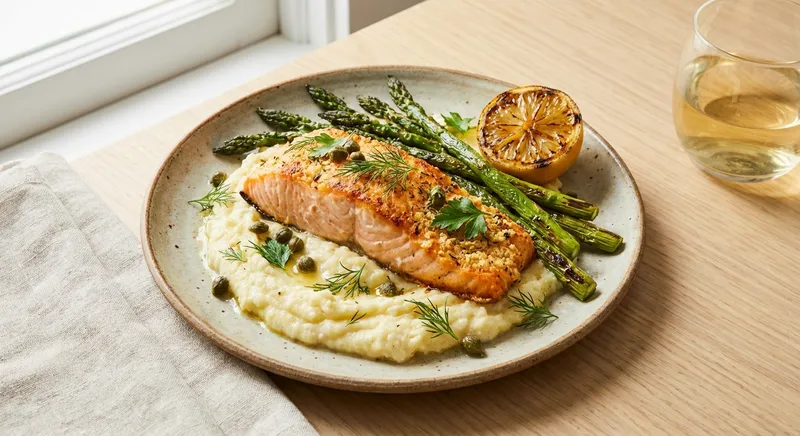
Silky, oven-baked salmon fillets rest on a bright, lemony cauliflower mash with crunchy roasted asparagus on the side. The dish balances rich, buttery salmon with a fragrant garlic-lemon mash and crisp-tender asparagus—simple ingredients elevated with careful roasting and finishing herbs for a restaurant-quality plate.
Preheat the oven to 425°F (220°C). Line a large baking sheet with parchment paper or foil. Preheating ensures the salmon starts cooking immediately and gives a short, high-heat bake that seals juices and encourages a lightly roasted surface.
Pat the salmon fillets dry with paper towels, then season both sides generously with salt and pepper. Rub 1 tablespoon of the ghee or oil over the flesh and scatter half the lemon zest and one smashed garlic clove over the fillets. Drying the salmon helps the exterior brown rather than steam; seasoning early lets the salt penetrate the flesh while you prepare the vegetables.
Toss the cauliflower florets with 1 tbsp of oil, a pinch of salt and pepper, and the other smashed garlic clove. Spread them in a single layer on one side of the baking sheet. Roast in the preheated oven for 20–25 minutes, turning once halfway through so they brown evenly. Roasting concentrates the cauliflower's flavor and removes excess water so the mash won't be watery.
While the cauliflower roasts, trim asparagus woody ends and toss with 1 tsp oil, salt and pepper. Place asparagus on the empty side of the baking sheet during the last 12–15 minutes of the cauliflower's roast time. Roasting asparagus briefly at high heat gives tender stalks with slightly charred tips for texture contrast.
Check the cauliflower with a fork after 20 minutes — it should be fork-tender and golden in spots. When done, remove the baking sheet and transfer cauliflower to a medium saucepan (reserve roasted garlic cloves too). Keep asparagus on the sheet loosely tented with foil to stay warm while you finish the mash and bake the salmon if needed. Allowing the cauliflower to rest a few minutes concentrates flavor and releases steam so the mash won't be watery.
Place the saucepan with roasted cauliflower over low heat. Add 2–3 tablespoons water (or a splash of milk/cream for richer mash) and the roasted garlic cloves (squeeze the softened roasted garlic out of their skins). Mash with a potato masher or use an immersion blender for a silkier texture. Stir in 1 tbsp ghee (or butter), the lemon juice and the remaining lemon zest, and half of the chopped herbs. Taste and season with salt and pepper. Mashing while still warm and adding fat and acid (ghee + lemon) gives the mash a glossy, flavorful finish.
Move the oven rack to the middle position and return the baking sheet to the oven if the salmon hasn't been baked yet. Bake the salmon fillets for 10–14 minutes at 425°F (220°C) depending on thickness (about 10 minutes per inch / 2.5 cm of thickness). You're aiming for an internal temperature of 50–52°C (122–125°F) for medium-rare or 57°C (135°F) for medium. Baking at high heat for a short time keeps the flesh moist while giving the exterior a lightly roasted flavor.
Once the salmon is nearly done, if you want a crisp skin, finish under the broiler for 1–2 minutes skin-side down (watch carefully to avoid burning). Rest the salmon on a cutting board, tented with foil, for 3–5 minutes; resting lets the juices redistribute so the fillet remains moist.
Plate: Spoon a generous mound of lemon-cauliflower mash in the center of each plate, fan a salmon fillet on top or to the side, and arrange the roasted asparagus alongside. Drizzle a little extra-virgin olive oil or a small knob of butter over the hot salmon, scatter remaining fresh herbs and a pinch more lemon zest, and serve with lemon wedges. The contrast of creamy mash, flaky fish and crisp asparagus creates a balanced, restaurant-style plate.
1152
Calories
93g
Protein
29g
Carbs
76g
Fat
12g
Fiber
How did this recipe turn out? Let others know!
to rate this recipe
By Ahhh Bowers
Silky, oven-baked salmon fillets rest on a bright, lemony cauliflower mash with crunchy roasted asparagus on the side. The dish balances rich, buttery salmon with a fragrant garlic-lemon mash and crisp-tender asparagus—simple ingredients elevated with careful roasting and finishing herbs for a restaurant-quality plate.
Preheat the oven to 425°F (220°C). Line a large baking sheet with parchment paper or foil. Preheating ensures the salmon starts cooking immediately and gives a short, high-heat bake that seals juices and encourages a lightly roasted surface.
Pat the salmon fillets dry with paper towels, then season both sides generously with salt and pepper. Rub 1 tablespoon of the ghee or oil over the flesh and scatter half the lemon zest and one smashed garlic clove over the fillets. Drying the salmon helps the exterior brown rather than steam; seasoning early lets the salt penetrate the flesh while you prepare the vegetables.
Toss the cauliflower florets with 1 tbsp of oil, a pinch of salt and pepper, and the other smashed garlic clove. Spread them in a single layer on one side of the baking sheet. Roast in the preheated oven for 20–25 minutes, turning once halfway through so they brown evenly. Roasting concentrates the cauliflower's flavor and removes excess water so the mash won't be watery.
While the cauliflower roasts, trim asparagus woody ends and toss with 1 tsp oil, salt and pepper. Place asparagus on the empty side of the baking sheet during the last 12–15 minutes of the cauliflower's roast time. Roasting asparagus briefly at high heat gives tender stalks with slightly charred tips for texture contrast.
Check the cauliflower with a fork after 20 minutes — it should be fork-tender and golden in spots. When done, remove the baking sheet and transfer cauliflower to a medium saucepan (reserve roasted garlic cloves too). Keep asparagus on the sheet loosely tented with foil to stay warm while you finish the mash and bake the salmon if needed. Allowing the cauliflower to rest a few minutes concentrates flavor and releases steam so the mash won't be watery.
Place the saucepan with roasted cauliflower over low heat. Add 2–3 tablespoons water (or a splash of milk/cream for richer mash) and the roasted garlic cloves (squeeze the softened roasted garlic out of their skins). Mash with a potato masher or use an immersion blender for a silkier texture. Stir in 1 tbsp ghee (or butter), the lemon juice and the remaining lemon zest, and half of the chopped herbs. Taste and season with salt and pepper. Mashing while still warm and adding fat and acid (ghee + lemon) gives the mash a glossy, flavorful finish.
Move the oven rack to the middle position and return the baking sheet to the oven if the salmon hasn't been baked yet. Bake the salmon fillets for 10–14 minutes at 425°F (220°C) depending on thickness (about 10 minutes per inch / 2.5 cm of thickness). You're aiming for an internal temperature of 50–52°C (122–125°F) for medium-rare or 57°C (135°F) for medium. Baking at high heat for a short time keeps the flesh moist while giving the exterior a lightly roasted flavor.
Once the salmon is nearly done, if you want a crisp skin, finish under the broiler for 1–2 minutes skin-side down (watch carefully to avoid burning). Rest the salmon on a cutting board, tented with foil, for 3–5 minutes; resting lets the juices redistribute so the fillet remains moist.
Plate: Spoon a generous mound of lemon-cauliflower mash in the center of each plate, fan a salmon fillet on top or to the side, and arrange the roasted asparagus alongside. Drizzle a little extra-virgin olive oil or a small knob of butter over the hot salmon, scatter remaining fresh herbs and a pinch more lemon zest, and serve with lemon wedges. The contrast of creamy mash, flaky fish and crisp asparagus creates a balanced, restaurant-style plate.
1152
Calories
93g
Protein
29g
Carbs
76g
Fat
12g
Fiber
Your Rating:
