By emensah m
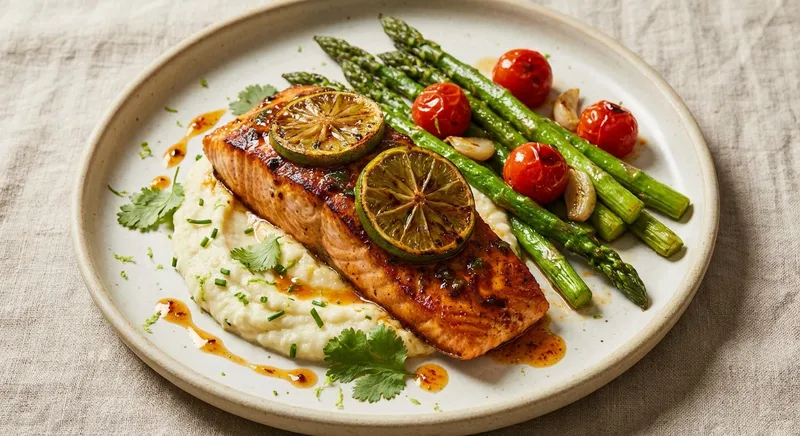
A Mexican‑inspired, restaurant‑quality plate that pairs tender pan‑seared salmon brightened with smoky chipotle‑lime butter, creamy cauliflower mash, and crisp‑tender asparagus. The chipotle adds a warm, smoky heat while lime cuts through the richness — together they create a vibrant finish that elevates simple ingredients into a celebratory weeknight meal.
Prep everything first: remove the salmon from the refrigerator 10–15 minutes before cooking so it comes closer to room temperature (this helps it cook evenly). Trim the cauliflower into florets and cut the woody ends off the asparagus. Zest the lime and then juice it. Mince the chipotle pepper and adobo sauce. Pat the salmon dry and season both sides lightly with salt and black pepper. (Why: room‑temperature salmon sears more evenly and a dry surface gets a better Maillard crust; prepping keeps the cook flow smooth.)
Start the cauliflower for the mash: place the florets in a large pot and cover with cold water by about 1 inch. Add a big pinch of salt and bring to a boil, then reduce to a simmer until very tender (10–12 minutes). Drain thoroughly in a colander and let sit 1–2 minutes to steam off excess moisture. (Why: starting cauliflower in cold water ensures even cooking; draining and steaming off prevents a watery mash.)
Make the chipotle‑lime butter: in a small saucepan over low heat, melt the butter gently. Add the minced chipotle pepper and adobo, and 1 tsp lime zest and 1 tbsp lime juice. Stir and warm for 30–45 seconds to bloom the smoky chile and loosen the adobo oils—do not boil. Taste and add a small pinch of salt if needed. Remove from heat and set aside. (Why: warming the butter with chipotle releases its aromatic oils and melds flavors; adding lime now brightens and balances the butter’s richness.)
Mash the cauliflower: return the drained florets to the pot or to a food processor. Add the heavy cream and 1–2 tablespoons of the chipotle‑lime butter (reserve most for the salmon). Use a potato masher for a rustic texture or a food processor for ultra‑silky mash. Season with salt and pepper to taste. If the mash is too stiff, add up to 1–2 tbsp warm water or more cream, 1 tbsp at a time. (Why: cream adds silk and body; blending less gives more texture while processing creates a restaurant‑silky purée.)
Blanch the asparagus (optional fast method): bring a medium pot of salted water to a boil. Drop asparagus in and blanch for 1–2 minutes (until bright green and just tender), then immediately plunge into an ice bath to stop cooking. Drain and pat dry. (Why: blanching ensures even doneness and preserves bright color; the ice bath prevents overcooking if you’ll finish in a pan.)
Heat a heavy skillet (cast iron or stainless) over medium‑high heat until hot. Pat the salmon again if needed. Add a touch of neutral oil (use a bare brush of olive oil if skinless) or heat the pan dry for skin‑on. Place salmon in the pan skin‑side down (if skin on) and press gently for 10 seconds to prevent curling. Cook without moving for 3–4 minutes until the skin is crisp and releases easily. (Why: a hot pan creates a golden Maillard crust and crisp skin; pressing keeps full contact for even searing.)
Flip the salmon and immediately spoon about half of the reserved chipotle‑lime butter over the tops. Reduce heat to medium and cook another 2–3 minutes for medium doneness (salmon will register 120–125°F / 49–52°C for medium; residual heat will carry it to about 130°F). Remove salmon to a plate and tent loosely with foil to rest 3–4 minutes. (Why: basting with butter adds flavor and helps finish cooking gently; resting lets juices redistribute so the fillet stays moist.)
Sauté the asparagus: return the skillet to medium heat, add 1 tbsp olive oil and the blanched asparagus (or raw, if you skipped blanching). Sauté, turning frequently, for 3–4 minutes until tender‑crisp and lightly charred in spots. Finish with a squeeze of the remaining lime juice, a pinch of lime zest, salt and black pepper. (Why: sautéing after blanching warms and adds char; if starting raw, sautéing cooks through while keeping snap.)
Finish the mash: taste and adjust seasoning. Spoon the cauliflower mash into shallow warmed bowls or plates, forming a gentle well in the center to receive the salmon. Drizzle any remaining chipotle‑lime butter over the mash for a flavorful tie‑in. (Why: warming plates/mash keeps everything hot; the butter glaze unifies the components.)
Plate: place a salmon fillet over the cauliflower mash, arrange asparagus alongside, and spoon a little more melted chipotle‑lime butter over the fish. Garnish with a final pinch of lime zest and freshly ground black pepper. Serve immediately. (Why: finishing zest adds bright aromatics and the plating helps present distinct textures and colors.)
Temperature guide: for doneness, aim for 120–125°F (49–52°C) when removing from heat for medium; 130–135°F (54–57°C) if you prefer fully cooked. Salmon will carry over by a few degrees while resting. (Why: precise targets avoid drying out salmon yet ensure safe, enjoyable texture.)
Cleanup and make‑ahead notes: the cauliflower mash can be made ahead and gently reheated with 1–2 tbsp cream or water. The chipotle‑lime butter can be kept refrigerated up to 3 days—bring to room temperature before spooning over hot fish. (Why: make‑ahead steps free up time and let flavors meld.)
680
Calories
45g
Protein
27g
Carbs
46g
Fat
10g
Fiber
How did this recipe turn out? Let others know!
to rate this recipe
By emensah m
A Mexican‑inspired, restaurant‑quality plate that pairs tender pan‑seared salmon brightened with smoky chipotle‑lime butter, creamy cauliflower mash, and crisp‑tender asparagus. The chipotle adds a warm, smoky heat while lime cuts through the richness — together they create a vibrant finish that elevates simple ingredients into a celebratory weeknight meal.
Prep everything first: remove the salmon from the refrigerator 10–15 minutes before cooking so it comes closer to room temperature (this helps it cook evenly). Trim the cauliflower into florets and cut the woody ends off the asparagus. Zest the lime and then juice it. Mince the chipotle pepper and adobo sauce. Pat the salmon dry and season both sides lightly with salt and black pepper. (Why: room‑temperature salmon sears more evenly and a dry surface gets a better Maillard crust; prepping keeps the cook flow smooth.)
Start the cauliflower for the mash: place the florets in a large pot and cover with cold water by about 1 inch. Add a big pinch of salt and bring to a boil, then reduce to a simmer until very tender (10–12 minutes). Drain thoroughly in a colander and let sit 1–2 minutes to steam off excess moisture. (Why: starting cauliflower in cold water ensures even cooking; draining and steaming off prevents a watery mash.)
Make the chipotle‑lime butter: in a small saucepan over low heat, melt the butter gently. Add the minced chipotle pepper and adobo, and 1 tsp lime zest and 1 tbsp lime juice. Stir and warm for 30–45 seconds to bloom the smoky chile and loosen the adobo oils—do not boil. Taste and add a small pinch of salt if needed. Remove from heat and set aside. (Why: warming the butter with chipotle releases its aromatic oils and melds flavors; adding lime now brightens and balances the butter’s richness.)
Mash the cauliflower: return the drained florets to the pot or to a food processor. Add the heavy cream and 1–2 tablespoons of the chipotle‑lime butter (reserve most for the salmon). Use a potato masher for a rustic texture or a food processor for ultra‑silky mash. Season with salt and pepper to taste. If the mash is too stiff, add up to 1–2 tbsp warm water or more cream, 1 tbsp at a time. (Why: cream adds silk and body; blending less gives more texture while processing creates a restaurant‑silky purée.)
Blanch the asparagus (optional fast method): bring a medium pot of salted water to a boil. Drop asparagus in and blanch for 1–2 minutes (until bright green and just tender), then immediately plunge into an ice bath to stop cooking. Drain and pat dry. (Why: blanching ensures even doneness and preserves bright color; the ice bath prevents overcooking if you’ll finish in a pan.)
Heat a heavy skillet (cast iron or stainless) over medium‑high heat until hot. Pat the salmon again if needed. Add a touch of neutral oil (use a bare brush of olive oil if skinless) or heat the pan dry for skin‑on. Place salmon in the pan skin‑side down (if skin on) and press gently for 10 seconds to prevent curling. Cook without moving for 3–4 minutes until the skin is crisp and releases easily. (Why: a hot pan creates a golden Maillard crust and crisp skin; pressing keeps full contact for even searing.)
Flip the salmon and immediately spoon about half of the reserved chipotle‑lime butter over the tops. Reduce heat to medium and cook another 2–3 minutes for medium doneness (salmon will register 120–125°F / 49–52°C for medium; residual heat will carry it to about 130°F). Remove salmon to a plate and tent loosely with foil to rest 3–4 minutes. (Why: basting with butter adds flavor and helps finish cooking gently; resting lets juices redistribute so the fillet stays moist.)
Sauté the asparagus: return the skillet to medium heat, add 1 tbsp olive oil and the blanched asparagus (or raw, if you skipped blanching). Sauté, turning frequently, for 3–4 minutes until tender‑crisp and lightly charred in spots. Finish with a squeeze of the remaining lime juice, a pinch of lime zest, salt and black pepper. (Why: sautéing after blanching warms and adds char; if starting raw, sautéing cooks through while keeping snap.)
Finish the mash: taste and adjust seasoning. Spoon the cauliflower mash into shallow warmed bowls or plates, forming a gentle well in the center to receive the salmon. Drizzle any remaining chipotle‑lime butter over the mash for a flavorful tie‑in. (Why: warming plates/mash keeps everything hot; the butter glaze unifies the components.)
Plate: place a salmon fillet over the cauliflower mash, arrange asparagus alongside, and spoon a little more melted chipotle‑lime butter over the fish. Garnish with a final pinch of lime zest and freshly ground black pepper. Serve immediately. (Why: finishing zest adds bright aromatics and the plating helps present distinct textures and colors.)
Temperature guide: for doneness, aim for 120–125°F (49–52°C) when removing from heat for medium; 130–135°F (54–57°C) if you prefer fully cooked. Salmon will carry over by a few degrees while resting. (Why: precise targets avoid drying out salmon yet ensure safe, enjoyable texture.)
Cleanup and make‑ahead notes: the cauliflower mash can be made ahead and gently reheated with 1–2 tbsp cream or water. The chipotle‑lime butter can be kept refrigerated up to 3 days—bring to room temperature before spooning over hot fish. (Why: make‑ahead steps free up time and let flavors meld.)
680
Calories
45g
Protein
27g
Carbs
46g
Fat
10g
Fiber
Your Rating:
