By Jodi Chila
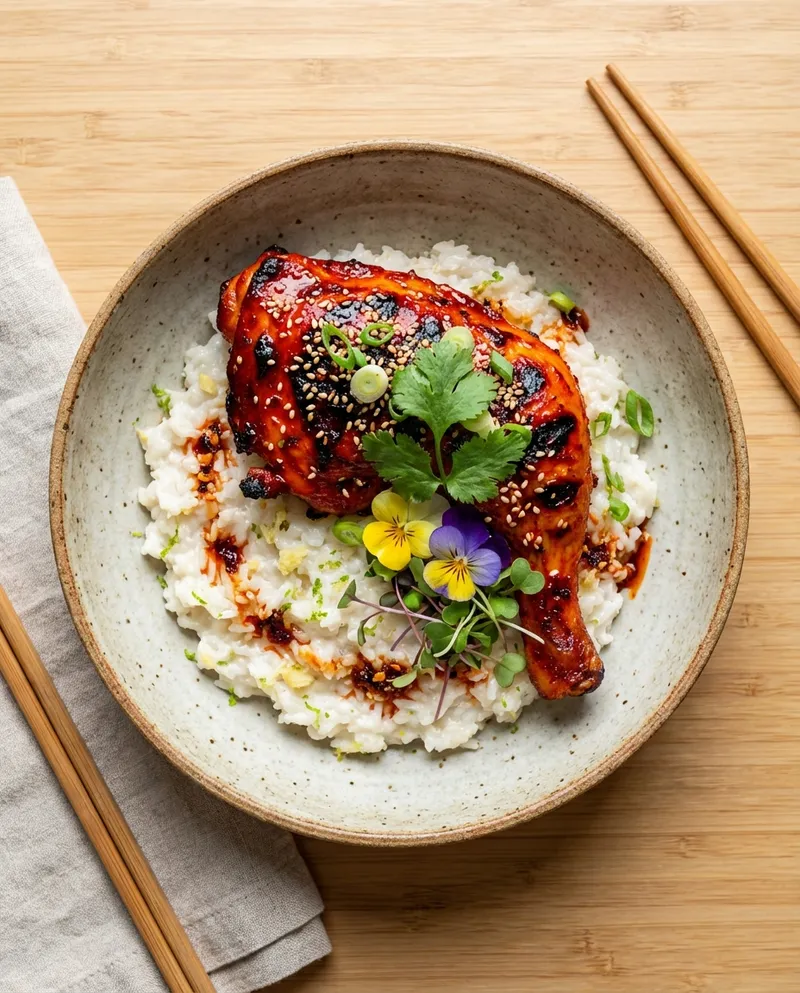
Tender, caramelized spicy chicken glazed in a balanced gochujang-sesame sauce served atop pillowy coconut-milk jasmine rice subtly scented with gochujang. The dish contrasts crunchy seared edges and a silky, fragrant rice—rich coconut, umami heat, and bright lime finish make this a restaurant-quality Korean-inspired comfort plate.
Prep the chicken and marinate: pat the 1 kg chicken thighs dry and place in a bowl. Add 1 cup whole milk, 1 tsp kosher salt, 1 tsp sugar, 1/2 tbsp grated ginger and 1 clove minced garlic. Toss so chicken is fully coated and refrigerate 30 minutes (up to 2 hours). WHY: the milk tenderizes and gently mellows the raw chicken flavor, improving juiciness and giving a subtle background sweetness that balances the heat of gochujang.
Rinse the rice: place 2 cups jasmine rice in a fine mesh sieve and rinse under cold water until the runoff is nearly clear (about 4–6 rinses). WHY: rinsing removes surface starch so the cooked rice grains stay separate and fluffy instead of gummy.
Make the coconut-gochujang rice liquid: in a medium saucepan combine the 400 ml coconut milk, 1 cup (240 ml) water, 1 tbsp gochujang, 1 tsp kosher salt, and 1 tsp sugar. Whisk to dissolve the gochujang into the coconut liquid. WHY: thinning gochujang into the cooking liquid infuses the rice uniformly—coconut milk adds richness while a controlled amount of gochujang brings background savory heat without overpowering.
Cook the rice: bring the coconut-gochujang liquid to a gentle boil, add the rinsed rice, stir once to distribute, cover with a tight-fitting lid, reduce heat to low and simmer 14–16 minutes until liquid is absorbed. Remove from heat and let rest, covered, 10 minutes. Finish with 1 tbsp butter and 1 tbsp thinly sliced scallions, fluff with a fork. WHY: the short simmer followed by a resting period allows steam to finish cooking the grains evenly and keeps rice tender and glossy; butter enriches and helps separate grains.
While rice cooks, make the gochujang glaze: in a small bowl mix 2 tbsp gochujang, 2 tbsp soy sauce, 1.5 tbsp honey, 1 tbsp sesame oil, 1/2 tbsp grated ginger, 2 minced garlic cloves, and 1 tbsp rice vinegar. Whisk until smooth and taste—add a pinch of sugar or a few drops of lime if it needs brightness. WHY: combining sweet, salty and acidic elements balances gochujang’s fermented heat and builds a glossy glaze that will caramelize on the chicken.
Sear the chicken: remove chicken from milk marinade and thoroughly pat dry with paper towels (dry surface browns better). Season with remaining 1/2 tsp kosher salt and 1/2 tsp black pepper. Heat a large oven-safe skillet over medium-high heat and add 2 tbsp vegetable oil. Once the oil shimmers, arrange chicken pieces in a single layer. Sear undisturbed 3–4 minutes per side until deeply golden—you want a good Maillard crust. WHY: high-heat searing creates flavor through browning; drying first ensures the skin or surface crisps rather than steaming.
Glaze and finish: lower heat to medium, brush the seared chicken generously with the gochujang glaze, and spoon any remaining glaze over the top. Transfer the skillet to a 200°C (400°F) oven and roast 8–10 minutes until the chicken registers 74°C (165°F) internal temperature. If you used a non-oven-safe pan, transfer chicken to a baking sheet. WHY: finishing in the oven cooks evenly through the meat without burning the glaze and gives time for the glaze to set and caramelize.
Rest and assemble: remove chicken from oven and let rest 5 minutes to allow juices to redistribute. Fluff rice again, then spoon a bed of coconut-gochujang rice onto each plate, top with two chicken thighs (or portion as desired), drizzle any pan juices or reserved glaze, and garnish with toasted sesame seeds, remaining scallions, lime juice, and optional quick-pickled cucumber. WHY: resting keeps meat juicy; bright garnishes cut the richness and add texture contrast.
Quick-pickle (optional, while chicken roasts): toss thin cucumber slices with 1 tbsp rice vinegar, a pinch of sugar and a pinch of salt. Let sit 10 minutes to develop a crisp, tangy counterpoint that refreshes the palate. WHY: acidic quick-pickles provide freshness and crunch to balance fatty coconut and richly glazed chicken.
1332
Calories
78g
Protein
108g
Carbs
67g
Fat
3g
Fiber
How did this recipe turn out? Let others know!
to rate this recipe
By Jodi Chila
Tender, caramelized spicy chicken glazed in a balanced gochujang-sesame sauce served atop pillowy coconut-milk jasmine rice subtly scented with gochujang. The dish contrasts crunchy seared edges and a silky, fragrant rice—rich coconut, umami heat, and bright lime finish make this a restaurant-quality Korean-inspired comfort plate.
Prep the chicken and marinate: pat the 1 kg chicken thighs dry and place in a bowl. Add 1 cup whole milk, 1 tsp kosher salt, 1 tsp sugar, 1/2 tbsp grated ginger and 1 clove minced garlic. Toss so chicken is fully coated and refrigerate 30 minutes (up to 2 hours). WHY: the milk tenderizes and gently mellows the raw chicken flavor, improving juiciness and giving a subtle background sweetness that balances the heat of gochujang.
Rinse the rice: place 2 cups jasmine rice in a fine mesh sieve and rinse under cold water until the runoff is nearly clear (about 4–6 rinses). WHY: rinsing removes surface starch so the cooked rice grains stay separate and fluffy instead of gummy.
Make the coconut-gochujang rice liquid: in a medium saucepan combine the 400 ml coconut milk, 1 cup (240 ml) water, 1 tbsp gochujang, 1 tsp kosher salt, and 1 tsp sugar. Whisk to dissolve the gochujang into the coconut liquid. WHY: thinning gochujang into the cooking liquid infuses the rice uniformly—coconut milk adds richness while a controlled amount of gochujang brings background savory heat without overpowering.
Cook the rice: bring the coconut-gochujang liquid to a gentle boil, add the rinsed rice, stir once to distribute, cover with a tight-fitting lid, reduce heat to low and simmer 14–16 minutes until liquid is absorbed. Remove from heat and let rest, covered, 10 minutes. Finish with 1 tbsp butter and 1 tbsp thinly sliced scallions, fluff with a fork. WHY: the short simmer followed by a resting period allows steam to finish cooking the grains evenly and keeps rice tender and glossy; butter enriches and helps separate grains.
While rice cooks, make the gochujang glaze: in a small bowl mix 2 tbsp gochujang, 2 tbsp soy sauce, 1.5 tbsp honey, 1 tbsp sesame oil, 1/2 tbsp grated ginger, 2 minced garlic cloves, and 1 tbsp rice vinegar. Whisk until smooth and taste—add a pinch of sugar or a few drops of lime if it needs brightness. WHY: combining sweet, salty and acidic elements balances gochujang’s fermented heat and builds a glossy glaze that will caramelize on the chicken.
Sear the chicken: remove chicken from milk marinade and thoroughly pat dry with paper towels (dry surface browns better). Season with remaining 1/2 tsp kosher salt and 1/2 tsp black pepper. Heat a large oven-safe skillet over medium-high heat and add 2 tbsp vegetable oil. Once the oil shimmers, arrange chicken pieces in a single layer. Sear undisturbed 3–4 minutes per side until deeply golden—you want a good Maillard crust. WHY: high-heat searing creates flavor through browning; drying first ensures the skin or surface crisps rather than steaming.
Glaze and finish: lower heat to medium, brush the seared chicken generously with the gochujang glaze, and spoon any remaining glaze over the top. Transfer the skillet to a 200°C (400°F) oven and roast 8–10 minutes until the chicken registers 74°C (165°F) internal temperature. If you used a non-oven-safe pan, transfer chicken to a baking sheet. WHY: finishing in the oven cooks evenly through the meat without burning the glaze and gives time for the glaze to set and caramelize.
Rest and assemble: remove chicken from oven and let rest 5 minutes to allow juices to redistribute. Fluff rice again, then spoon a bed of coconut-gochujang rice onto each plate, top with two chicken thighs (or portion as desired), drizzle any pan juices or reserved glaze, and garnish with toasted sesame seeds, remaining scallions, lime juice, and optional quick-pickled cucumber. WHY: resting keeps meat juicy; bright garnishes cut the richness and add texture contrast.
Quick-pickle (optional, while chicken roasts): toss thin cucumber slices with 1 tbsp rice vinegar, a pinch of sugar and a pinch of salt. Let sit 10 minutes to develop a crisp, tangy counterpoint that refreshes the palate. WHY: acidic quick-pickles provide freshness and crunch to balance fatty coconut and richly glazed chicken.
1332
Calories
78g
Protein
108g
Carbs
67g
Fat
3g
Fiber
Your Rating:
