By Barry Hamilton
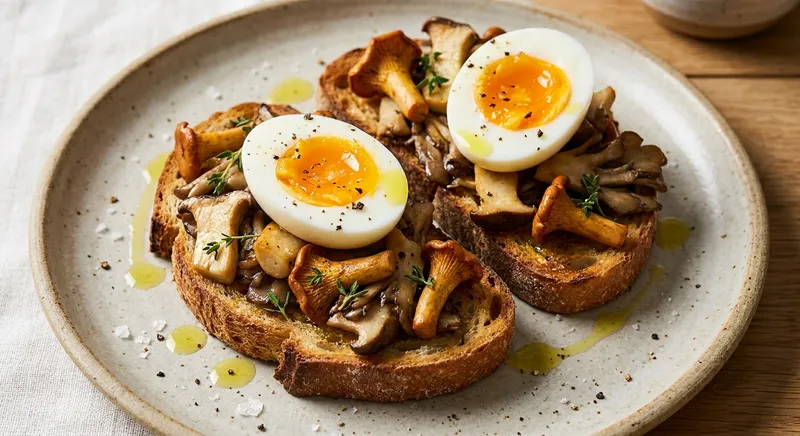
Silky, just-soft eggs sit atop a crunchy slice of sourdough, crowned with butter‑glossed autumn mushrooms and bright thyme. Earthy mushrooms, fragrant thyme and the contrast of runny yolk with crisp toast make this an elegant yet comforting brunch that tastes much more special than the effort it takes.
Bring the eggs to near room temperature (take them out of the fridge 10–15 minutes before cooking). This reduces temperature shock and helps avoid cracking; it also gives you a more consistent soft‑set white and runny yolk.
Prepare an ice bath: fill a bowl with cold water and ice. This stops the eggs’ carryover cooking immediately after you remove them from the hot water, preserving the silky yolk texture.
Heat a small nonstick or stainless skillet over medium heat and add 1 tsp olive oil and 1 tsp unsalted butter. Using both oil and butter gives you the butter flavor and a slightly higher smoke point from the oil so the butter doesn’t burn—important for browning mushrooms gently.
When the butter foams and the pan is hot (but not smoking), add the mushrooms in an even layer. Do not stir constantly—leave them for 1–2 minutes so they can brown. Browning (the Maillard reaction) concentrates mushroom flavor and produces a nutty, savory note that contrasts with the soft eggs.
After 1–2 minutes, stir and cook another 2–3 minutes until the mushrooms have released most of their moisture and that moisture has evaporated. Add the fresh thyme leaves toward the end (about 30 seconds before removing from heat) to preserve their bright herbal aroma instead of cooking it away.
Season the mushrooms with a pinch of salt and several grinds of black pepper, then remove from the heat and keep warm. Resting the mushrooms off the heat prevents them from continuing to steam and getting soggy.
Bring a small saucepan of water to a gentle rolling boil (about 95–100°C). Using a spoon, lower the eggs into the water one at a time. A rolling boil gives even heat transfer; if the water is only simmering, the eggs will cook more slowly and inconsistently.
Start timing as soon as the eggs enter the water. For large eggs that yield set whites and jammy, runny yolks, cook 6 minutes. If your eggs are very cold or you prefer slightly firmer yolks, add 30 seconds. Maintain a gentle boil so the eggs move but don’t slam into each other and crack.
Immediately transfer the eggs to the ice bath for at least 2 minutes to arrest cooking. This gives you that perfect, custardy yolk and prevents the whites from toughening from carryover heat.
While the eggs chill, re-toast or warm your sourdough slice if needed. For extra flavor, rub the warm toast lightly with the back of a garlic clove (optional) or brush a scant teaspoon of olive oil or melted butter across the surface—this helps the bread stand up to the mushrooms’ moisture.
Gently peel the eggs: crack all over, roll lightly, then peel under a little running water to coax the membrane away without tearing the white. Halve the eggs lengthwise to display the creamy yolk.
Assemble: place the toasted sourdough on a plate, pile the warm mushrooms across the center, set the halved soft‑boiled eggs on top, scatter any remaining thyme, and finish with flaky sea salt and freshly cracked black pepper. The toast provides textural contrast and a platform to soak up the yolk—this is part of what makes the dish so satisfying.
Serve immediately so the yolk remains runny and the toast stays crisp at the edges. If you must wait more than a few minutes, serve the mushrooms on the side to avoid soggy toast.
442
Calories
22g
Protein
43g
Carbs
20g
Fat
3g
Fiber
How did this recipe turn out? Let others know!
to rate this recipe
By Barry Hamilton
Silky, just-soft eggs sit atop a crunchy slice of sourdough, crowned with butter‑glossed autumn mushrooms and bright thyme. Earthy mushrooms, fragrant thyme and the contrast of runny yolk with crisp toast make this an elegant yet comforting brunch that tastes much more special than the effort it takes.
Bring the eggs to near room temperature (take them out of the fridge 10–15 minutes before cooking). This reduces temperature shock and helps avoid cracking; it also gives you a more consistent soft‑set white and runny yolk.
Prepare an ice bath: fill a bowl with cold water and ice. This stops the eggs’ carryover cooking immediately after you remove them from the hot water, preserving the silky yolk texture.
Heat a small nonstick or stainless skillet over medium heat and add 1 tsp olive oil and 1 tsp unsalted butter. Using both oil and butter gives you the butter flavor and a slightly higher smoke point from the oil so the butter doesn’t burn—important for browning mushrooms gently.
When the butter foams and the pan is hot (but not smoking), add the mushrooms in an even layer. Do not stir constantly—leave them for 1–2 minutes so they can brown. Browning (the Maillard reaction) concentrates mushroom flavor and produces a nutty, savory note that contrasts with the soft eggs.
After 1–2 minutes, stir and cook another 2–3 minutes until the mushrooms have released most of their moisture and that moisture has evaporated. Add the fresh thyme leaves toward the end (about 30 seconds before removing from heat) to preserve their bright herbal aroma instead of cooking it away.
Season the mushrooms with a pinch of salt and several grinds of black pepper, then remove from the heat and keep warm. Resting the mushrooms off the heat prevents them from continuing to steam and getting soggy.
Bring a small saucepan of water to a gentle rolling boil (about 95–100°C). Using a spoon, lower the eggs into the water one at a time. A rolling boil gives even heat transfer; if the water is only simmering, the eggs will cook more slowly and inconsistently.
Start timing as soon as the eggs enter the water. For large eggs that yield set whites and jammy, runny yolks, cook 6 minutes. If your eggs are very cold or you prefer slightly firmer yolks, add 30 seconds. Maintain a gentle boil so the eggs move but don’t slam into each other and crack.
Immediately transfer the eggs to the ice bath for at least 2 minutes to arrest cooking. This gives you that perfect, custardy yolk and prevents the whites from toughening from carryover heat.
While the eggs chill, re-toast or warm your sourdough slice if needed. For extra flavor, rub the warm toast lightly with the back of a garlic clove (optional) or brush a scant teaspoon of olive oil or melted butter across the surface—this helps the bread stand up to the mushrooms’ moisture.
Gently peel the eggs: crack all over, roll lightly, then peel under a little running water to coax the membrane away without tearing the white. Halve the eggs lengthwise to display the creamy yolk.
Assemble: place the toasted sourdough on a plate, pile the warm mushrooms across the center, set the halved soft‑boiled eggs on top, scatter any remaining thyme, and finish with flaky sea salt and freshly cracked black pepper. The toast provides textural contrast and a platform to soak up the yolk—this is part of what makes the dish so satisfying.
Serve immediately so the yolk remains runny and the toast stays crisp at the edges. If you must wait more than a few minutes, serve the mushrooms on the side to avoid soggy toast.
442
Calories
22g
Protein
43g
Carbs
20g
Fat
3g
Fiber
Your Rating:
